 Admin
Admin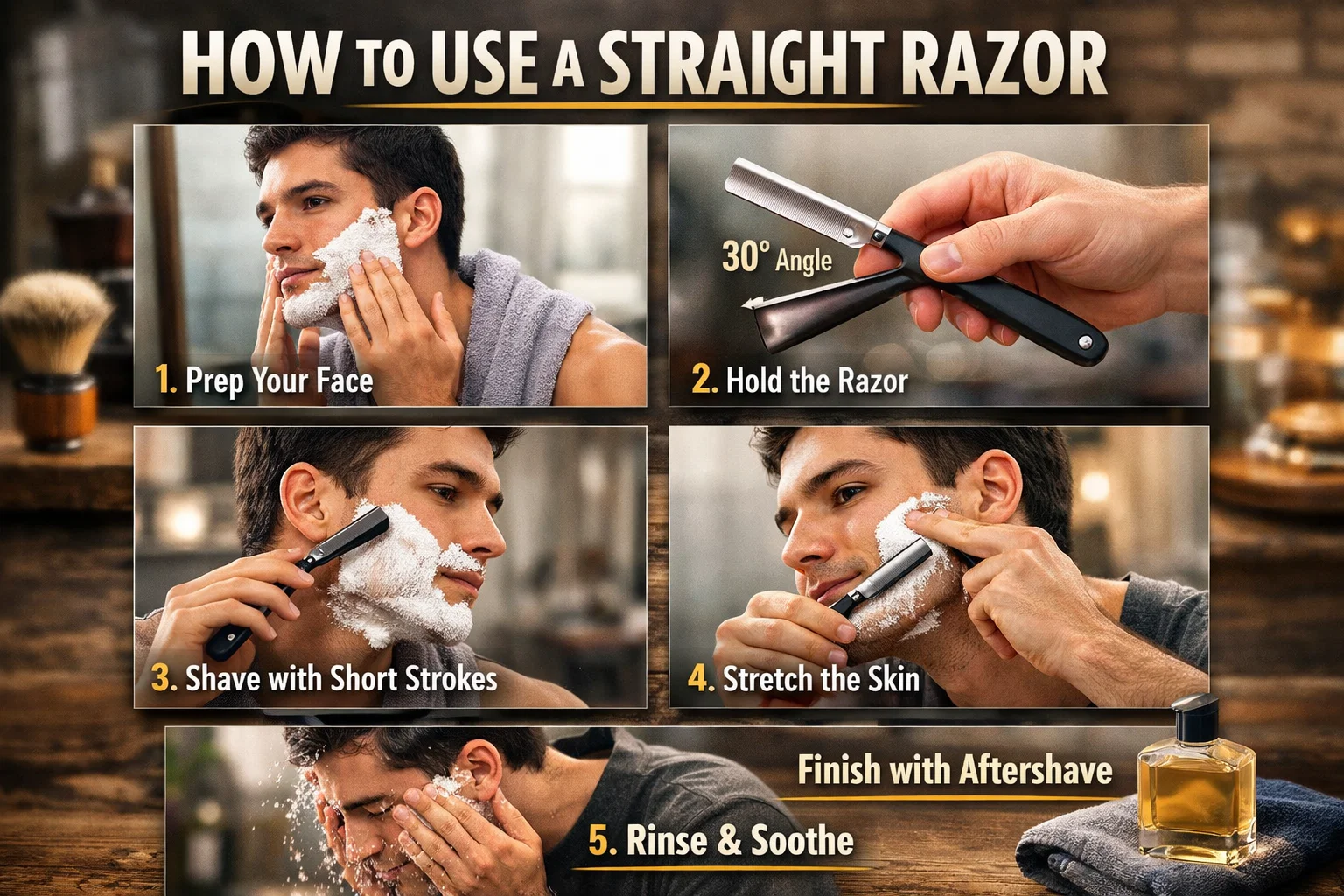
Learning how to use a straight razor is more than just adopting a shaving method; it’s embracing a timeless grooming tradition that prioritizes precision, patience, and craftsmanship. For centuries, barbers relied on this single, exposed blade to deliver incredibly close shaves. Even today, many grooming enthusiasts prefer it for its control and classic appeal.
At first glance, a straight razor may seem intimidating. The open blade, the careful handling, and the deliberate technique can feel overwhelming for beginners. However, with the right preparation, tools, and mindset, anyone can master it safely. This detailed guide will walk you through everything—from understanding how to use a straight razor, the razor’s anatomy to perfecting your shaving strokes—so you can achieve a smooth, irritation-free finish with confidence.
Understanding the Straight Razor and Its Components
Before attempting your first shave, it’s essential to understand the tool itself. A straight razor, sometimes called a cut-throat razor, consists of a sharp blade that folds into a handle known as the scales. Unlike cartridge razors, it features a single edge that requires maintenance and skill.
The blade includes several parts: the point, edge, spine, heel, tang, and pivot pin. The spine controls the shaving angle, while the edge does the cutting. The handle protects the blade when folded and provides grip during use. High-quality models are often made from carbon steel or stainless steel, each offering unique advantages. Carbon steel is easier to sharpen, while stainless steel resists corrosion better. Understanding these components helps you handle the razor with confidence and awareness.
Why Choose a Straight Razor Over Modern Alternatives?
In an era dominated by disposable cartridges and electric shavers, choosing a straight razor might seem unconventional. However, how to use a straight razor, it offers several distinct advantages that explain its continued popularity.
First, it delivers an exceptionally close shave because there is only one blade cutting the hair at skin level. Multi-blade cartridges can cause irritation by lifting and cutting hairs below the surface. Second, it is environmentally friendly. A single well-maintained razor can last decades, reducing plastic waste. Third, it promotes a mindful grooming routine. Many users find the ritual relaxing and rewarding. Over time, mastering the technique not only improves results but also builds a sense of craftsmanship and personal pride.
Essential Tools You Need Before You Begin
Before learning how to use a straight razor effectively, you must gather the proper tools. Using the right equipment ensures both safety and performance.
How to use a straight razor? You’ll need a sharp straight razor, a leather strop, shaving soap or cream, a shaving brush, warm water, and a clean towel. A leather strop is critical because it aligns the blade’s edge before each shave. Without stropping, the razor may tug instead of glide smoothly. A quality shaving brush, often made from synthetic or natural fibers, helps create rich lather and lifts facial hair for a closer cut. Optional items include pre-shave oil and an alum block to soothe minor nicks. Preparation sets the foundation for success.
Preparing Your Face for a Safe and Smooth Shave
Proper skin preparation significantly reduces the risk of cuts and irritation. Rushing this step is one of the most common beginner mistakes.
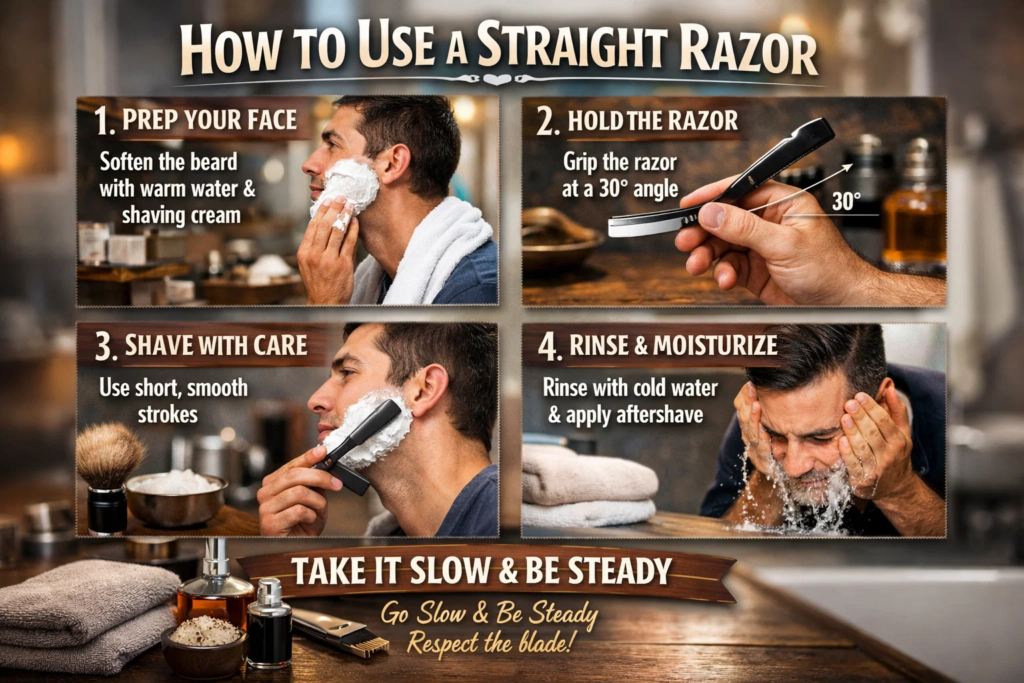
How to use a straight razor? Start by washing your face with warm water to remove oil and dirt. Warmth softens facial hair and opens pores, making shaving easier. Many traditional barbers recommend shaving after a shower because steam hydrates the beard. Next, apply shaving soap using circular motions with your brush. This technique lifts hairs and creates a protective cushion between blade and skin. The lather should be thick and creamy, not watery. Good preparation ensures the blade glides effortlessly, minimizing friction and discomfort.
Stropping the Blade Before Each Shave
Stropping is a crucial step that maintains the razor’s sharpness and alignment. Even a sharp blade can feel dull if not properly stropped.
How to use a straight razor? Attach the leather strop securely to a stable surface. Hold it taut with one hand while guiding the razor with the other. Place the blade flat against the strop, ensuring both the spine and edge touch the leather. Move the blade away from you, leading with the spine. Flip it on its spine and bring it back toward you. Perform 20 to 30 smooth strokes before shaving. This process doesn’t sharpen the blade but aligns microscopic teeth along the edge, ensuring a clean and comfortable shave.
How to Use a Straight Razor for the First Time
How to use a straight razor? When you’re ready to begin, approach the process calmly and deliberately. Anxiety can lead to rushed movements, which increase the risk of cuts.
Hold the razor with your dominant hand. Most users position their thumb on the underside of the tang, with the index and middle fingers on top and the ring finger resting near the pivot. Keep the blade at a 30-degree angle to your skin. This angle is crucial; too steep may cause nicks, too shallow may not cut effectively. Start with easy areas like the cheeks before moving to more complex regions. Use short, controlled strokes rather than long sweeping motions for better precision and safety.
Mastering Shaving Angles and Stroke Direction
Angle control is the heart of successful straight razor shaving. The spine naturally guides you toward the correct angle if you keep it slightly lifted from your face.
How to use a straight razor? Begin by shaving with the grain, meaning in the direction your hair naturally grows. This reduces irritation and allows you to assess your technique. After completing the first pass, reapply lather. You may choose to shave across or against the grain for an even closer result, but only after gaining confidence. Stretch your skin gently with your free hand to create a flat surface. Taut skin helps the blade glide smoothly and reduces the chance of catching or skipping.
Shaving Difficult Areas Like the Neck and Chin
The neck and chin are often the most challenging areas because hair grows in multiple directions. Patience is essential here.
On the neck, pay close attention to hair growth patterns. Adjust your strokes accordingly and use shorter motions. Keep the blade angle consistent and avoid pressing down. Let the razor’s weight do the work. How to use a straight razor? For the chin, slightly tilt your head and pull the skin tight. Many beginners find it helpful to make very small strokes around the curve of the jawline. These controlled movements reduce risk and improve precision. Over time, muscle memory will make these tricky spots easier to manage.
Post-Shave Care and Skin Protection
A great shave doesn’t end when you rinse off the lather. Proper aftercare ensures your skin remains healthy and irritation-free.
Rinse your face with cool water to close pores and remove residue. How to use a straight razor? Pat your skin dry with a clean towel; avoid rubbing. If you experience minor nicks, an alum block can help stop bleeding and soothe irritation. Finish with an alcohol-free aftershave balm to hydrate and calm the skin. Moisturizing prevents dryness and maintains a smooth appearance. Taking a few extra minutes for aftercare protects your skin and enhances the overall grooming experience.
Maintaining and Honing Your Straight Razor
Regular maintenance ensures longevity and consistent performance. Unlike disposable razors, a straight razor requires ongoing care.
How to use a straight razor? After each shave, rinse the blade carefully and dry it completely to prevent rust, especially if it’s made from carbon steel. Store it in a dry environment with good ventilation. Over time, the blade will require honing to restore sharpness. Honing involves using sharpening stones to refine the edge. Beginners often prefer having their razor professionally honed until they gain experience. Proper maintenance can extend the razor’s life for decades, making it a worthwhile investment.
Common Mistakes to Avoid
Many beginners encounter challenges when starting out. Recognizing common mistakes helps you avoid unnecessary frustration.
How to use a straight razor? One frequent error is using too much pressure. A straight razor requires a light touch; pressing down increases the chance of cuts. Another mistake is neglecting preparation, which leads to tugging and irritation. Skipping stropping can also compromise performance. Additionally, shaving against the grain too early may cause razor burn. Focus on mastering the basics before attempting advanced techniques. Patience and consistency are key to developing skill and confidence.
Is a Straight Razor Suitable for Beginners?
Although it demands practice, a straight razor can be suitable for beginners who are patient and willing to learn. It requires more time than cartridge shaving, but the results often justify the effort.
Start slowly and limit your first few sessions to manageable areas like the cheeks. Gradually expand your routine as you gain control. Watching professional demonstrations and practicing careful hand positioning can accelerate learning. How to use a straight razor? Many enthusiasts report that after a few weeks of consistent use, the technique becomes second nature. Commitment and proper guidance make the journey smoother and more rewarding.
Conclusion
Mastering how to use a straight razor is a skill that blends tradition, technique, and personal care. While the learning how to use a straight razor, curve may seem steep at first, proper preparation, controlled movements, and regular maintenance transform the experience into a rewarding ritual. From understanding blade anatomy to perfecting shaving angles, each step contributes to achieving a smooth, precise finish.
How to use a straight razor? With patience and consistent practice, you can enjoy the benefits of a close shave, reduced irritation, and long-term sustainability. A straight razor is not merely a grooming tool—it’s an investment in craftsmanship and self-care. Approach it thoughtfully, and you’ll discover both confidence and satisfaction in every shave.
Frequently Asked Questions
1. Is using a straight razor dangerous?
It can cause cuts if used improperly, but with correct technique and preparation, it is safe. Maintaining the proper angle and avoiding pressure are essential.
2. How often should I strop my razor?
You should strop your blade before every shave to align the edge and ensure smooth performance.
3. Do I need to hone the razor myself?
Not necessarily. Beginners often prefer professional honing until they learn proper sharpening techniques.
4. How long does it take to master straight razor shaving?
Most people become comfortable within a few weeks of consistent practice and careful technique.
5. Can I use it for sensitive skin?
Yes, many users with sensitive skin find it causes less irritation than multi-blade razors when used correctly.
6. How long does a straight razor last?
With proper care, a high-quality straight razor can last decades, making it a long-term investment.
For More Update and Stories Visit Daily Guides