 Admin
Admin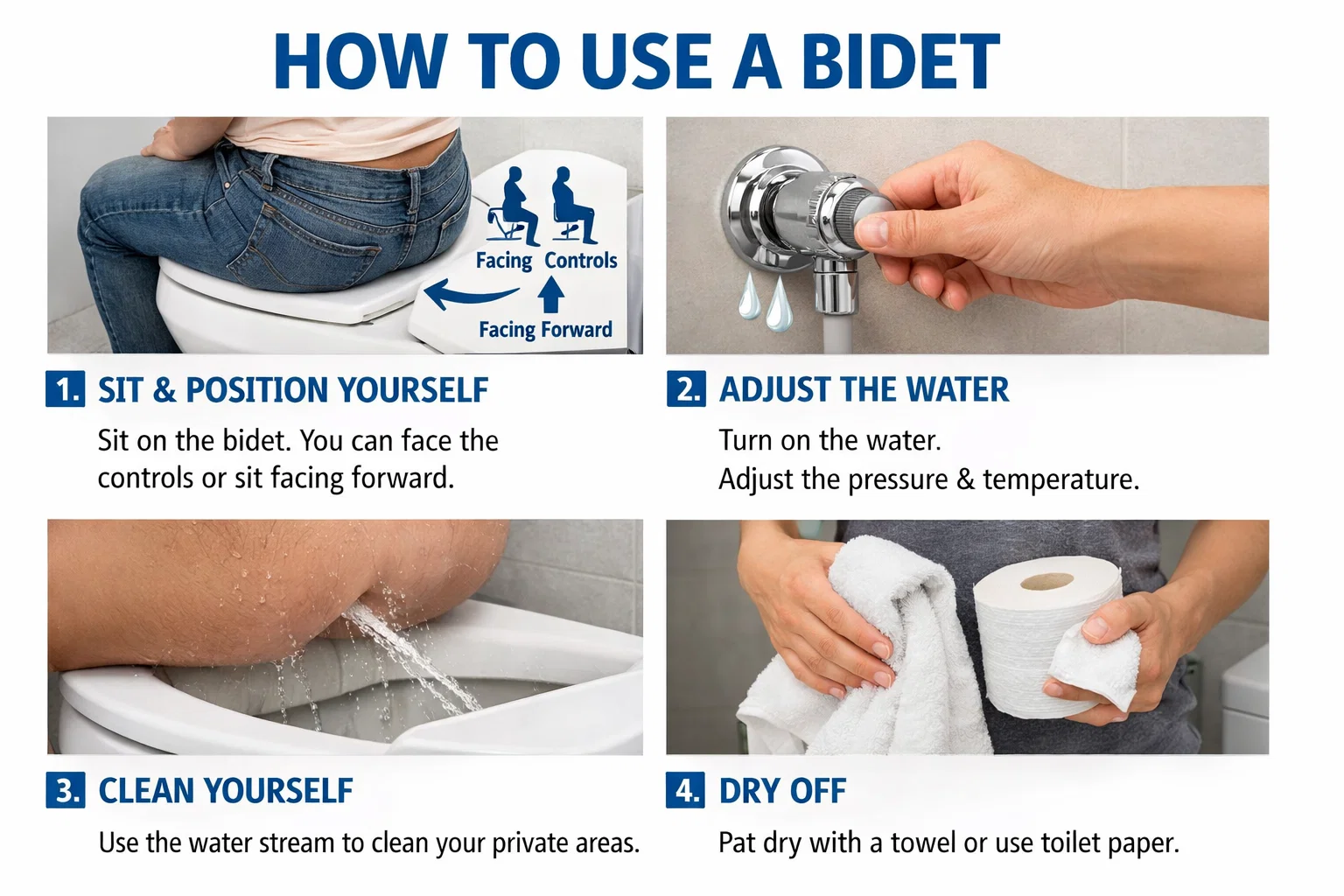
Learning how to use a bidet can feel unfamiliar at first, especially if you grew up relying only on toilet paper. However, bidets have been trusted for centuries as one of the most effective methods for maintaining personal hygiene after using the toilet. Today, they are becoming increasingly popular worldwide due to their comfort, cleanliness, and environmental benefits. Whether you encounter a standalone fixture, a bidet attachment, or a handheld sprayer, understanding how to use a bidet the proper technique ensures a comfortable and sanitary experience. This guide explains everything step-by-step, helping beginners confidently adopt this modern hygiene solution and improve their daily routine.
What Is a Bidet and Why Millions Use It
A bidet is a bathroom fixture designed to clean your private areas using a gentle stream of water after using the toilet. How to use a bidet, Unlike toilet paper, which wipes away waste, water provides a more thorough and hygienic cleanse. Bidets originated in Europe during the 17th century, especially in France and Italy, and later became extremely popular in Japan. Modern bidets are now integrated into advanced toilet seats produced by companies like TOTO and Kohler. Their popularity continues to grow because they offer superior cleanliness, reduce irritation, and promote better personal hygiene for people of all ages.
Types of Bidets You Might Encounter
Standalone bidets are separate fixtures installed next to the toilet. They look similar to a low sink or toilet bowl and are used after finishing on the toilet. How to use a bidet, to use one, you move from the toilet to the bidet and sit or squat over it while water sprays upward. These models usually include knobs or handles to adjust water flow and temperature. Although less common in modern homes, standalone bidets remain widely used in parts of Europe and luxury bathrooms. They provide precise control and excellent cleaning performance, making them a reliable option for maintaining personal hygiene.
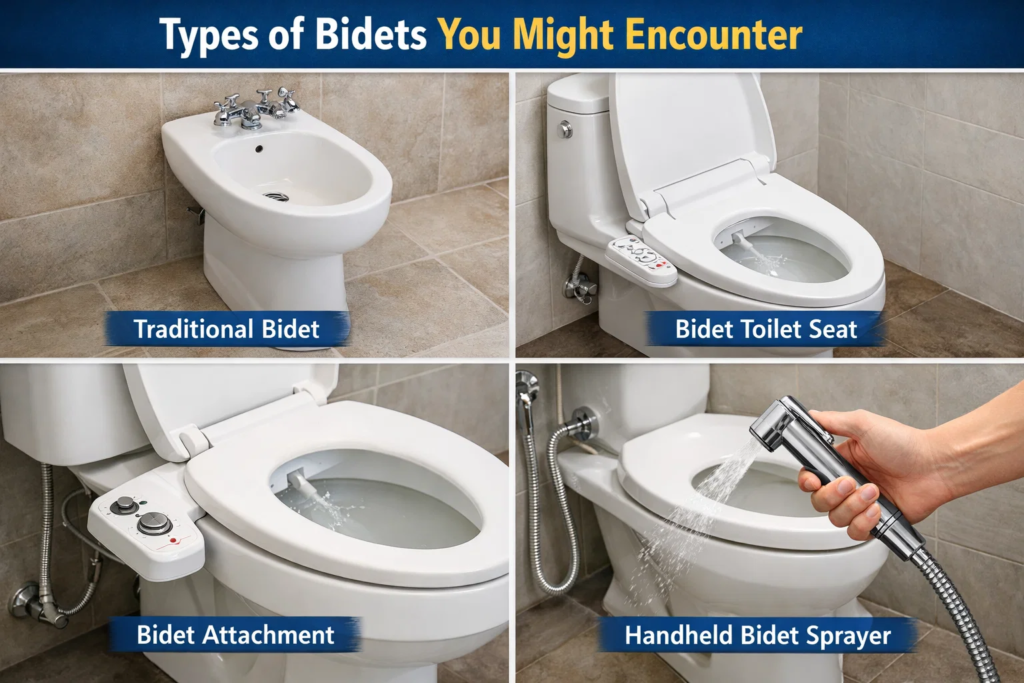
Bidet attachments and bidet seats are among the most common modern options. These devices connect directly to your existing toilet and include built-in nozzles that spray water automatically. Some advanced models include heated seats, adjustable pressure, warm air drying, and self-cleaning nozzles. Using these devices is simple because controls are usually located on the side or on a remote panel. Many households prefer attachments because they are affordable, easy to install, and space-efficient. They transform an ordinary toilet into a high-tech hygiene system without requiring major bathroom renovations.
How to use a bidet? Handheld bidet sprayers, sometimes called bidet showers, resemble a small spray nozzle attached to a hose. These devices are mounted next to the toilet and allow users to manually control water direction and pressure. To use one, you simply aim the sprayer toward the area that needs cleaning while seated. Handheld bidets are extremely popular in many regions because they offer flexibility and precise control. They are also useful for cleaning the toilet bowl itself. While they require a bit more coordination than automatic seats, they are affordable, efficient, and easy to maintain.
How to Use a Bidet Correctly: Step-by-Step Guide
Understanding how to use a bidet correctly ensures comfort, hygiene, and confidence. While designs may vary, the basic steps remain consistent across most models. The key principle is allowing water to gently clean the area after using the toilet, rather than relying on dry wiping alone. Beginners often feel unsure about positioning or water pressure, but modern bidets are designed to be safe and user-friendly. By following a simple routine and adjusting settings gradually, anyone can quickly adapt. Within a few uses, the process becomes natural and far more comfortable than traditional cleaning methods.
Step 1: Use the Toilet First
Always use the toilet normally before activating the bidet. The bidet is intended for cleaning after waste elimination, not as a replacement for the toilet itself. Once finished, remain seated if using an attached bidet, or move carefully to the standalone fixture if necessary. Avoid wiping excessively beforehand, as water will perform the main cleaning function. How to use a bidet, this approach minimizes irritation and ensures a more hygienic result. Keeping this sequence consistent helps you build a reliable routine and prevents unnecessary confusion, especially when using unfamiliar bidet models in hotels or public facilities.
Step 2: Position Yourself Properly
Proper positioning is essential for effective cleaning. If you are using an attached bidet seat, remain seated as usual and activate the spray. The nozzle is already aligned for optimal coverage. How to use a bidet, for standalone bidets, you may need to sit facing forward or backward depending on comfort and fixture design. The goal is to ensure the water stream reaches the correct area. Take your time adjusting your position until you feel the spray contacting the intended spot. Comfort and accuracy improve with practice, and correct positioning ensures maximum hygiene without unnecessary water use.
Step 3: Adjust Water Pressure and Temperature
Start with low water pressure to avoid discomfort. Gradually increase pressure until you find a comfortable level that effectively cleans the area. How to use a bidet, Many modern bidets also allow temperature adjustment, providing warm water for additional comfort. Warm water is especially helpful during colder months or for individuals with sensitive skin. Avoid setting the pressure too high, as gentle water flow is sufficient for cleaning. Taking a few seconds to adjust settings ensures a pleasant experience and prevents irritation. Over time, you will discover your preferred pressure and temperature for optimal comfort.
Step 4: Clean and Rinse Thoroughly
How to use a bidet? Allow the water to rinse the area for about 20 to 40 seconds, ensuring all residue is removed. You may shift slightly to ensure complete coverage. Some bidets include oscillating or pulsating spray features, which improve cleaning effectiveness. These features are designed to mimic gentle washing rather than forceful spraying. The goal is thorough cleanliness without discomfort. Trust the process, as water is far more effective than dry wiping. Once the area feels clean and refreshed, you can turn off the spray and prepare for drying.
Step 5: Dry Yourself Properly
How to use a bidet? After rinsing, drying is an important final step. Many advanced bidet seats include built-in air dryers, which gently blow warm air to dry the area. If your bidet does not have this feature, you can use a small amount of toilet paper or a clean towel. Pat gently rather than rubbing to avoid irritation. Proper drying helps prevent moisture-related discomfort and ensures complete hygiene. This final step completes the cleaning process and leaves you feeling fresh, comfortable, and confident throughout the day.
Hygiene Benefits and Who Should Use a Bidet
Using a bidet offers significant hygiene advantages compared to toilet paper alone. How to use a bidet, water removes bacteria and residue more effectively, reducing the risk of irritation and infection. This makes bidets especially beneficial for individuals with sensitive skin, hemorrhoids, mobility limitations, or medical recovery needs. Older adults and pregnant individuals also benefit from the gentle cleaning method. Children can safely use bidets under supervision, helping them develop better hygiene habits early. Because water cleans without friction, it minimizes skin damage and improves comfort. Over time, regular use promotes better overall health and reduces dependence on abrasive wiping methods.
Common Mistakes Beginners Should Avoid
Many beginners make simple mistakes when learning how to use a bidet, such as using excessive water pressure or positioning incorrectly. Starting with high pressure can cause discomfort, so gradual adjustment is important. Another mistake is using too much toilet paper afterward, which defeats the purpose of water cleaning. Some users also forget to clean the bidet nozzle regularly, which is essential for hygiene. Always keep the device clean and follow manufacturer instructions. Taking time to learn proper use ensures maximum comfort and cleanliness. Avoid rushing the process, and allow yourself to develop confidence with each use.
Bidet vs Toilet Paper: Hygiene, Cost, and Environmental Impact
How to use a bidet? Bidets offer clear advantages over toilet paper in terms of hygiene, comfort, and sustainability. Toilet paper can leave residue and cause irritation, while water provides a complete cleanse. From an environmental perspective, bidets reduce paper consumption, helping conserve trees and water used in paper production. How to use a bidet, households also save money over time by purchasing less toilet paper. Although bidets require a small amount of water, the overall environmental impact is significantly lower. This combination of hygiene, comfort, and sustainability explains why bidets are becoming standard in modern bathrooms worldwide.
Conclusion
Understanding how to use a bidet is an important step toward improving personal hygiene, comfort, and environmental responsibility. While it may seem unfamiliar initially, the process is simple and becomes natural with practice. Bidets provide a gentler, more effective cleaning method than toilet paper, making them ideal for people of all ages and lifestyles. How to use a bidet, by following proper steps, adjusting settings carefully, and maintaining the device, you can enjoy a cleaner and healthier bathroom routine. As modern bathrooms continue evolving, bidets are becoming an essential fixture for those who value hygiene, comfort, and sustainability in daily life.
Frequently Asked Questions (FAQs)
Is using a bidet sanitary?
Yes, bidets are highly sanitary when used correctly and maintained properly. They use clean water to rinse away bacteria and waste, providing a more effective cleaning method than dry wiping. Most modern bidets include self-cleaning nozzles and hygienic designs that prevent contamination. Regular cleaning of the bidet fixture ensures continued safety and performance. Because water removes residue more thoroughly, it reduces the risk of irritation and infection. Many healthcare professionals recommend bidets for improved hygiene, especially for individuals with sensitive skin or medical conditions requiring gentle care.
Do you still need toilet paper when using a bidet?
In most cases, toilet paper is used only for drying after rinsing. Since water performs the primary cleaning function, far less paper is needed compared to traditional wiping. Some advanced bidets include built-in air dryers, eliminating the need for toilet paper entirely. This reduces both costs and environmental impact over time. Using less paper also minimizes skin irritation and improves comfort. Many users eventually prefer bidets because they feel cleaner and fresher. The reduced reliance on paper makes bidets both economical and environmentally responsible.
Is it difficult to learn how to use a bidet?
Learning how to use a bidet is surprisingly easy, even for beginners. Most people become comfortable after just a few uses. Modern bidets are designed with user-friendly controls, adjustable pressure, and intuitive features. Starting slowly and experimenting with settings helps build confidence. Once you understand positioning and pressure control, the process becomes automatic. Many users quickly realize that bidets are simpler and more comfortable than traditional wiping. With minimal effort, anyone can adopt this hygiene method and enjoy its long-term benefits.
Can bidets cause infections or health problems?
When used properly, bidets do not cause infections. In fact, they often reduce infection risk by improving cleanliness. Using gentle water pressure and maintaining proper hygiene ensures safety. Regularly cleaning the bidet nozzle prevents bacteria buildup. Individuals with specific medical conditions should follow healthcare advice, but bidets are generally safe for daily use. Many hospitals and medical professionals recommend bidets for improved hygiene and comfort. Proper maintenance and correct use ensure a safe and healthy experience for all users.
Are bidets suitable for small bathrooms?
Yes, bidets are suitable for bathrooms of all sizes. Modern bidet attachments and seats are designed to fit standard toilets without requiring additional space. These compact options provide full functionality without major renovations. Handheld bidet sprayers are also space-efficient and easy to install. Even small bathrooms can accommodate these solutions comfortably. Homeowners increasingly choose bidet attachments because they provide advanced hygiene without sacrificing space. Their compact design makes them practical for apartments, homes, and commercial facilities alike.
For More Update and Stories Visit Daily Guides