
 Admin
Admin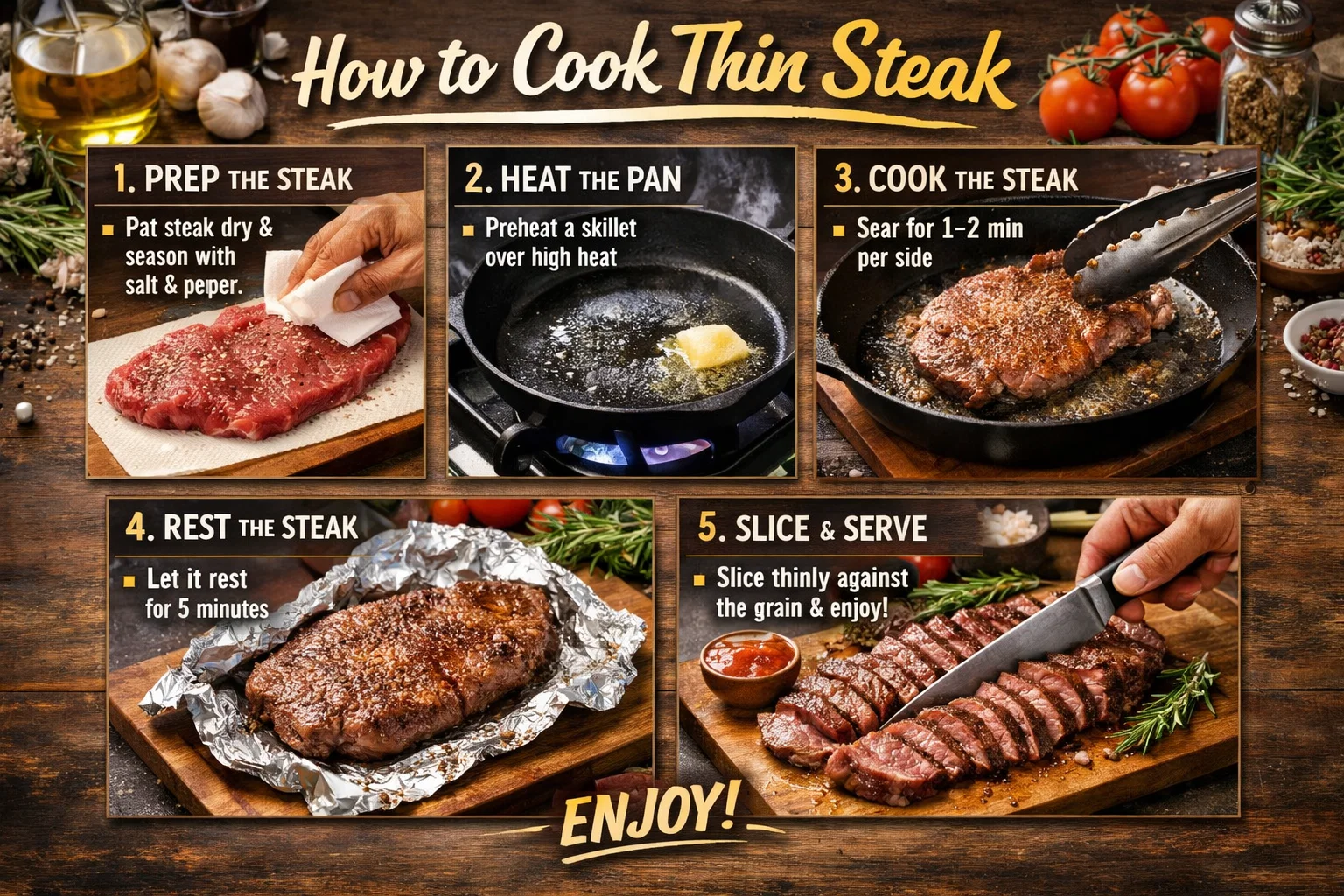
Cooking thin steak can be intimidating for many home cooks. Unlike thick cuts, thin steaks cook rapidly and can easily become overcooked or tough if not handled properly. Knowing how to cook thin steak correctly ensures a juicy, flavorful result every time, whether you prefer it rare, medium, or well-done.
Thin cuts, often less than an inch thick, include flank, skirt, and minute steaks. Their quick cooking time makes them perfect for fast weeknight dinners, sandwiches, or salads. Mastering the techniques for thin steak involves selecting the right cut, seasoning properly, preheating your pan, and monitoring cooking time closely. How to cook thin steak, this guide explores step-by-step methods, tips, and flavor enhancements for achieving tender, perfectly cooked thin steaks.
Choosing the Right Cut for Thin Steak
How to cook thin steak? Selecting the proper cut is the first step in cooking thin steak. Cuts like flank, skirt, sirloin, and ribeye are popular choices. Flank and skirt are leaner, with a strong beef flavor, making them ideal for quick searing. Sirloin and ribeye have more marbling, providing extra tenderness even with fast cooking.
Thickness is crucial. Thin steaks typically measure ½ to ¾ inch thick. Too thin, and they can overcook in seconds; too thick, and they require different techniques. Look for evenly cut steaks to ensure consistent cooking. The right cut ensures maximum flavor and tenderness, allowing for optimal results whether pan-searing, grilling, or broiling.
Preparing Thin Steak for Cooking
Preparation plays a major role in cooking thin steak. Begin by removing the steak from the refrigerator about 15–20 minutes before cooking to reach room temperature. This promotes even cooking and prevents the exterior from overcooking before the center warms up.
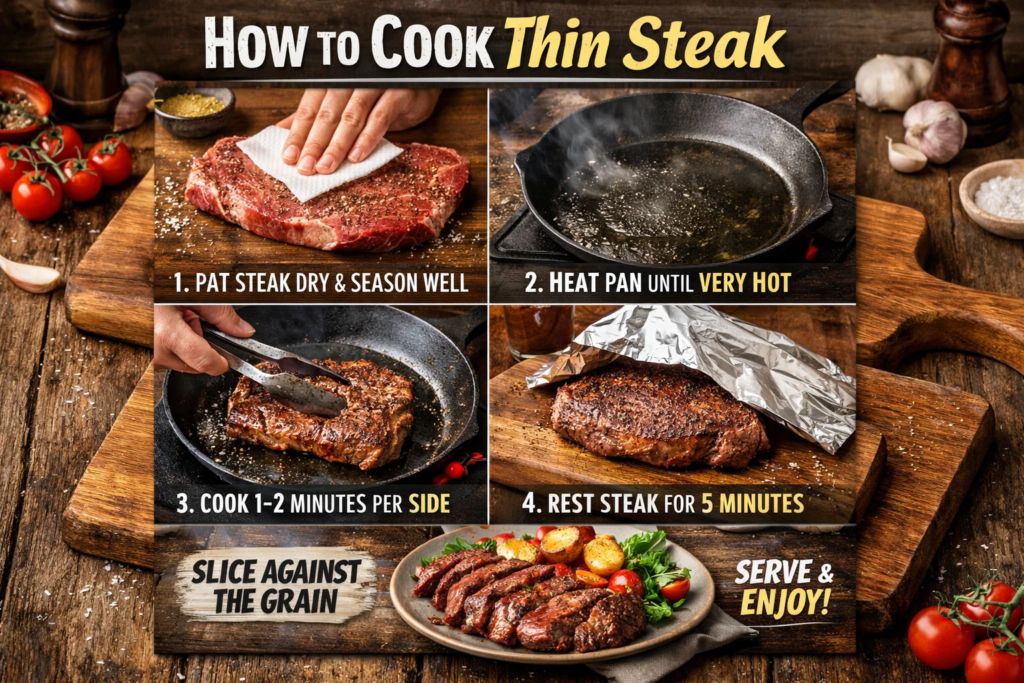
How to cook thin steak? Pat the steak dry with paper towels to remove excess moisture. A dry surface promotes better searing and caramelization. Season generously with salt, pepper, and optional spices or marinades. For additional flavor, consider a light drizzle of olive oil or a quick marinade with garlic, soy sauce, or herbs. Proper preparation sets the stage for a tender and flavorful steak.
Choosing the Cooking Method for Thin Steak
Thin steaks cook quickly, so selecting the right method is critical. The most effective methods are pan-searing, grilling, or broiling. Pan-searing provides a quick, controlled sear and is perfect for indoors. Grilling adds smoky flavor and is ideal for outdoor cooking, while broiling in the oven uses high heat from above to cook rapidly.
Avoid slow cooking methods like braising for thin steaks, as these cuts cook in seconds. High heat methods ensure a crisp, caramelized exterior and a tender interior. Understanding how to cook thin steak which cooking technique suits your cut helps prevent dryness and achieves restaurant-quality results at home.
Pan-Searing Thin Steak
Pan-searing is the most popular method for thin steak. Begin by heating a heavy skillet, preferably cast iron, over medium-high heat until it’s extremely hot. Add a small amount of oil with a high smoke point, like vegetable or canola oil.
How to cook thin steak? Place the steak in the pan and sear for 1–2 minutes per side depending on thickness and desired doneness. Avoid moving the steak during searing to develop a rich, golden-brown crust. After searing, let the steak rest for 2–3 minutes to allow juices to redistribute, ensuring a moist and tender bite.
Grilling Thin Steak
How to cook thin steak? Grilling thin steak imparts a distinct smoky flavor and requires attention to heat and timing. Preheat the grill to high heat, ensuring grates are clean and lightly oiled to prevent sticking.
Place the steak directly over the flame and cook for 1–2 minutes per side. Thin steaks can overcook rapidly, so use a timer or visual cues, such as the formation of grill marks. Remove from heat when just done and let rest briefly. Grilling works best with cuts that have marbling or are lightly marinated to maintain juiciness.
Broiling Thin Steak in the Oven
How to cook thin steak? Broiling uses intense direct heat from the oven’s top element, perfect for indoor cooking. Place the thin steak on a broiler pan or a wire rack over a baking sheet. Preheat the broiler to high and position the rack about 4–6 inches from the heat source.
Cook the steak for 1–3 minutes per side, depending on thickness and preference. Monitor closely, as thin steaks can burn quickly. Broiling produces a flavorful crust while keeping the interior tender. This method works well when pan-searing or grilling isn’t an option, delivering similar high-heat results indoors.
Checking Doneness of Thin Steak
Thin steaks cook quickly, so monitoring doneness is key. How to cook thin steak? For rare, aim for an internal temperature of 120–125°F (49–52°C); medium-rare, 130–135°F (54–57°C); medium, 140–145°F (60–63°C). A quick touch test or an instant-read thermometer can provide accurate results.
Avoid overcooking, as thin steaks can become dry and tough in seconds. Remove the steak slightly before reaching the target temperature, as residual heat continues cooking during resting. Accurate timing ensures a juicy, flavorful steak with perfect texture.
Resting Thin Steak for Maximum Juiciness
Resting is a crucial but often overlooked step when cooking thin steak. After cooking, allow the steak to rest for 2–5 minutes, depending on size. This allows the juices to redistribute throughout the meat rather than spilling out when cut.
How to cook thin steak? Cover loosely with foil to retain heat while preventing steam buildup, which could soften the crust. Resting enhances flavor, tenderness, and overall enjoyment. Even a short rest makes a noticeable difference, especially for thin cuts that cook quickly and are prone to losing moisture.
Enhancing Flavor with Marinades and Rubs
Marinades and rubs elevate the flavor of thin steak. Quick marinades using soy sauce, garlic, lemon, olive oil, or Worcestershire sauce infuse flavor without tenderizing for too long, as thin cuts absorb quickly.
How to cook thin steak? Dry rubs with spices like paprika, cumin, black pepper, and brown sugar create a caramelized crust during searing or grilling. Because thin steaks cook fast, flavoring before cooking and seasoning immediately after ensures both taste and texture are maximized without overcomplicating the process.
Avoiding Common Mistakes
Cooking thin steak comes with pitfalls. Overcooking is the most common, turning juicy cuts into tough meat. Underseasoning results in bland flavor. How to cook thin steak, using a low heat pan prevents proper searing, while flipping too often disrupts crust formation.
Prevent mistakes by using high heat, timing precisely, seasoning generously, and allowing rest. Keeping a thermometer handy or observing visual cues ensures ideal doneness. Understanding how to cook thin steak the quick cooking nature of thin steak allows for perfect results consistently.
Serving Suggestions for Thin Steak
Thin steak is versatile and pairs well with various sides. Serve it sliced over salads, in sandwiches, or alongside roasted vegetables. Drizzle with pan juices, chimichurri, or a balsamic glaze to enhance flavor.
How to cook thin steak? Thin cuts also complement mashed potatoes, rice, or pasta for a hearty meal. Presentation matters: slicing against the grain improves tenderness and appearance. Serving thin steak creatively allows you to enjoy restaurant-quality meals at home, even on busy weeknights.
Storing and Reheating Leftover Thin Steak
Leftover thin steak should be stored in an airtight container in the refrigerator for 2–3 days. Reheat gently in a skillet over medium heat or briefly in the oven to prevent overcooking.
How to cook thin steak? Avoid microwaving for long periods, as it can dry out thin cuts. Adding a splash of beef broth or butter while reheating helps maintain moisture and flavor. Proper storage and reheating ensure you can enjoy your thin steak leftovers without compromising texture or taste.
Conclusion
Mastering how to cook thin steak ensures a delicious, juicy, and flavorful result every time. From selecting the right cut to proper seasoning, high-heat cooking, and resting, each step contributes to a perfectly cooked steak. Pan-searing, grilling, or broiling allows flexibility in preparation while keeping the interior tender and the exterior caramelized.
Enhancing flavor with rubs or marinades, checking doneness carefully, and slicing against the grain elevates your thin steak dishes to restaurant-quality standards. With practice, attention to timing, and high-heat techniques, cooking thin steak becomes quick, simple, and consistently rewarding.
Frequently Asked Questions
1. How long should I cook a thin steak per side?
Typically 1–2 minutes per side depending on thickness and desired doneness.
2. Can I grill thin steak without overcooking it?
Yes, use high heat, monitor carefully, and remove promptly when done.
3. Should I marinate thin steak?
Quick marinades enhance flavor but should not exceed 30 minutes to avoid mushiness.
4. How do I check if thin steak is done?
Use an instant-read thermometer or touch test for accurate results.
5. Do I need to rest thin steak?
Yes, 2–5 minutes of resting redistributes juices for maximum tenderness.
6. Can I cook thin steak in a pan without oil?
It is not recommended; a small amount of oil ensures proper searing and prevents sticking.
7. What is the best way to slice thin steak?
Slice against the grain to maintain tenderness and improve texture.
For More Update and Stories Visit Daily Guides