
 Admin
Admin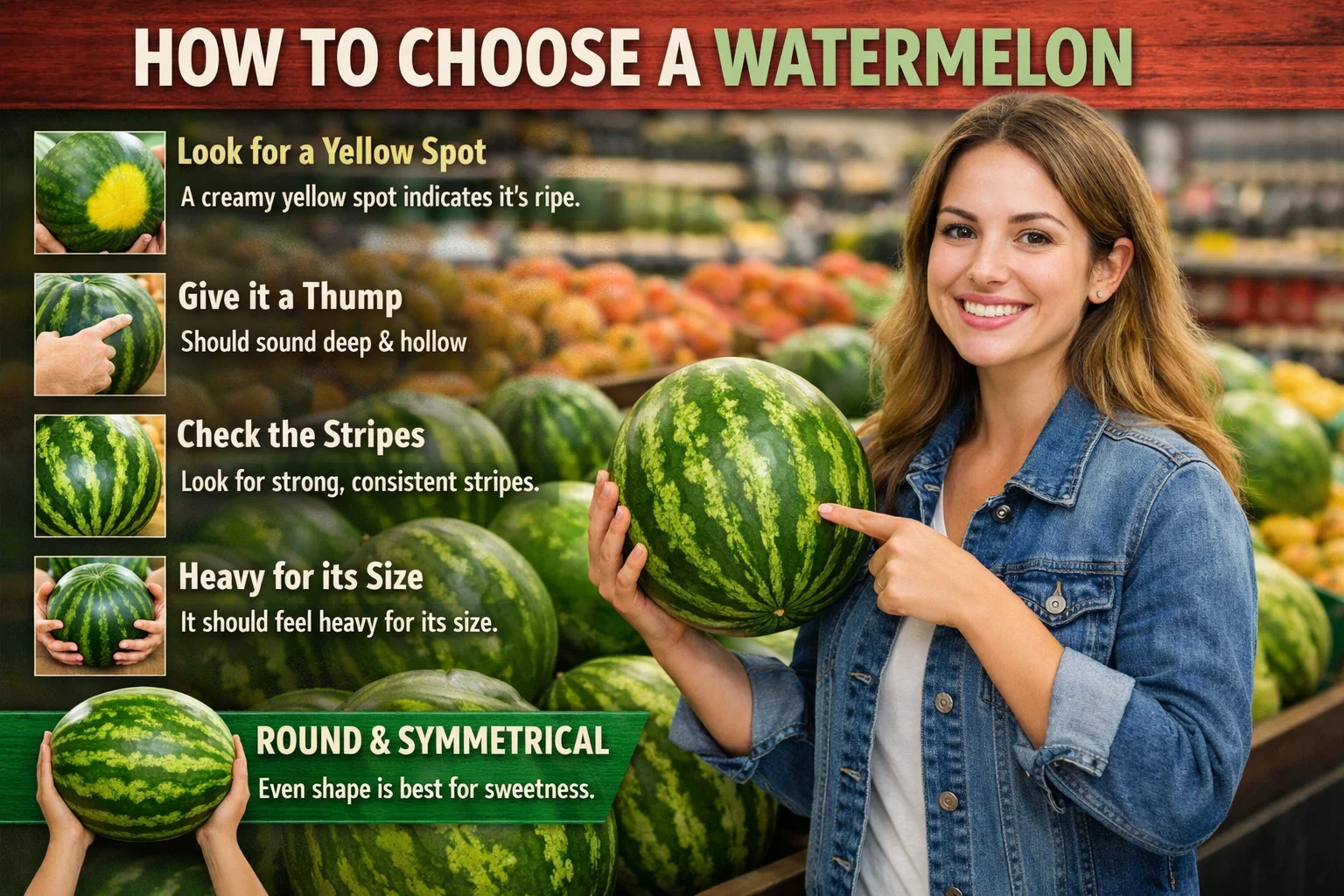
There is something uniquely satisfying about slicing into a perfectly ripe watermelon on a warm afternoon. The bright red flesh, crisp texture, and refreshing sweetness make it one of the most loved summer fruits worldwide. Yet many shoppers hesitate in the produce aisle, unsure which one to pick. If you have ever tapped, lifted, or inspected several melons without confidence, you are not alone. Learning how to choose watermelon is a skill that combines observation, touch, and a bit of science.
The good news is that selecting a sweet and juicy watermelon does not require luck. By understanding a few key signs—such as field spots, weight, sound, and shape—you can consistently bring home a delicious fruit. This detailed guide will walk you through every important factor in a clear and practical way.
Why Choosing the Right Watermelon Matters
A watermelon may look perfect on the outside but still disappoint once cut open. Since you cannot see the interior before buying, you must rely on external clues. Picking a ripe melon ensures better sweetness, juiciness, and texture. It also prevents waste, saving money and reducing food spoilage.
Watermelons are composed of about 92% water, which makes them highly refreshing but also sensitive to ripeness timing. Harvested too early, they lack sweetness. Left too long, they can become mealy. Understanding how to choose watermelon and how to evaluate ripeness visually and physically ensures you enjoy the best flavor possible.
Understanding Watermelon Varieties
How to choose watermelon? Before diving into selection techniques, it helps to know there are several common types of watermelon available in markets. Seeded, seedless, mini, and yellow-fleshed varieties each have slight differences in appearance and taste. Seedless types are especially popular for convenience, while mini watermelons are ideal for small households.
Despite these differences, the fundamental rules for selecting a ripe fruit remain the same. Whether large or small, striped or solid green, the external indicators of ripeness follow consistent patterns. Learning these universal signs simplifies the entire process.

Check the Field Spot First
One of the most reliable signs of ripeness is the field spot. This is the creamy patch on the watermelon where it rested on the ground while growing. A ripe watermelon will have a field spot that is deep yellow or even orange. How to choose watermelon? If the spot appears white or pale, the fruit was likely harvested too early.
The field spot forms because that area did not receive direct sunlight. The longer the fruit stays on the vine, the darker and more golden this patch becomes. When learning how to choose watermelon, always turn the fruit over and inspect this detail carefully. It is often the quickest visual clue to maturity.
Look for a Dull, Not Shiny, Surface
How to choose watermelon? A common misconception is that shiny fruit looks fresher. In the case of watermelon, the opposite is true. A ripe watermelon typically has a dull, matte surface rather than a glossy one. Shine often indicates the fruit is underripe.
As watermelons mature, their outer rind develops a deeper, more muted tone. The green stripes should appear well-defined but not overly bright. This subtle change in surface appearance signals that the sugars inside have developed properly.
Pick It Up and Feel the Weight
How to choose watermelon? Weight is a surprisingly important factor. A good watermelon should feel heavy for its size. Since the fruit contains high water content, heaviness suggests juiciness. When comparing two melons of similar size, choose the heavier one.
This technique works because ripeness corresponds with water retention and density. A lighter melon may indicate dryness or underdevelopment. Lifting the fruit gives you a direct sense of its internal moisture level, which strongly influences taste and texture.
Tap and Listen to the Sound
How to choose watermelon? Tapping a watermelon may look amusing, but it is an effective method. Gently knock on the rind with your knuckles and listen carefully. A ripe watermelon produces a deep, hollow sound. An underripe fruit tends to make a dull or flat noise.
The hollow sound indicates that the interior flesh is firm and packed with juice. Practice this method a few times to train your ear. While it may not be perfect alone, combined with other signs it greatly improves accuracy when deciding how to choose watermelon.
Examine the Shape and Symmetry
How to choose watermelon? Symmetry matters more than many people realize. Choose a watermelon that is uniform and evenly shaped, whether round or oval. Avoid fruits with irregular bumps, dents, or asymmetrical growth.
Misshapen melons may have experienced inconsistent watering or growth interruptions. Consistency in shape often reflects steady development on the vine, which contributes to balanced sweetness and texture throughout the fruit.
Inspect the Webbing and Sugar Spots
How to choose watermelon? Some watermelons display brown web-like patterns or rough patches on the rind. These markings are sometimes called sugar spots. Contrary to what some believe, they are often a positive sign.
Webbing occurs when bees pollinate the flower multiple times. More pollination typically leads to sweeter fruit. While not a guarantee, moderate webbing can indicate high sugar content. Avoid excessive damage, but do not reject a melon solely because of minor surface markings.
Check the Stem Condition
How to choose watermelon? If the watermelon still has a piece of stem attached, observe its condition. A dried brown stem usually indicates that the fruit ripened naturally on the vine. A green stem may suggest early harvesting.
However, many store-bought watermelons are sold without visible stems. In such cases, focus on other indicators like field spots and weight. When available, stem color adds one more helpful clue.
Avoid Cuts, Soft Spots, or Bruises
How to choose watermelon? Always examine the rind carefully for damage. Soft areas, cracks, or bruises can indicate internal spoilage. The rind should feel firm and solid when pressed gently.
Small superficial scratches are usually harmless, but deep cracks may allow bacteria to enter. Selecting a watermelon in good physical condition ensures both safety and quality.
Seasonal Timing Matters
How to choose watermelon? Watermelon season typically peaks during warmer months, often from May through September in many regions. Buying in season increases the likelihood of finding sweet, ripe fruit because harvest timing aligns with natural growth cycles.
Off-season watermelons may be imported or grown in less optimal conditions. While still edible, they may lack peak sweetness. Paying attention to seasonal availability improves overall satisfaction.
Organic vs Conventional: Does It Matter?
Whether organic or conventionally grown, the ripeness indicators remain the same. Organic watermelons are cultivated without synthetic pesticides, which appeals to health-conscious consumers. However, sweetness depends more on harvest timing than farming method.
Choose based on personal preference and budget. Regardless of farming practice, the physical signs of ripeness remain your best guide.
Storing Your Watermelon After Purchase
Once you successfully apply the techniques for how to choose watermelon, proper storage maintains freshness. Whole watermelons can stay at room temperature for a few days. For longer storage, refrigerate them.
After cutting, wrap tightly and store in the refrigerator. Consume within three to four days for optimal taste and texture. Proper storage preserves the sweetness you carefully selected.
Why Experience Improves Your Skill
Like many food-selection skills, choosing watermelon improves with practice. Each time you cut open a fruit, compare the interior quality with the external signs you observed. Over time, you will develop stronger intuition.
Observation builds confidence. Soon, you will rely less on guesswork and more on consistent visual and tactile cues. Mastery comes from combining multiple indicators rather than depending on a single trick.
Conclusion
Learning how to choose watermelon is a practical skill that ensures you enjoy the sweetest, juiciest fruit possible. By checking the field spot, examining surface texture, lifting for weight, tapping for sound, and inspecting shape, you can confidently select a ripe melon every time. Seasonal timing and proper storage further enhance your experience.
The next time you stand in the produce aisle, you will no longer feel uncertain. Instead, you will approach each watermelon with knowledge and assurance. With a little attention and practice, picking the perfect one becomes second nature.
Frequently Asked Questions
1. What is the most important sign of a ripe watermelon?
The deep yellow or orange field spot is one of the most reliable indicators. It shows the fruit ripened naturally on the vine.
2. Does tapping a watermelon really work?
Yes. A ripe watermelon produces a hollow, deep sound when tapped. However, use this method alongside other signs for accuracy.
3. Should I avoid watermelons with webbing?
Not necessarily. Moderate webbing can indicate good pollination and potentially higher sweetness.
4. Why does weight matter when choosing watermelon?
Heavier melons typically contain more water and are therefore juicier and fresher.
5. Is shiny rind a good sign?
No. A dull, matte rind usually indicates ripeness, while a shiny surface can suggest underripeness.
6. How long does watermelon last after cutting?
Cut watermelon stays fresh in the refrigerator for about three to four days when properly sealed.
7. Are seedless watermelons less sweet?
Not at all. Seedless varieties can be just as sweet as seeded ones when picked at peak ripeness.
For More Update and Stories Visit Daily Guides