
 Admin
Admin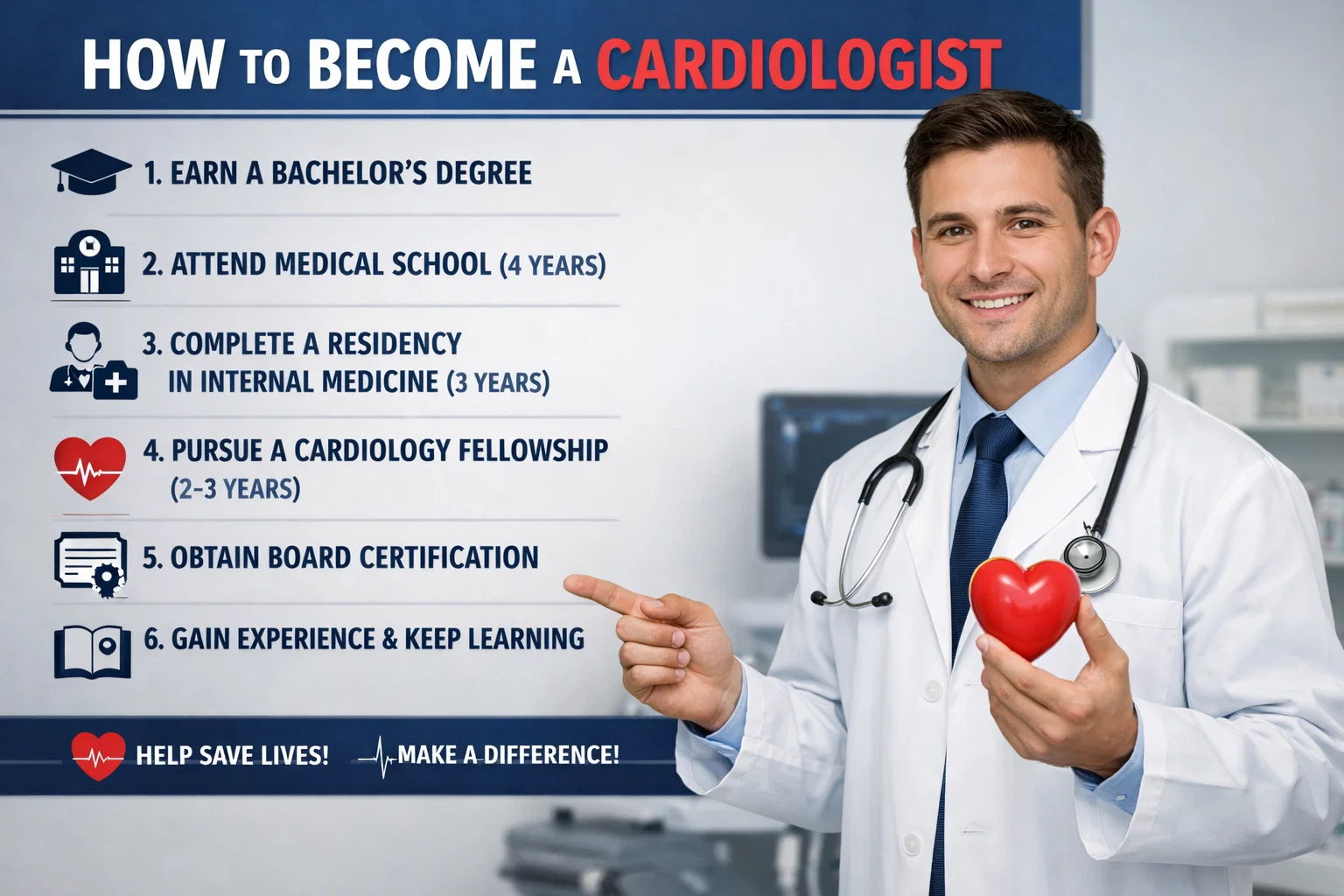
The human heart is one of the most vital organs, beating approximately 100,000 times every day to sustain life. When something goes wrong, a cardiologist becomes the expert responsible for diagnosis, treatment, and prevention of heart-related diseases. If you are passionate about science, helping people, and working in a respected medical profession, understanding how to become a cardiologist is the first step toward a fulfilling career. Cardiologists are often called heart specialists, and their role is critical in reducing global cardiovascular deaths, which remain the leading cause of mortality according to organizations like the World Health Organization. This career requires dedication, years of education, and strong commitment, but the rewards are both meaningful and financially promising.
What Does a Cardiologist Do?
How to become a cardiologist? A cardiologist specializes in diagnosing and treating diseases related to the heart and blood vessels. These include conditions such as heart attacks, arrhythmias, coronary artery disease, heart failure, and hypertension. Cardiologists perform diagnostic tests like ECG, echocardiograms, stress tests, and cardiac catheterization to assess heart function. They also create treatment plans involving medication, lifestyle changes, and preventive strategies to improve patient outcomes.
In addition to treating patients, cardiologists educate people about heart health and prevention. They work closely with other healthcare professionals to ensure comprehensive care. Some cardiologists specialize in invasive procedures, while others focus on prevention and diagnosis. Their expertise helps patients live longer, healthier lives by managing complex cardiovascular conditions and reducing risks associated with heart disease.
Why Choose a Career in Cardiology?
Choosing cardiology offers both professional and personal fulfillment. Cardiologists play a crucial role in saving lives, often making immediate and life-changing decisions. The field is intellectually stimulating because it involves advanced technology, evolving treatments, and complex medical challenges. Every patient case is unique, requiring strong analytical skills and continuous learning.
How to become a cardiologist? Financially, cardiology is one of the highest-paying medical specialties worldwide. Experienced cardiologists earn substantial salaries, depending on location, specialization, and experience. Beyond financial rewards, the emotional satisfaction of helping patients recover and improve their quality of life is unmatched. This profession also offers global career opportunities, allowing specialists to work in hospitals, private clinics, research institutions, or academic environments.
Educational Requirements to Become a Cardiologist
Understanding the academic journey is essential when learning how to become a cardiologist. The process begins with completing secondary education with science subjects, including biology, chemistry, and physics. Strong academic performance is necessary to gain admission to medical school, which is highly competitive worldwide.
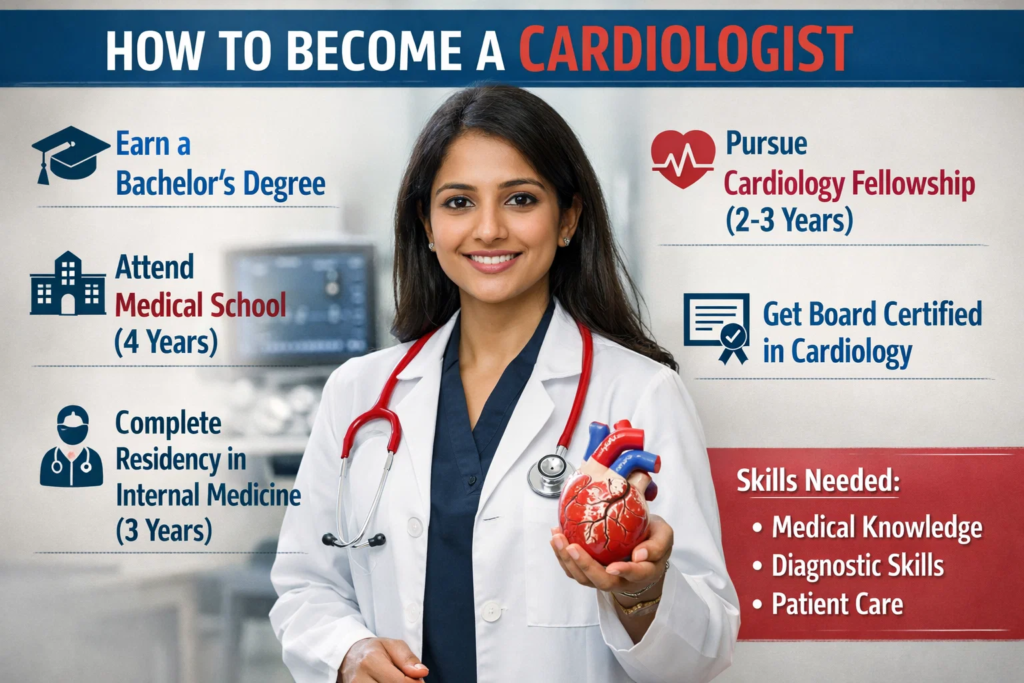
How to become a cardiologist? After high school, students must enroll in a Bachelor of Medicine, Bachelor of Surgery (MBBS) or equivalent medical degree. This program typically takes 5–6 years and covers foundational medical knowledge, clinical training, and patient care. Students learn anatomy, physiology, pathology, pharmacology, and clinical medicine. Completing medical school qualifies graduates as general physicians, but additional training is required to specialize in cardiology.
Step-by-Step Guide on How to Become a Cardiologist
Step 1: Complete High School with Science Subjects
The journey begins in high school, where students should focus on biology, chemistry, and physics. How to become a cardiologist? These subjects provide the scientific foundation necessary for medical education. Strong grades improve chances of admission to reputable medical schools. Students should also develop critical thinking, communication, and problem-solving skills during this stage.
Participating in science competitions, volunteering at hospitals, or shadowing doctors can strengthen medical school applications. Early exposure helps students understand the realities of healthcare professions. Developing discipline and study habits during high school prepares students for the rigorous academic demands of medical school and future cardiology training.
Step 2: Earn a Medical Degree (MBBS or Equivalent)
After completing high school, students must enroll in a medical degree program such as MBBS, which typically lasts 5–6 years. This stage includes classroom learning and clinical rotations in hospitals. Students gain hands-on experience diagnosing illnesses, interacting with patients, and understanding medical procedures. How to become a cardiologist?
Medical school builds essential knowledge in areas like anatomy, physiology, and pathology. Clinical rotations expose students to different specialties, including cardiology. This exposure helps students confirm their interest in becoming heart specialists. Successfully completing medical school is a critical milestone in the journey toward cardiology specialization.
Step 3: Complete a Medical Internship
How to become a cardiologist? After earning a medical degree, graduates must complete a one-year internship, also called a house job in many countries. This internship provides supervised clinical experience in different departments, including internal medicine, surgery, and emergency care. Internships help new doctors develop practical skills and gain confidence in treating patients.
During this period, doctors learn how to become a cardiologist, how hospitals operate and how to manage real medical cases. This experience is essential before pursuing specialization. Internships also allow doctors to explore cardiology departments and interact with experienced cardiologists, providing valuable insights into the profession.
Step 4: Specialize in Internal Medicine Residency
How to become a cardiologist? To become a cardiologist, doctors must first specialize in internal medicine, which usually takes 3–4 years. Residency programs provide intensive training in diagnosing and managing adult diseases. Doctors learn to handle complex medical cases, develop treatment plans, and perform advanced diagnostic procedures.
Internal medicine residency is a crucial step because cardiology is considered a subspecialty of internal medicine. Residents gain experience treating cardiovascular conditions and working in hospital settings. This stage prepares doctors with the necessary knowledge and skills required for cardiology fellowship training.
Step 5: Complete a Cardiology Fellowship
How to become a cardiologist? After finishing internal medicine residency, doctors must complete a cardiology fellowship, which typically lasts 3–4 years. Fellowship training focuses specifically on heart diseases, diagnostic techniques, and treatment methods. Fellows learn to perform specialized procedures such as cardiac catheterization and echocardiography.
During fellowship, doctors work under experienced cardiologists and gain expertise in managing cardiovascular disorders. This training is essential to become a certified cardiologist. After completing fellowship, doctors can practice independently as heart specialists and provide advanced cardiac care.
Total Time Required to Become a Cardiologist
The complete journey usually takes 10–15 years, depending on the country and educational system. This includes 5–6 years of medical school, 1 year of internship, 3–4 years of residency, and 3–4 years of fellowship. Although the process is long, each stage builds essential skills and knowledge necessary for providing specialized cardiac care.
How to become a cardiologist? The extensive training ensures cardiologists are fully prepared to handle complex heart conditions. This level of expertise is necessary because heart diseases can be life-threatening. The years of education and training reflect the responsibility and importance of the profession in modern healthcare.
Skills Required to Become a Successful Cardiologist
Cardiologists must possess a combination of technical knowledge and personal skills. Strong analytical abilities help them diagnose complex cardiovascular conditions accurately. Attention to detail is essential when interpreting diagnostic tests and patient histories. Communication skills are equally important, as cardiologists must explain medical conditions and treatments clearly to patients.
Emotional resilience is necessary because cardiologists often deal with critical and life-threatening cases. Problem-solving skills help them make quick decisions during emergencies. Continuous learning How to become a cardiologist is also vital, as medical advancements constantly improve diagnostic and treatment methods. These skills ensure cardiologists provide effective and compassionate patient care.
Certifications and Licensing Requirements
After completing training, cardiologists must obtain medical licenses from regulatory bodies such as the Pakistan Medical and Dental Council or equivalent organizations in other countries. Licensing ensures doctors meet professional and ethical standards required for medical practice.
Some cardiologists pursue additional certifications to specialize further in areas like interventional cardiology or electrophysiology. Certification demonstrates expertise and improves career opportunities. Maintaining certification requires ongoing education and training, ensuring cardiologists stay updated with the latest medical advancements and technologies.
Types of Cardiologists and Specializations
Cardiology offers multiple specialization options. Interventional cardiologists perform procedures like angioplasty and stent placement. Non-invasive cardiologists focus on diagnosis and preventive care without surgery. Electrophysiologists specialize in heart rhythm disorders and electrical system abnormalities.
Each specialization requires additional training and expertise. Choosing a subspecialty allows cardiologists to focus on specific areas of interest. For example, pioneering surgeons like Christiaan Barnard, who performed the first successful heart transplant in 1967, revolutionized cardiovascular medicine. Specialization enhances career opportunities and allows cardiologists to contribute significantly to medical advancements.
Career Opportunities and Workplaces
Cardiologists have diverse career opportunities. They can work in hospitals, private clinics, academic institutions, or research centers. Some cardiologists become professors and train future doctors. Others work in research to develop new treatments and technologies.
Hospitals remain the primary workplace, where cardiologists diagnose and treat patients daily. Academic cardiologists often teach at institutions like Harvard Medical School or regional universities. Cardiologists can also work internationally, as cardiovascular expertise is in high demand worldwide. This flexibility makes cardiology an attractive and versatile career choice.
Salary and Job Outlook
Cardiology is among the highest-paying medical specialties. Salaries vary depending on location, experience, and specialization. Entry-level cardiologists earn competitive salaries, while experienced specialists earn significantly higher incomes. In many countries, cardiologists earn between $150,000 and $400,000 annually or more.
The demand for cardiologists continues to grow due to increasing rates of heart disease. Aging populations and lifestyle factors contribute to higher cardiovascular risks. This ensures strong job security and excellent career prospects. Cardiologists remain essential healthcare professionals in modern medical systems worldwide.
Challenges of Becoming a Cardiologist
The path requires years of education, intense study, and dedication. Medical training can be physically and emotionally demanding. Long working hours, high stress, and responsibility for patient lives can be challenging.
Despite these challenges, the rewards outweigh the difficulties. Cardiologists make meaningful contributions to healthcare and save lives. The respect, financial stability, and professional fulfillment make cardiology a worthwhile career for those passionate about medicine.
How to Become a Cardiologist in Pakistan and Globally
In Pakistan, students must complete FSc Pre-Medical, followed by MBBS, house job, and specialization through programs regulated by national medical authorities. Institutions like Aga Khan University offer advanced medical training and cardiology programs.
Globally, the process is similar, though specific requirements vary by country. International medical licensing exams may be required for practicing abroad. Regardless of location, dedication and commitment are essential for achieving success in cardiology.
Conclusion
Understanding how to become a cardiologist requires recognizing the long but rewarding journey involved. From completing medical school to specialized fellowship training, every stage builds expertise necessary for treating heart diseases. Cardiologists play a vital role in healthcare, saving lives and improving patient outcomes. The profession offers intellectual challenges, financial rewards, and personal fulfillment.
Although the path requires dedication, perseverance, and years of education, the impact cardiologists have on patients and society makes the effort worthwhile. For students passionate about medicine and helping others, cardiology offers a meaningful and respected career. With determination and proper planning, anyone with the right motivation can achieve success and become a skilled heart specialist.
Frequently Asked Questions (FAQs)
1. How many years does it take to become a cardiologist?
It typically takes 10–15 years to become a cardiologist. This includes medical school, internship, internal medicine residency, and cardiology fellowship. Each stage builds essential medical knowledge and clinical skills. The length may vary depending on the country and educational system, but extensive training ensures cardiologists are fully qualified to handle complex cardiovascular conditions.
2. What degree is required to become a cardiologist?
You must complete a medical degree such as MBBS or equivalent. After that, doctors must complete residency training in internal medicine and a cardiology fellowship. Additional certifications and licensing are required to practice professionally. This structured educational path ensures cardiologists have the necessary expertise and clinical experience.
3. Is cardiology a good career choice?
Yes, cardiology is an excellent career choice. It offers high earning potential, strong job demand, and the opportunity to save lives. Cardiologists enjoy professional respect and career stability. The field also offers opportunities for specialization, research, and teaching, making it a rewarding long-term career.
4. Can I become a cardiologist after MBBS?
Yes, after completing MBBS, doctors must complete an internship, internal medicine residency, and cardiology fellowship. MBBS alone qualifies you as a general doctor, but specialization is required to become a cardiologist. This additional training provides expertise in diagnosing and treating heart diseases.
5. What skills are important for cardiologists?
Important skills include analytical thinking, attention to detail, communication, and emotional resilience. Cardiologists must interpret diagnostic tests accurately and make critical decisions. Strong interpersonal skills help them communicate effectively with patients and healthcare teams.
6. What is the salary of a cardiologist?
Cardiologists earn high salaries compared to other professions. Salaries vary by country and experience but generally range between $150,000 and $400,000 per year or more. Experienced cardiologists and specialists earn higher incomes, especially in private practice or specialized fields.
For More Update and Stories Visit Daily Guides