 Admin
Admin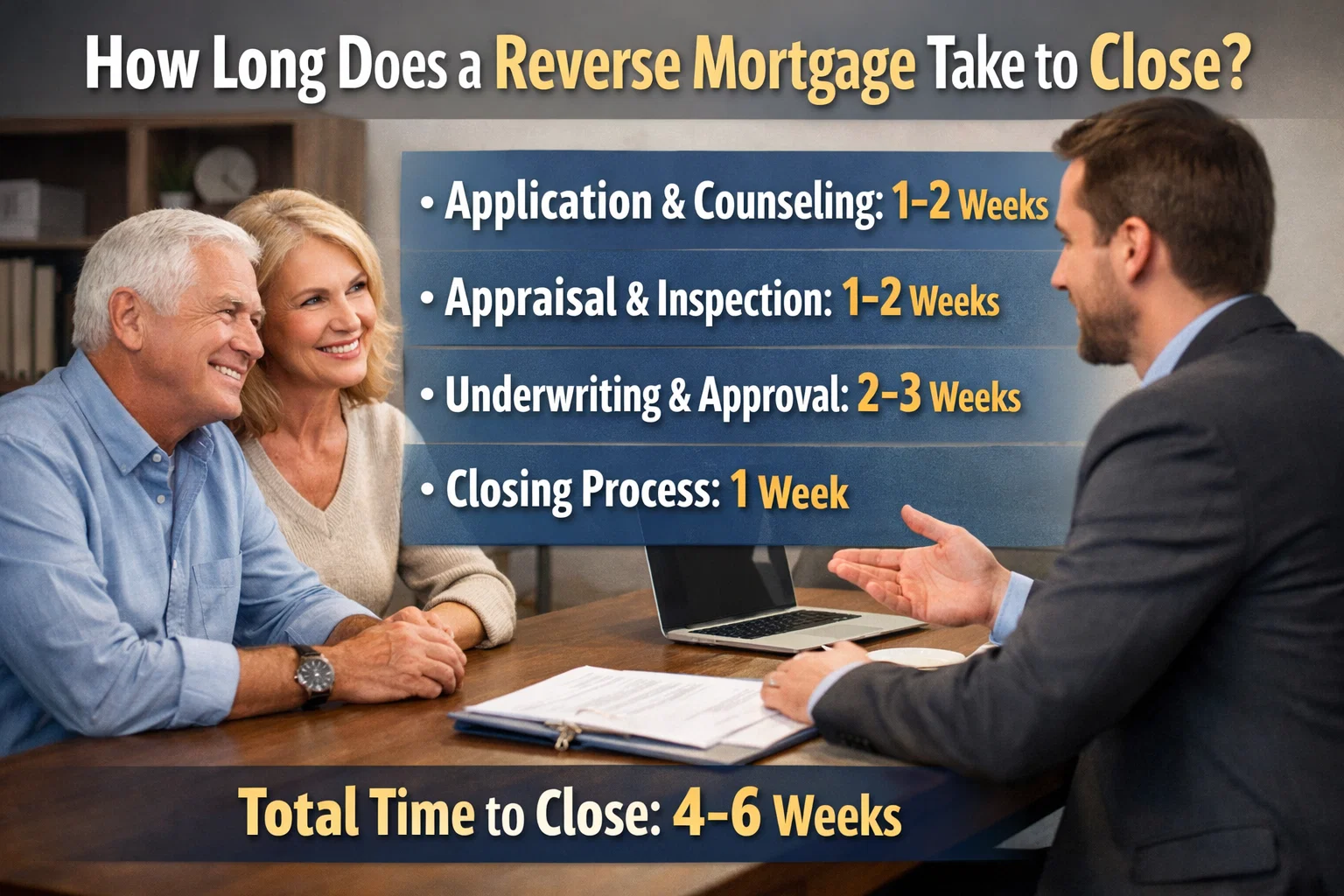
For many homeowners aged 62 and older, a reverse mortgage can provide financial flexibility during retirement. Whether the goal is covering medical expenses, supplementing income, or eliminating an existing mortgage payment, understanding the process is essential. One of the most common questions borrowers ask is: how long does a reverse mortgage take to close?
The answer depends on several moving parts, including counseling requirements, property appraisal, underwriting review, and final loan approval. On average, most reverse mortgage loans close within 30 to 60 days, though certain circumstances may extend that timeline. This guide walks you through each stage of the process, explains potential delays, and offers practical tips to help ensure a smooth closing.
Understanding Reverse Mortgages Before the Timeline
A reverse mortgage, most commonly the Home Equity Conversion Mortgage (HECM) insured by the Federal Housing Administration (FHA), allows eligible homeowners to convert part of their home equity into cash. Unlike a traditional mortgage, borrowers are not required to make monthly principal and interest payments. Instead, the loan balance increases over time and is repaid when the borrower sells the home, moves out permanently, or passes away.
Before diving deeper into how long does a reverse mortgage take to close, it is important to understand that this loan type involves additional safeguards. Because it is designed for seniors, federal regulations require independent counseling and strict underwriting standards. These protections add time to the process but ensure borrowers fully understand their obligations.
Average Timeline: How Long Does a Reverse Mortgage Take to Close?
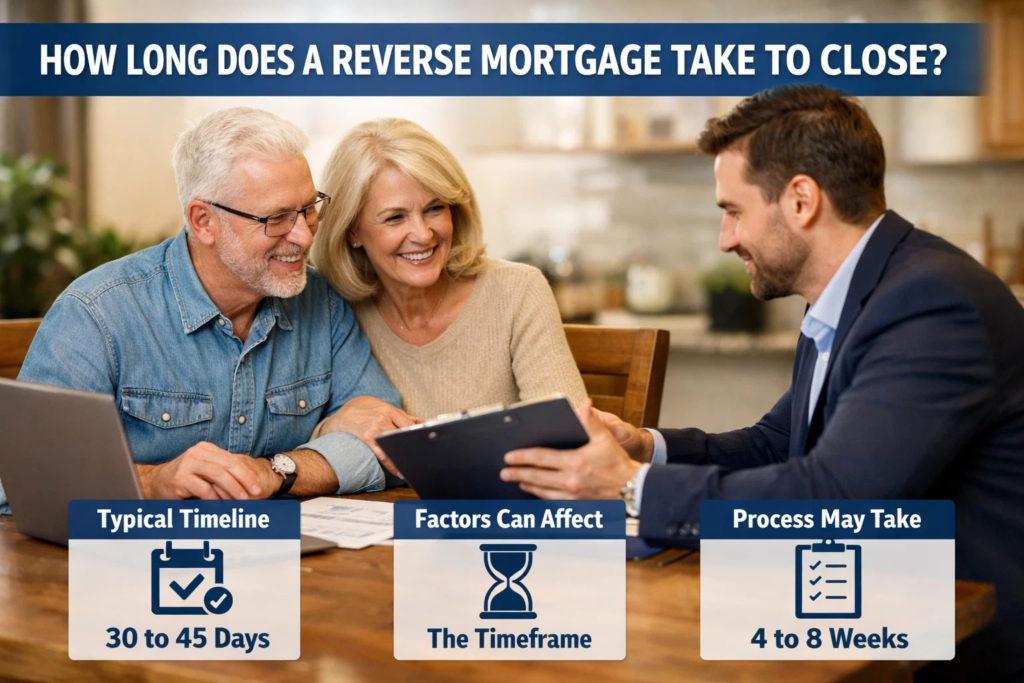
How long does a reverse mortgage take to close? In most cases, the complete process takes four to eight weeks from application to funding. Some lenders complete straightforward files in closer to 30 days, while complex cases may take 60 days or slightly longer. Unlike conventional refinance loans that may close faster, reverse mortgages involve mandatory counseling and property review steps.
The timeline is influenced by factors such as property condition, borrower documentation, and lender efficiency. Government-backed HECM loans follow specific compliance guidelines that must be carefully reviewed. Although waiting can feel lengthy, each stage is designed to protect the borrower and ensure long-term sustainability of the loan.
Step-by-Step Breakdown of the Reverse Mortgage Process
Understanding how long does a reverse mortgage take to close, the stages helps clarify what happens behind the scenes. Each phase plays a role in determining how quickly your loan moves toward closing.
Initial Consultation and Application
The journey begins with a consultation with a licensed reverse mortgage specialist. During this conversation, the lender explains eligibility requirements, loan options, payout structures, and estimated proceeds. Borrowers must be 62 years or older, occupy the home as their primary residence, and maintain sufficient equity.
Once the application is submitted, the lender collects basic financial information, including proof of income, property tax statements, homeowners insurance details, and identification documents. How long does a reverse mortgage take to close? This early stage usually takes a few days to one week, depending on how quickly documents are provided. Prompt submission of paperwork can significantly reduce delays later in the process.
Mandatory HUD-Approved Counseling
One of the defining features of a HECM loan is the requirement for independent counseling through a HUD-approved counseling agency. This session ensures borrowers understand loan terms, repayment obligations, and potential alternatives.
How long does a reverse mortgage take to close? Counseling typically lasts 60 to 90 minutes and may be conducted by phone or in person. After completion, the borrower receives a certificate required for loan processing. Scheduling availability can impact the timeline, especially during peak periods. Most borrowers complete this step within one week of application, but waiting for an appointment may add extra days. While this requirement adds time, it provides critical consumer protection.
Home Appraisal and Property Evaluation
After counseling is complete, the lender orders a professional home appraisal. The appraiser evaluates the property’s condition, location, and market value to determine how much equity is available.
How long does a reverse mortgage take to close? Appraisals generally take one to two weeks, depending on local market demand. In busy housing markets, scheduling may take longer. If the appraisal identifies necessary repairs to meet FHA property standards, the borrower must address them before closing. Repairs can extend the process by several weeks. Because loan proceeds are based on the appraised value, this step is central to determining final eligibility and loan amount.
Financial Assessment and Underwriting Review
Although reverse mortgages do not require monthly payments, lenders must conduct a financial assessment to confirm borrowers can meet ongoing obligations such as property taxes, insurance, and maintenance. This review includes income verification, credit history evaluation, and debt analysis.
Underwriting usually takes one to two weeks, depending on file complexity. How long does a reverse mortgage take to close? If additional documentation is requested, timely responses prevent unnecessary delays. The underwriter ensures compliance with FHA guidelines and confirms all required disclosures have been completed. This stage often determines whether the loan proceeds smoothly or requires further clarification.
Loan Approval and Closing Preparation
How long does a reverse mortgage take to close? Once underwriting conditions are satisfied, the lender issues a final approval and prepares closing documents. A closing date is scheduled, and a notary or escrow officer meets with the borrower to sign paperwork.
Document preparation typically takes several days. Borrowers should review closing disclosures carefully to understand loan terms, interest rates, and payment options. The signing appointment itself may last about an hour. After signing, the loan enters a mandatory waiting period before funds are disbursed.
Three-Day Right of Rescission
Federal law provides a three-business-day right of rescission for reverse mortgage borrowers. This means homeowners have three days after signing to cancel the loan without penalty.
Funds cannot be released until this rescission period expires. While this requirement extends the timeline slightly, it ensures borrowers have time to reconsider their decision. How long does a reverse mortgage take to close? Once the rescission window closes, the lender proceeds with funding. This final safeguard reflects the regulatory emphasis on consumer protection in reverse mortgage lending.
Funding and Disbursement
After the rescission period, funds are disbursed according to the chosen payment plan. Borrowers may select a lump sum, monthly payments, line of credit, or a combination.
Funding usually occurs within a few days after rescission, meaning total time from application to funding averages about 30 to 60 days. At this stage, the process is officially complete. How long does a reverse mortgage take to close? The borrower begins receiving proceeds, and the loan balance accrues interest over time.
Key Factors That Affect Closing Time
Although the average timeframe is consistent, several variables influence how long the process ultimately takes.
Property Condition and Repairs
How long does a reverse mortgage take to close? If the appraisal reveals issues such as roof damage, structural concerns, or safety hazards, repairs must be completed before closing. Coordinating contractors and inspections can add weeks to the timeline. Well-maintained homes generally move through underwriting faster.
Borrower Responsiveness
How long does a reverse mortgage take to close? Promptly providing required documentation significantly reduces delays. Missing bank statements, unsigned disclosures, or incomplete tax records can stall underwriting. Staying organized and responsive helps maintain momentum.
Lender Efficiency and Workload
Some lenders specialize in reverse mortgages and maintain streamlined processes. Others may experience backlogs during high-demand periods. Choosing an experienced lender often improves efficiency and communication.
Title Issues or Liens
Title searches ensure the property is free of unresolved liens or ownership disputes. If legal issues appear, they must be cleared before closing. Title complications are one of the less common but more serious causes of delay.
Government and FHA Requirements
Because most reverse mortgages are FHA-insured HECMs, strict compliance reviews are required. Any discrepancies in documentation can trigger additional review time. While these safeguards may extend the process slightly, they protect both borrower and lender.
Comparing Reverse Mortgage Closing Times to Other Loans
Compared to traditional refinance loans, reverse mortgages may take slightly longer due to counseling and federal compliance steps. Conventional refinances sometimes close in 30 days or less, while reverse mortgages often average closer to 45 days.
However, how long does a reverse mortgage take to close, reverse mortgages typically involve less income qualification pressure and no monthly payment requirements. The added time primarily results from consumer protection measures. Understanding this difference helps set realistic expectations when planning finances.
Tips to Help Speed Up the Process
Although certain factors are unavoidable, borrowers can take proactive steps to prevent delays.
Schedule counseling immediately after applying to avoid waiting periods. Gather financial documents early, including Social Security statements and insurance records. Address potential home maintenance issues before appraisal if possible. How long does a reverse mortgage take to close, Communicate regularly with your lender and respond promptly to document requests.
These actions cannot guarantee a shorter timeline, but they often keep the process closer to the lower end of the 30-to-60-day range.
Why the Timeline Is Designed to Protect Borrowers
Some borrowers worry that the process feels lengthy. However, how long does a reverse mortgage take to close, each stage exists for a reason. Reverse mortgages are complex financial products that affect long-term home equity and inheritance planning.
The HUD counseling requirement, financial assessment, and rescission period ensure informed decision-making. These safeguards prevent misunderstandings and reduce the risk of financial hardship. While waiting may require patience, it ultimately supports responsible lending and borrower protection.
Common Misconceptions About Reverse Mortgage Closings
Many people assume reverse mortgages close as quickly as personal loans. In reality, they involve real estate transactions, appraisals, title work, and government oversight. Others believe funds are available immediately after signing, not realizing the three-day rescission rule applies.
Another misconception is that poor credit automatically disqualifies applicants. While credit history is reviewed, the primary focus is on the ability to meet property-related obligations. How long does a reverse mortgage take to close? Understanding these details prevents unrealistic expectations about how long does a reverse mortgage take to close.
Conclusion
So, how long does a reverse mortgage take to close? In most cases, borrowers can expect the process to take 30 to 60 days, depending on property condition, documentation readiness, and lender efficiency. While some straightforward cases close in about a month, more complex situations may extend beyond two months.
The timeline includes application, counseling, appraisal, underwriting, approval, signing, and a mandatory rescission period. Each step ensures compliance with FHA regulations and protects homeowners from rushed decisions. By staying organized, responding quickly to document requests, and understanding the process, borrowers can move confidently toward closing. Patience during this period often leads to a smoother, more secure financial outcome in retirement.
Frequently Asked Questions (FAQs)
1. Can a reverse mortgage close in 30 days?
Yes, some straightforward cases close in about 30 days, but many take 45 to 60 days due to counseling and appraisal requirements.
2. What causes delays in reverse mortgage approval?
Common delays include required home repairs, incomplete documentation, title issues, and underwriting review requests.
3. Is counseling mandatory for all reverse mortgages?
For FHA-insured HECM loans, counseling through a HUD-approved agency is required before processing continues.
4. When do borrowers receive funds?
Funds are disbursed after closing and once the three-day rescission period expires, typically within a few days.
5. Does credit score affect closing time?
Credit history is reviewed as part of the financial assessment, but income stability and ability to pay taxes and insurance are more important factors.
6. Can the process move faster if I pay off repairs quickly?
Yes, completing required repairs promptly can significantly reduce delays and keep the timeline on track.
For More Update and Stories Visit Daily Guides