
 Admin
Admin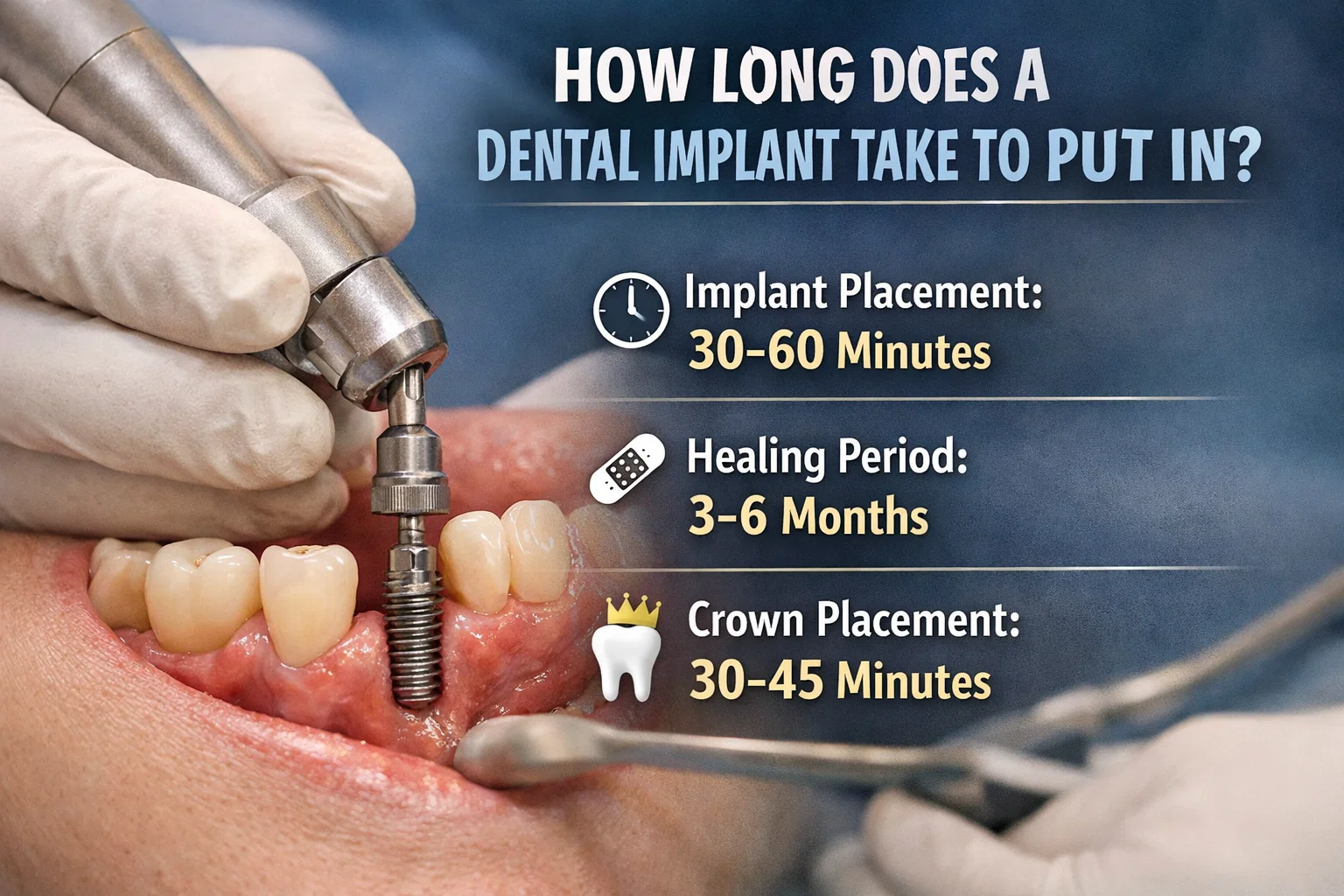
Dental implants have transformed modern dentistry, offering a long-lasting and natural-looking solution for missing teeth. If you’re considering this procedure, one of the first questions you’ll likely ask is: how long does a dental implant take to put in? The answer isn’t as simple as a single number. While the actual surgical placement may take less than two hours, the entire process—from consultation to final crown—can span several months.
Understanding how long does a dental implant take to put in, the timeline helps you prepare physically, financially, and emotionally. In this comprehensive guide, we’ll walk you through every stage, explain what affects healing time, and clarify what you can expect at each step. By the end, you’ll have a clear, realistic understanding of how dental implant treatment works.
Understanding Dental Implants: What Happens During the Procedure?
A dental implant is a small, screw-like post typically made of titanium or zirconia that replaces a missing tooth root. It is surgically placed into the jawbone, where it fuses naturally with bone tissue in a process called osseointegration. Once healed, the implant supports a crown, bridge, or denture.
The procedure is usually performed under local anesthesia, and many patients report that it feels similar to having a tooth extracted. The implant is carefully inserted into the jawbone through a small incision in the gum. How long does a dental implant take to put in, After placement, the site is closed with stitches, and healing begins. While the surgical portion may take 30 to 90 minutes per implant, the total treatment time depends on your oral health and whether additional procedures are needed.
How Long Does a Dental Implant Take to Put In? The Short Answer
When patients ask how long does a dental implant take to put in, they often mean the surgical appointment itself. In most cases, placing a single implant takes about one hour. More complex cases involving multiple implants or bone grafting may take longer, sometimes up to two hours.
However, How long does a dental implant take to put in, the complete journey—from consultation to final crown placement—typically lasts three to six months, and sometimes longer. This timeframe allows for proper healing and bone integration. Rushing the process can compromise long-term success, so dentists prioritize stability and safety over speed. While same-day implants are possible for select candidates, traditional treatment remains the most reliable approach for lasting results.
Step-by-Step Breakdown of the Dental Implant Timeline
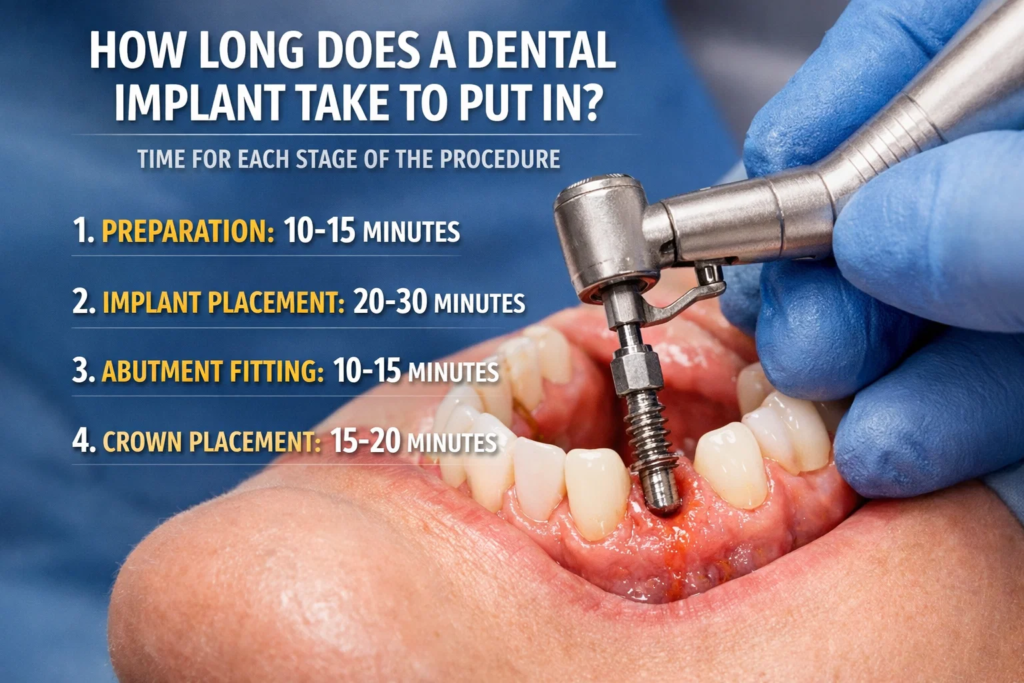
To better understand the full duration, let’s break down the dental implant process into stages. Each step plays a vital role in ensuring long-term success.
Initial Consultation and Evaluation (1–2 Weeks)
The journey begins with a thorough consultation. During this appointment, your dentist examines your mouth, reviews medical history, and may take digital X-rays or 3D CBCT scans. These images help evaluate bone density, gum health, and implant placement options.
How long does a dental implant take to put in? If additional procedures are needed—such as tooth extraction or bone grafting—they will be discussed during this visit. Treatment planning may take one to two weeks, especially if laboratory coordination is required. This stage ensures a customized approach tailored to your oral anatomy and health conditions.
Tooth Extraction (If Required) – 1 to 2 Weeks Healing
If the damaged or decayed tooth is still present, it must be removed before implant placement. In some cases, the implant can be inserted immediately after extraction. However, How long does a dental implant take to put in, many dentists prefer allowing the site to heal for one to two weeks, depending on infection or inflammation.
Simple extractions heal relatively quickly, while complicated cases may require additional recovery time. Healing ensures that the bone and gum tissue are stable before proceeding. Your dentist will monitor the site carefully before scheduling the next stage of treatment.
Bone Grafting (If Necessary) – 3 to 6 Months Healing
Not all patients require bone grafting, but it becomes necessary if there isn’t enough jawbone to support the implant. Bone loss can occur due to gum disease, trauma, or long-term tooth loss.
How long does a dental implant take to put in, A bone graft strengthens and rebuilds the jaw structure. Healing can take anywhere from three to six months, depending on the size of the graft. While this extends the overall timeline, it significantly improves implant stability and long-term success rates, which are typically above 95 percent in healthy individuals.
Implant Placement Surgery – 30 to 90 Minutes
This is the core surgical step. During the appointment, the implant post is placed into the jawbone. The procedure is typically painless due to local anesthesia, and mild discomfort afterward is manageable with medication.
For a single implant, How long does a dental implant take to put in, the process usually takes about one hour. Multiple implants require additional time. After placement, a healing cap may be attached to shape the gum tissue. Stitches are removed after about 7 to 10 days, and the healing phase begins.
Osseointegration – 3 to 6 Months
Osseointegration is the biological process where the implant fuses with the jawbone. This stage is crucial because it determines the implant’s strength and durability. How long does a dental implant take to put in, During this period, the bone cells grow around the implant, securing it firmly in place.
Healing time varies based on age, health, and bone density. Most patients require three to six months for full integration. Although this waiting period may feel long, it ensures the implant can withstand chewing pressure like a natural tooth.
Abutment Placement – 2 to 4 Weeks Healing
How long does a dental implant take to put in? Once the implant has fully integrated, an abutment is attached. This small connector piece links the implant to the final crown. The dentist reopens the gum slightly to attach the abutment, then allows the tissue to heal around it.
This stage typically requires two to four weeks of healing before the final restoration is placed. Temporary crowns may be used during this period for aesthetic purposes.
Crown Placement – Final Appointment
The final step is attaching the custom-made dental crown. This crown is designed to match the color, shape, and size of your natural teeth. Once secured, the implant looks and functions like a real tooth.
The crown placement appointment usually takes less than one hour. After this, your treatment is complete. Regular brushing, flossing, and dental checkups will help maintain your new smile for decades.
Factors That Influence How Long the Process Takes
Several variables affect the overall timeline. Understanding these factors helps set realistic expectations.
Bone quality and density play a major role. Patients with strong, healthy jawbone heal faster. Those with bone loss may require grafting, extending treatment time.
Oral hygiene and general health also matter. Conditions such as diabetes or smoking habits can slow healing and increase complication risks. Maintaining excellent oral care accelerates recovery.
The number of implants placed impacts surgical duration. Replacing multiple teeth naturally takes longer than placing a single implant. Additionally, advanced techniques such as immediate-load implants may shorten timelines but are not suitable for everyone.
Same-Day Dental Implants: Are They Faster?
Some clinics offer same-day or immediate-load implants, where a temporary crown is placed on the same day as surgery. While this reduces visible waiting time, it does not eliminate the healing process. The implant still requires months for osseointegration.
Immediate implants are ideal for patients with strong bone density and no infection. However, they may not be suitable for complex cases. Your dentist will determine whether you qualify for this accelerated approach. Traditional implants remain the gold standard for predictable long-term success.
Recovery Time After Implant Surgery
Recovery after implant placement is generally mild. Most patients return to normal activities within 24 to 48 hours. Swelling and minor discomfort may last a few days, but these symptoms are manageable with prescribed medication and cold compresses.
Eating soft foods and maintaining good oral hygiene are essential during early healing. Avoid smoking and strenuous activity for a few days. Following your dentist’s aftercare instructions ensures smooth recovery and reduces complications.
Long-Term Success and Durability
Dental implants are designed to be a permanent tooth replacement solution. With proper care, they can last 20 years or more, often a lifetime. Studies consistently show success rates above 95 percent in healthy patients.
Regular dental checkups and professional cleanings protect both the implant and surrounding gum tissue. Unlike dentures, implants do not slip or require adhesives. Their stability makes them one of the most reliable restorative treatments available today.
Conclusion
So, how long does a dental implant take to put in? The surgical placement usually takes about one hour, but the complete treatment process can span three to six months or longer. The timeline depends on healing, bone condition, and additional procedures like grafting.
Although the waiting period may seem lengthy, it ensures durability, strength, and natural function. Dental implants remain one of the most advanced and successful solutions for tooth replacement. By understanding each stage, you can confidently plan your treatment and look forward to a restored, healthy smile that lasts for decades.
Frequently Asked Questions
1. Is dental implant surgery painful?
Most patients report minimal discomfort. The procedure is performed under local anesthesia, and post-surgery pain is usually mild and manageable with medication.
2. Can I get a dental implant immediately after extraction?
In some cases, yes. Immediate placement is possible if there is no infection and sufficient bone support. Your dentist will evaluate your eligibility.
3. Why does the process take several months?
The waiting period allows for osseointegration, where the implant fuses with the jawbone. This step ensures stability and long-term success.
4. How soon can I eat normally after surgery?
Soft foods are recommended for a few days. Most patients resume a normal diet within one to two weeks, depending on healing progress.
5. What happens if I don’t have enough bone?
A bone graft may be required to strengthen the jaw. Healing from grafting can take three to six months before implant placement.
6. Are dental implants permanent?
Yes. With proper care, implants can last 20 years or more and often remain functional for a lifetime.
7. Does age affect healing time?
Age alone is not a limiting factor. Overall health, bone quality, and oral hygiene have a greater impact on healing duration.
For More Update and Stories Visit Daily Guides