 Admin
Admin
Dermal fillers have become one of the most popular non-surgical cosmetic treatments worldwide, offering quick enhancements with minimal downtime. Yet one question consistently concerns first-time and returning patients alike: how long do fillers take to settle? The answer is not always immediate or straightforward, because fillers interact with facial tissue in stages rather than delivering instant final results. Swelling, fluid shifts, and tissue adaptation all play a role in how the treated area evolves after injection. Understanding the settling timeline helps reduce anxiety, set realistic expectations, and prevent unnecessary touch-ups. This guide explains the entire process in detail, from the first 24 hours to the final refined look.
What Does “Settling” Mean in Dermal Fillers?
How long do fillers take to settle? When professionals talk about fillers “settling,” they are referring to the period during which the injected material integrates with surrounding tissue. Immediately after treatment, fillers may appear uneven, overfilled, or firmer than expected. This is normal. Settling involves the reduction of swelling, redistribution of hyaluronic acid or other substances, and muscle relaxation around the area. The skin and deeper tissues gradually adjust to the added volume. This process varies by individual, injection site, and filler type. Settling does not mean the filler is moving uncontrollably; rather, it is stabilizing naturally as inflammation subsides and hydration levels normalize within the skin.
Average Timeline: How Long Do Fillers Take to Settle?
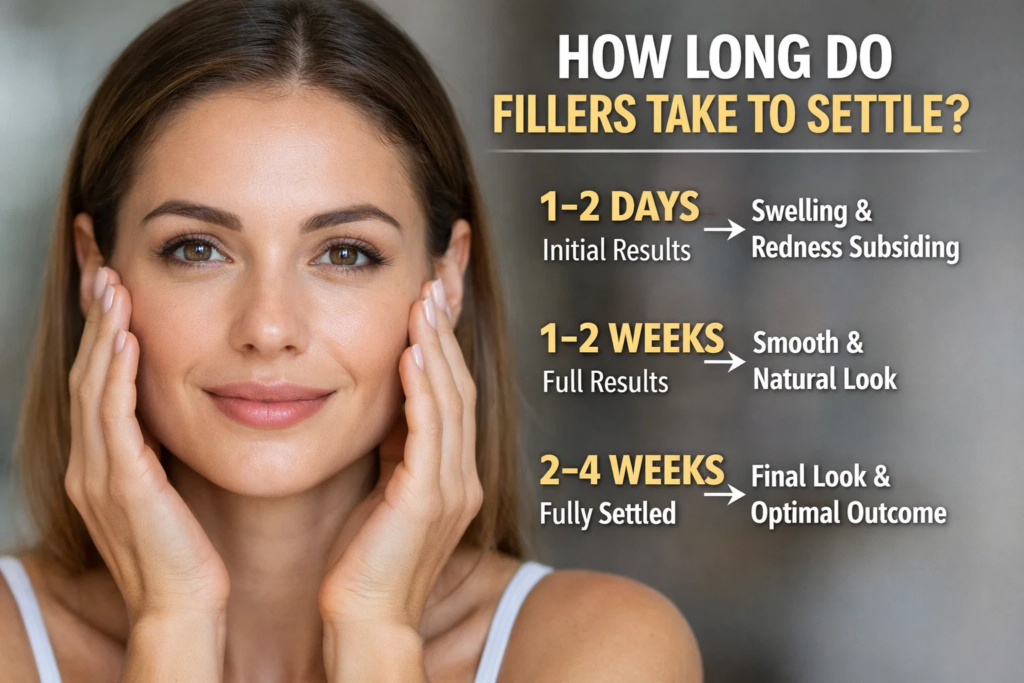
For most people, fillers begin to look more natural within 7 to 14 days, with full settling typically completed by two to four weeks. How long do fillers take to settle? During this time, swelling diminishes, firmness softens, and facial expressions feel more natural. When patients ask how long do fillers take to settle, practitioners emphasize patience, as early impressions can be misleading. The body needs time to respond to micro-trauma from injections and to balance fluid retention. While some areas, like lips, may appear settled sooner, others such as cheeks or jawline often require more time due to thicker tissue and deeper placement.
The First 24 to 72 Hours After Fillers
The initial phase after filler injections is often the most visually dramatic. How long do fillers take to settle? Mild to moderate swelling, redness, and tenderness are common during the first 24 to 72 hours. Some patients also experience bruising, particularly in areas with dense blood vessels like the lips or under-eyes. This stage does not reflect final results, as inflammation temporarily exaggerates volume. Applying cold compresses, staying hydrated, and avoiding strenuous activity can help minimize swelling. During this period, fillers may feel firm or uneven to the touch. These sensations usually resolve naturally as the body begins the healing response.
Days 3 to 7: Early Adjustment Phase
Between days three and seven, swelling continues to decrease, and the treated area begins to look more balanced. Bruising fades, and firmness gradually softens. How long do fillers take to settle? Patients often notice that asymmetry seen earlier starts to resolve on its own. This is a key phase in understanding how long do fillers take to settle, as the filler is now integrating with surrounding tissue rather than sitting superficially. Facial movements feel more natural, though slight tightness may remain. Most people can comfortably return to social activities during this period, as visible signs of treatment become increasingly subtle and manageable.
Weeks 2 to 4: Full Settling and Refinement
By the second to fourth week, fillers typically reach their final appearance. Swelling has resolved, texture feels smoother, and volume appears more proportionate. This is considered the true result of the treatment, and it is the ideal time for follow-up assessments. Any minor adjustments, if needed, are usually planned at this stage. Understanding this timeline prevents premature dissatisfaction or overcorrection. During this phase, the filler has fully bonded with surrounding tissues, and facial contours appear refined rather than enhanced. For most patients, this is when confidence in the results peaks.
How Filler Type Affects Settling Time
Different filler materials influence how quickly results stabilize. Hyaluronic acid fillers, commonly used for lips and fine lines, tend to settle faster due to their compatibility with natural skin hydration. Calcium-based fillers or poly-L-lactic acid stimulators may take longer, as they stimulate collagen production over time. Thicker fillers designed for structural support, such as jawline or cheek enhancement, also require longer settling periods. The chemical composition, density, and injection depth all affect how long the filler integrates. Knowing the filler type used helps clarify why timelines differ between patients and treatment areas.
Injection Area and Its Role in Settling
The location of filler placement significantly impacts settling duration. Lips, for example, often swell more initially due to their vascular nature but also tend to settle relatively quickly. Cheeks and jawline involve deeper tissue layers, which may take longer to adapt. Under-eye fillers require cautious placement and extended observation, as swelling can persist subtly. Each facial area responds differently based on skin thickness, muscle movement, and blood supply. This variation explains why some results appear stable sooner than others, even when the same filler is used across multiple areas.
Individual Healing Response and Lifestyle Factors
Every individual heals differently, and this personal response plays a major role in settling time. Factors such as age, metabolism, hydration levels, and immune response influence how quickly swelling subsides. Lifestyle choices also matter. Smoking, alcohol consumption, poor sleep, and high sodium intake can prolong inflammation. Conversely, proper hydration, gentle skincare, and balanced nutrition support faster recovery. Understanding how long do fillers take to settle requires acknowledging that timelines are averages, not guarantees. A healthy lifestyle often results in smoother, more predictable outcomes.
Common Sensations During the Settling Period
During the settling phase, patients may notice sensations such as firmness, mild itching, or slight tenderness. These feelings are typically temporary and indicate tissue adjustment rather than complications. Small lumps or unevenness may be felt early on, especially with thicker fillers, but often resolve as swelling decreases. It is important not to massage or manipulate the area unless instructed by a professional. Awareness of normal sensations helps reduce unnecessary concern and prevents actions that could disrupt the settling process. Most sensations gradually fade within the first two weeks.
What Is Not Normal During Filler Settling?
While many post-treatment effects are normal, certain signs require professional evaluation. Persistent pain, increasing redness, severe asymmetry, or skin discoloration beyond expected bruising are not typical. Symptoms that worsen after several days rather than improve should be assessed promptly. Vascular complications, though rare, require immediate attention. Understanding normal versus abnormal responses helps patients feel confident while staying alert. Knowing how long do fillers take to settle also includes recognizing when settling is not progressing as expected and when expert advice is necessary.
How Aftercare Influences Settling Time
Proper aftercare can significantly influence how smoothly fillers settle. Avoiding intense exercise, heat exposure, and alcohol for at least 24 to 48 hours reduces swelling. Sleeping with the head elevated and avoiding pressure on treated areas helps maintain even distribution. Gentle skincare and sun protection support healing. Following aftercare instructions is one of the most controllable factors in the settling process. Patients who adhere closely to guidance often experience faster stabilization and more predictable results. Aftercare is not optional; it is an extension of the treatment itself.
The Role of Touch-Ups and Follow-Up Visits
Follow-up appointments are typically scheduled two to four weeks after treatment, once fillers have settled. These visits allow professionals to assess symmetry, volume, and overall balance. Minor touch-ups, if needed, are performed conservatively to refine results. Rushing adjustments before settling is complete can lead to overfilling. Understanding how long do fillers take to settle helps patients appreciate the value of waiting before making changes. Follow-ups ensure results align with expectations while maintaining safety and natural aesthetics.
Psychological Adjustment to Filler Results
Beyond physical changes, emotional adjustment is an often-overlooked part of the settling process. Seeing one’s face change, even subtly, can feel unfamiliar at first. Temporary anxiety or doubt is common, especially during early swelling. As fillers settle and results soften, confidence usually increases. Educating patients about the emotional side of cosmetic treatments fosters realistic expectations and satisfaction. Time allows not only the filler but also the individual’s perception to settle. This psychological adaptation is a natural and important part of the overall experience.
Long-Term Stability After Fillers Settle
Once fully settled, fillers typically maintain a stable appearance for several months, depending on the product used and individual metabolism. Most hyaluronic acid fillers last six to eighteen months, gradually breaking down over time. Settling marks the beginning of this stable phase, where results look consistent and natural. Understanding the full timeline helps patients plan future treatments responsibly. Maintenance schedules are best discussed after the settling period, when outcomes can be accurately evaluated. Long-term satisfaction begins with patience during the initial weeks.
Conclusion
Understanding how long do fillers take to settle is essential for anyone considering or recovering from dermal filler treatment. While initial changes are visible immediately, true results emerge gradually over two to four weeks as swelling subsides and tissues adapt. Factors such as filler type, injection area, individual healing, and aftercare all influence this timeline. Patience during the settling phase prevents unnecessary worry and ensures safer, more satisfying outcomes. By respecting the natural healing process and following professional guidance, patients can enjoy refined, balanced results that enhance confidence and facial harmony.
Frequently Asked Questions (FAQs)
How long do fillers take to settle completely?
Most fillers settle fully within two to four weeks, although subtle refinement may continue slightly beyond this period depending on the area treated.
Can fillers look uneven while settling?
Yes, temporary unevenness or swelling is common during the first week and usually resolves without intervention as inflammation decreases.
Do lips take longer to settle than cheeks?
Lips often swell more initially but usually settle faster than cheeks, which involve deeper tissue and structural support.
Should I massage my fillers to help them settle?
Only massage if explicitly instructed by a professional. Unnecessary manipulation can disrupt placement and prolong settling.
When should I worry if fillers don’t feel right?
If pain, redness, or asymmetry worsens after several days, professional evaluation is recommended to rule out complications.
Does age affect how long fillers take to settle?
Yes, slower healing and reduced collagen in older skin may slightly extend the settling period compared to younger individuals.
For More Update and Stories Visit Daily Guides