 Admin
Admin
A vanity mirror is more than a decorative element; it is a functional centerpiece that affects comfort, lighting, and overall bathroom balance. Many homeowners underestimate how much impact correct mirror placement can have on daily routines such as grooming, makeup application, or shaving. Hanging it too high strains the neck, while placing it too low disrupts visual harmony. Understanding how high to hang a vanity mirror ensures usability for everyone in the household while enhancing the bathroom’s design. This guide walks you through professional standards, design principles, and practical considerations so your mirror looks intentional, feels comfortable, and complements your vanity perfectly without trial and error.
Why Vanity Mirror Height Matters More Than You Think
Mirror height influences ergonomics, aesthetics, and long-term comfort. A mirror positioned at the wrong height can cause daily inconvenience, especially in shared bathrooms. Eye-level alignment is essential so users do not need to bend or stretch. From a design perspective, incorrect placement can make a vanity appear off-center or cramped. Proper height also ensures that wall sconces or overhead lights reflect evenly, improving visibility. Whether the bathroom is modern, traditional, or minimalist, mirror placement sets visual balance. How high to hang a vanity mirror, A well-positioned mirror visually enlarges the space, reflects natural light, and aligns seamlessly with cabinetry, creating a polished and professional finish that feels custom-built.
Standard Guidelines for Vanity Mirror Placement
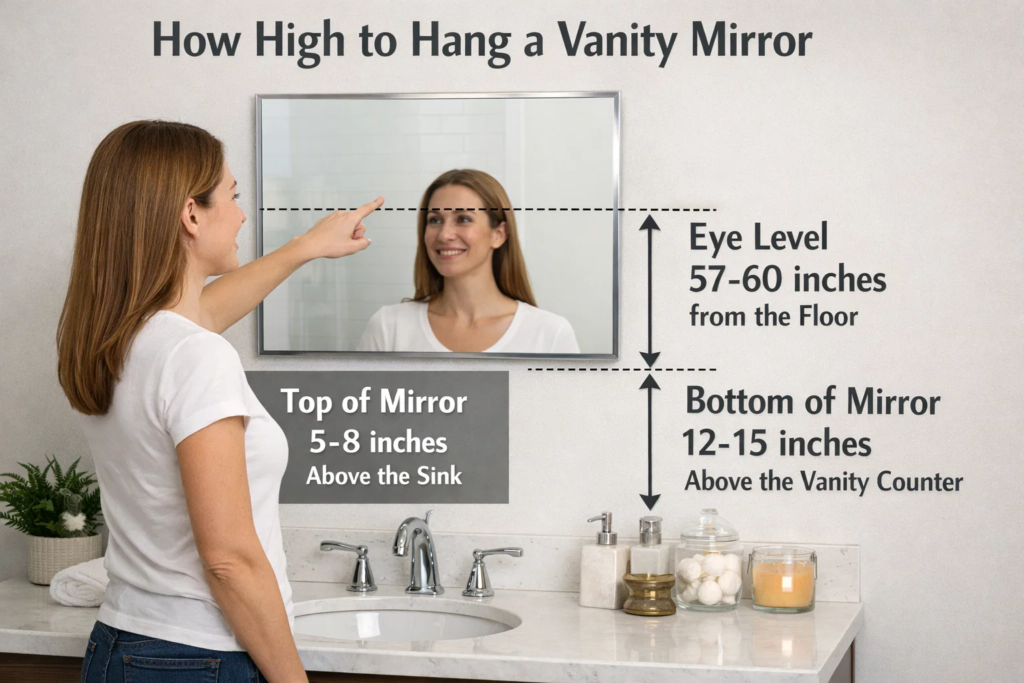
Interior designers generally follow tried-and-tested height guidelines. The center of the mirror should sit at approximately 57–65 inches from the floor, aligning with the average adult eye level. Another reliable method is positioning the bottom edge 5–10 inches above the vanity countertop, depending on mirror size. How high to hang a vanity mirror, these measurements ensure the mirror remains functional without clashing with faucets or backsplashes. While standards provide a starting point, they are not rigid rules. Ceiling height, vanity dimensions, and user height all influence final placement. Treat these numbers as flexible benchmarks rather than strict requirements, adjusting slightly to suit your bathroom’s proportions and daily users.
How High to Hang a Vanity Mirror Above the Sink
When focusing specifically on how high to hang a vanity mirror above the sink, the key is vertical balance. The mirror should feel visually connected to the vanity without touching it. Leaving adequate space prevents water splashes from damaging the mirror edge and allows room for accessories like soap dispensers. For most bathrooms, maintaining 6–8 inches of clearance between the countertop and mirror bottom works well. This spacing ensures faucets and handles remain visible while the mirror frames the sink area naturally. The goal is to create a single visual unit where vanity, mirror, and lighting feel intentionally aligned rather than stacked randomly.
Adjusting Mirror Height for Different User Heights
Household demographics play a major role in placement decisions. In homes where users vary significantly in height, centering the mirror around the average eye level is usually the most practical compromise. For families with children, a slightly lower placement or a taller mirror allows multiple users to see themselves comfortably. In single-user bathrooms, customization becomes easier. Taller individuals benefit from slightly higher positioning, while shorter users prefer lower alignment. How high to hang a vanity mirror, the best solution often involves selecting a mirror with generous vertical dimensions so it accommodates a wide range of eye levels without needing extreme placement adjustments.
Single Vanity vs Double Vanity Mirror Height Rules
Single and double vanities require different planning approaches. For a single vanity, one centered mirror creates symmetry, and height adjustments focus solely on user comfort. For double vanities, each mirror should be aligned identically to maintain visual consistency across the wall. The spacing between mirrors matters just as much as height, ensuring they do not crowd each other or the lighting fixtures. When determining how high to hang a vanity mirror in double setups, designers typically match the mirror bottoms across both sinks while centering each mirror over its respective basin. This uniformity enhances balance and creates a luxury, hotel-style appearance.
Mirror Size and Shape: How They Affect Placement
Mirror dimensions significantly influence placement decisions. Taller mirrors offer more flexibility, as they can be hung slightly higher or lower without sacrificing usability. Shorter mirrors require more precision to ensure eye-level alignment. Shape also matters; rectangular mirrors often align cleanly with vanities, while round or oval mirrors benefit from careful centering to avoid looking misplaced. How high to hang a vanity mirror, large mirrors can visually raise ceiling height, while smaller mirrors create intimacy. When deciding placement, always consider the mirror’s proportions relative to wall space, vanity width, and ceiling height to ensure it complements rather than overwhelms the room.
Framed vs Frameless Vanity Mirrors
The presence of a frame subtly affects visual height. Framed mirrors add visual weight and often appear lower than frameless ones when mounted at the same measurement. How high to hang a vanity mirror, this means they may need slightly higher placement to avoid looking compressed against the vanity. Frameless mirrors, on the other hand, feel lighter and more modern, blending seamlessly into the wall. When determining placement, measure from the mirror’s reflective surface rather than the frame edge for accuracy. This approach ensures proper eye-level alignment regardless of decorative elements, maintaining both functionality and style.
Lighting Considerations When Hanging a Vanity Mirror
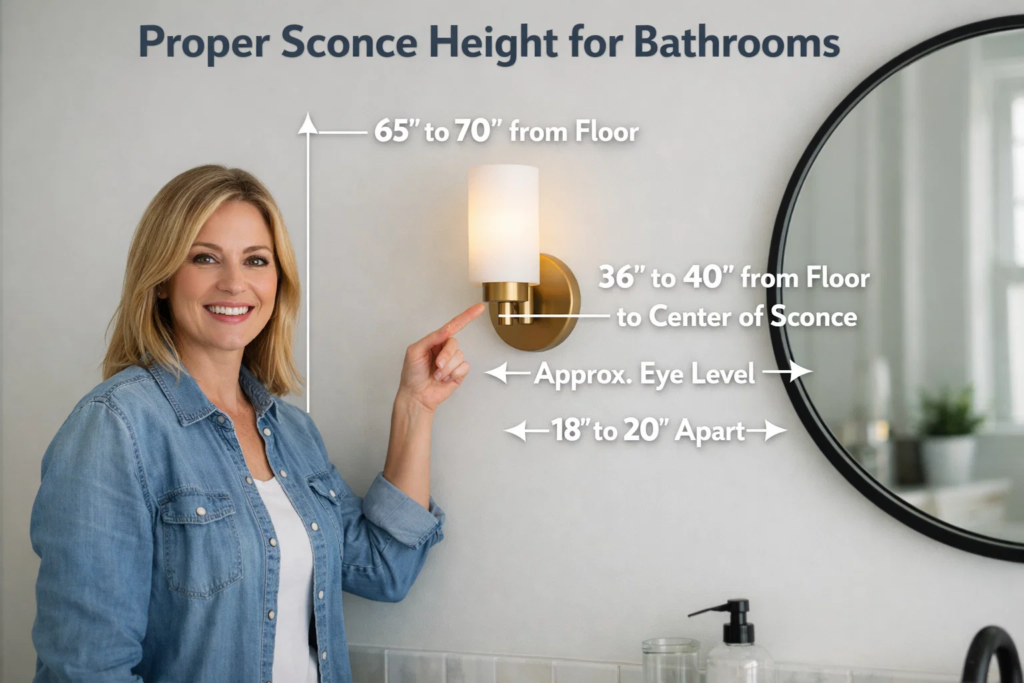
Lighting and mirror placement are inseparable. Wall sconces, overhead fixtures, or integrated LED mirrors all influence final height. Ideally, the mirror should align with lighting so shadows are minimized. Sconces typically sit 65–70 inches from the floor, flanking the mirror vertically. If the mirror is hung too high, light may cast shadows under the eyes or chin. When planning how high to hang a vanity mirror, always consider lighting placement first, then adjust mirror height accordingly. This coordination improves visibility, enhances facial lighting, and creates a cohesive design that feels professionally planned rather than improvised.
Ceiling Height and Bathroom Size Impact
Bathrooms with higher ceilings allow more flexibility, but they also require careful proportioning. How high to hang a vanity mirror, Hanging a mirror too high in a tall bathroom can make the vanity feel disconnected from the wall. In smaller bathrooms, mirrors placed slightly higher can create an illusion of height, making the space feel more open. However, usability should never be sacrificed for visual tricks. Always balance proportion with practicality. The mirror should anchor the vanity visually while reflecting light effectively. Adjustments of just an inch or two can significantly improve both comfort and aesthetics, especially in compact or unusually shaped bathrooms.
Design Styles and Mirror Height Preferences
Different interior styles influence mirror placement subtly. Modern and minimalist bathrooms favor clean lines and precise alignment, often centering mirrors carefully over the vanity. Traditional designs may allow slightly lower placement to emphasize decorative frames. Rustic or farmhouse styles often use larger mirrors hung a bit lower to create warmth and intimacy. While functional guidelines remain consistent, stylistic preferences can justify small deviations. How high to hang a vanity mirror, Understanding these nuances helps tailor placement to match the bathroom’s personality while still respecting ergonomic principles and ensuring daily comfort.
Common Mistakes to Avoid When Hanging Vanity Mirrors
One frequent mistake is mounting the mirror based solely on wall space rather than user height. How high to hang a vanity mirror, Another is ignoring lighting placement, resulting in poor visibility. Hanging the mirror flush against the ceiling or too close to the countertop also disrupts balance. Overlooking the mirror’s size relative to the vanity can make the setup feel awkward. To avoid these issues, always measure carefully, visualize alignment with lighting, and step back to assess proportions before final installation. A few minutes of planning can prevent years of daily inconvenience and visual dissatisfaction.
Professional Installation Tips for Perfect Alignment
Professional installers rely on precise measurements and leveling tools. How high to hang a vanity mirror, Marking eye-level height, vanity centerline, and lighting positions before drilling ensures accuracy. Using painter’s tape to outline the mirror’s position allows you to preview placement visually. Always secure mirrors into studs or use appropriate wall anchors for safety. When determining how high to hang a vanity mirror, professionals double-check measurements from multiple reference points to ensure consistency. This method minimizes errors and guarantees the mirror remains secure, level, and visually aligned for long-term use.
Conclusion
Choosing the correct vanity mirror height blends science, design, and personal comfort. How high to hang a vanity mirror, By understanding eye-level alignment, vanity proportions, lighting placement, and user needs, you can achieve a setup that feels both functional and elegant. The right placement enhances daily routines, improves lighting effectiveness, and elevates your bathroom’s overall aesthetic. Rather than guessing, rely on proven guidelines and thoughtful adjustments. How high to hang a vanity mirror, Once installed correctly, a vanity mirror becomes a seamless part of the space, quietly supporting comfort and style for years to come without drawing attention to itself for the wrong reasons.
Frequently Asked Questions
1. What is the standard height for hanging a vanity mirror?
Most designers recommend centering the mirror 57–65 inches from the floor, aligning with average eye level for comfortable daily use.
2. How much space should be between the vanity and the mirror?
Leaving 5–10 inches between the countertop and mirror bottom creates visual balance and protects the mirror from water exposure.
3. Should a vanity mirror be centered over the sink?
Yes, centering the mirror over the sink ensures symmetry and improves usability, especially in single-sink setups.
4. Does mirror shape affect how high it should be hung?
Absolutely. Taller mirrors offer more flexibility, while shorter or round mirrors require more precise placement to maintain eye-level alignment.
5. Can I hang a vanity mirror higher for design reasons?
Small adjustments are acceptable for style, but functionality should always come first to avoid discomfort during daily use.
6. How do I choose the right height for a family bathroom?
Center the mirror around the average adult eye level or choose a taller mirror that accommodates multiple users comfortably.
For More Update and Stories Visit Daily Guides