 Admin
Admin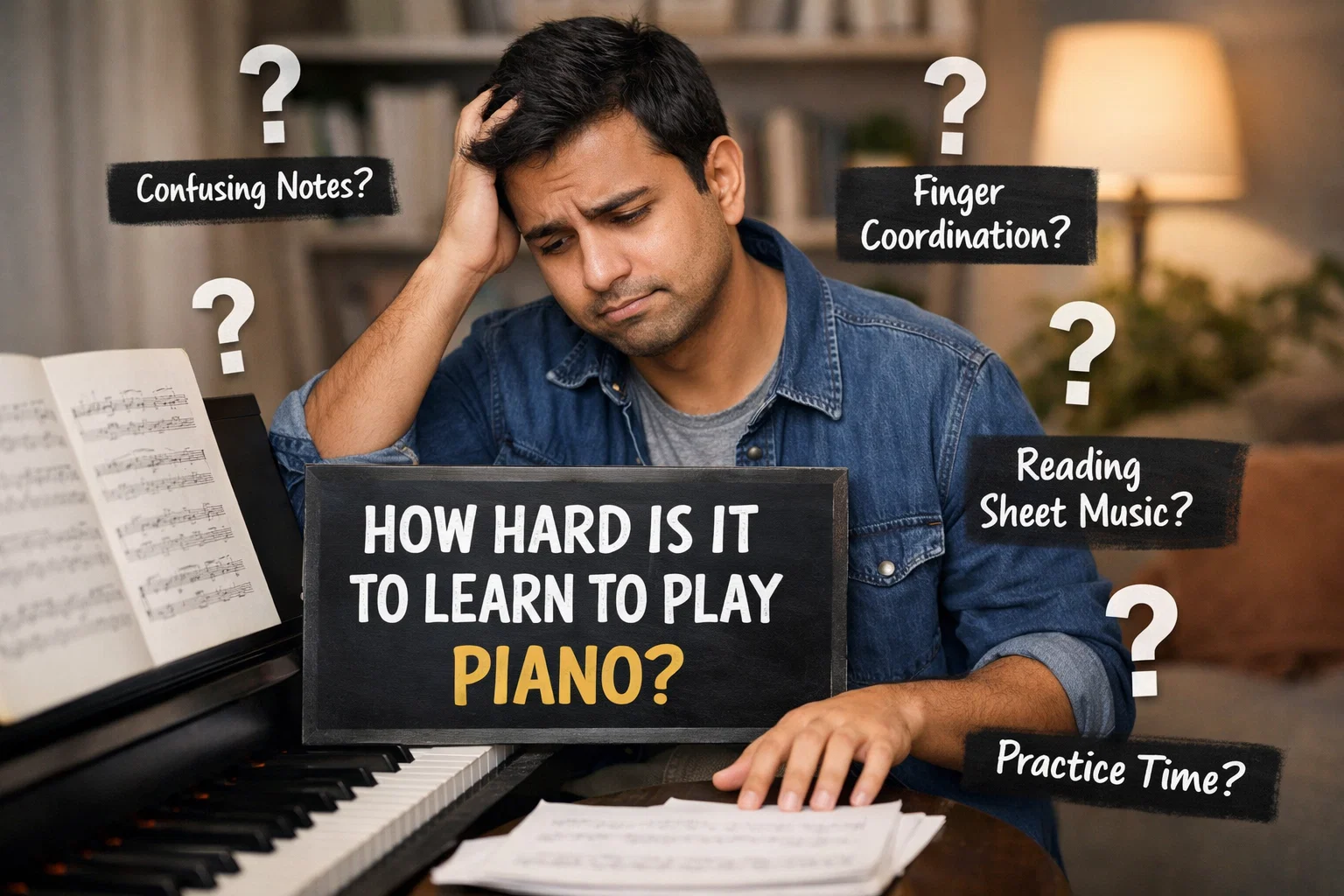
Understanding the Real Difficulty of Learning Piano
Many beginners ask a simple yet emotionally loaded question: how hard is it to learn to play piano? The answer depends less on talent and more on expectations, habits, and guidance. Piano has a unique reputation as both beginner-friendly and deeply complex, which can feel confusing at first. Unlike many instruments, the piano offers instant sound production, making early progress encouraging. At the same time, mastering coordination, rhythm, and musical expression requires patience. This guide breaks down the learning process honestly, using real-world examples and practical insight, so readers can understand what makes piano challenging, what makes it approachable, and how progress realistically unfolds over time.
Why Piano Is Often Considered One of the Best Starter Instruments
Piano is frequently recommended for beginners because of its logical layout and visual clarity. Each key represents a single note, eliminating the guesswork common with string or wind instruments. This design helps learners quickly understand scales, chords, and harmony. For many people wondering how hard is it to learn to play piano, this simplicity reduces early frustration. Additionally, piano supports many musical styles, from classical to pop, making practice more engaging. The ability to play melody and harmony simultaneously also builds strong musical foundations, which later help with composing, singing, or learning other instruments.
What Makes Learning Piano Challenging for Most Beginners
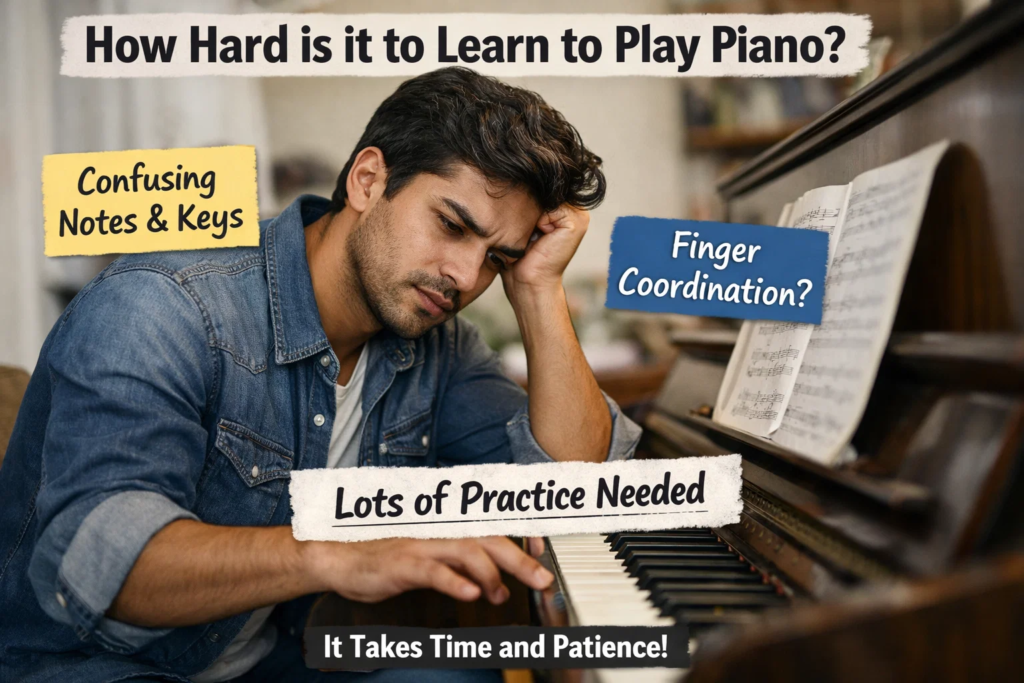
Despite its accessibility, piano presents real challenges that should not be underestimated. Coordinating both hands independently, reading two musical clefs at once, and maintaining rhythm can feel overwhelming initially. Beginners often struggle with posture, finger strength, and timing, which can slow progress if not addressed early. When people ask how hard is it to learn to play piano, they are often reacting to this coordination barrier. Unlike instruments where one action creates sound, piano requires constant multitasking. However, these challenges are gradual and manageable when approached with structured practice and realistic milestones.
The Role of Age in Piano Learning Difficulty
Age plays a role, but not in the way many fear. Children often absorb musical patterns faster, while adults bring discipline, focus, and emotional understanding. Adults asking how hard is it to learn to play piano sometimes worry they are “too late,” but this is a myth. While finger flexibility may take longer to develop, adults often progress steadily because they practice intentionally. Cognitive maturity helps with music theory, goal-setting, and self-correction. The learning curve may feel different, but success is equally achievable at any age with consistent effort and smart learning strategies.
How Long It Takes to Reach Basic Piano Skills
Time expectations shape motivation more than talent does. Most learners can play simple melodies and basic chords within three to six months of regular practice. At this stage, reading beginner sheet music and playing with both hands becomes comfortable. When evaluating how hard is it to learn to play piano, this early phase is often the most encouraging. Progress feels visible and rewarding. Reaching an intermediate level, where dynamics and expression improve, usually takes one to two years. Mastery, however, is a long-term journey shaped by musical goals rather than fixed timelines.
Practice Habits That Make Piano Easier or Harder
The difficulty of piano learning is heavily influenced by how one practices, not just how long. Short, focused sessions produce better results than long, unfocused ones. Beginners who repeat mistakes or rush through pieces often feel piano is harder than it truly is. Those who slow down, use a metronome, and isolate difficult passages progress faster. When people wonder how hard is it to learn to play piano, inconsistent practice is usually the hidden issue. Building a daily routine of 20–30 minutes can dramatically reduce frustration and create steady improvement over time.
Reading Sheet Music vs Playing by Ear
One common fear among beginners is learning to read sheet music. While it looks complex, music notation follows clear patterns. Piano learners benefit because notes move visually left to right, matching the keyboard layout. Playing by ear, on the other hand, relies on listening skills and memory. Many people asking how hard is it to learn to play piano assume they must choose one method. In reality, combining both creates balance. Reading builds technical accuracy, while ear training enhances musicality. Neither approach is impossible, and both improve naturally with guided exposure.
The Impact of Teachers, Apps, and Self-Learning
Learning resources significantly affect perceived difficulty. A qualified piano teacher can correct posture, technique, and rhythm before bad habits form. However, modern apps and online courses offer structured alternatives for self-learners. People often ask how hard is it to learn to play piano without lessons, and the answer depends on discipline. Self-learning requires more patience and self-evaluation, but it is entirely possible. The key is choosing a clear method and sticking to it. Guidance, whether human or digital, reduces confusion and keeps learners motivated through plateaus.
Music Theory: Helpful, Not a Barrier
Music theory often intimidates beginners, but it is not a requirement for early success. Basic concepts like scales, intervals, and chord structures actually make learning easier by explaining patterns on the keyboard. Many learners struggling with how hard is it to learn to play piano realize later that theory reduced their confusion rather than increased it. Understanding why notes sound good together improves confidence and creativity. Theory should be introduced gradually and practically, linked directly to songs being learned. When approached this way, it becomes a powerful support tool rather than an obstacle.
Physical Coordination and Finger Independence
Piano demands a level of physical coordination that feels unnatural at first. Each hand may play different rhythms, dynamics, or patterns simultaneously. This is often the moment learners question how hard is it to learn to play piano. The good news is that finger independence is a trained skill, not a talent. Simple exercises strengthen weaker fingers and improve control. Over time, movements that once felt impossible become automatic. Consistency is more important than speed. Developing coordination gradually prevents strain and builds a relaxed, efficient playing style that supports long-term growth.
Emotional Challenges and Motivation Plateaus
Learning piano is not just technical; it is emotional. Motivation often fluctuates, especially when progress slows. Many learners hit a plateau and assume they lack ability. This emotional dip fuels doubts about how hard is it to learn to play piano. In reality, plateaus signal consolidation, not failure. During these phases, skills are stabilizing beneath the surface. Changing repertoire, revisiting old pieces, or setting small goals helps restore momentum. Accepting that frustration is part of learning transforms it into a temporary phase rather than a reason to quit.
Comparing Piano Difficulty to Other Instruments
Compared to instruments like violin or trumpet, piano is often easier to start but harder to master fully. Sound production is immediate, eliminating tuning and embouchure challenges. However, the instrument’s wide range and polyphonic nature add complexity later. When people compare how hard is it to learn to play piano versus guitar or drums, the answer depends on goals. Piano requires reading more information simultaneously, but it rewards learners with a complete musical experience. This balance of accessibility and depth is why piano remains one of the most studied instruments worldwide.
The Role of Musical Goals in Perceived Difficulty
Difficulty is relative to intention. Someone aiming to play pop songs for enjoyment faces a very different challenge than someone pursuing classical concert repertoire. Many who ask how hard is it to learn to play piano unknowingly mix these goals. Casual players can achieve satisfaction quickly, while advanced musicians invest years refining nuance and technique. Clarifying goals early prevents unrealistic expectations. Piano adapts to the learner’s ambition, offering meaningful progress at every level. Matching effort to intention keeps learning enjoyable rather than overwhelming.
Common Myths About Learning Piano
Several myths exaggerate piano’s difficulty. One common belief is that you must start young, which is false. Another is that talent matters more than effort, which research consistently disproves. People also assume piano requires expensive instruments, when quality digital pianos are widely available. These misconceptions inflate fears around how hard is it to learn to play piano. In reality, structured practice, patience, and curiosity matter far more than age or background. Dispelling these myths allows learners to approach piano with confidence and realistic optimism.
How Consistency Transforms Difficulty Over Time
What feels hard today often feels simple months later. Consistency rewires the brain and body, turning conscious effort into automatic response. Learners who practice regularly often look back and are surprised by their progress. This long-term perspective reshapes the question of how hard is it to learn to play piano. Difficulty is not static; it decreases as familiarity grows. Each challenge conquered becomes a foundation for the next. This compounding effect is what makes piano learning sustainable and deeply rewarding for those who stay committed.
Conclusion: Is Learning Piano Hard or Worth It?
So, how hard is it to learn to play piano? It is challenging enough to demand respect, yet accessible enough to welcome beginners. The piano rewards patience, consistency, and curiosity more than natural talent. Early progress is encouraging, middle stages require persistence, and long-term learning offers lifelong satisfaction. Difficulty depends largely on goals, practice habits, and mindset. For those willing to embrace gradual improvement, piano becomes not just an instrument, but a meaningful skill that grows alongside the learner. The journey is demanding, but the rewards consistently outweigh the effort.
Frequently Asked Questions
Is piano harder than guitar for beginners?
Piano is often easier at the beginning because notes are visually laid out and sound production is immediate. Guitar requires finger strength and complex hand positions early on. However, piano becomes more complex later due to hand independence and reading two clefs. When comparing how hard is it to learn to play piano, beginners usually find the first few months smoother than guitar, but long-term mastery demands equal dedication.
Can adults learn piano without prior musical experience?
Yes, adults can successfully learn piano without any background. Adults often progress steadily because they practice with intention and discipline. While coordination may take time, understanding patterns and theory can be easier. Many adults asking how hard is it to learn to play piano discover that consistency matters more than age. With realistic goals, adult beginners often achieve satisfying results within their first year.
How many hours a week should a beginner practice?
For beginners, three to five hours per week is effective when practice is focused. Short daily sessions build muscle memory and reduce fatigue. Practicing incorrectly for long hours can slow progress. When evaluating how hard is it to learn to play piano, quality of practice matters more than quantity. Structured routines lead to faster improvement and less frustration over time.
Is learning piano without a teacher realistic?
Self-learning piano is realistic with modern resources, but it requires discipline and self-awareness. Teachers help correct technique early, preventing long-term issues. Without guidance, learners must be patient and methodical. Many who question how hard is it to learn to play piano alone find success by combining apps, videos, and slow practice. Feedback, even occasional, greatly improves results.
Do you need to read sheet music to play piano well?
Reading sheet music is helpful but not mandatory for enjoyment. Many players rely on chords or ear training. However, reading expands musical possibilities and accuracy. Beginners concerned about how hard is it to learn to play piano often fear notation, but it becomes manageable with gradual exposure. Combining reading with listening creates a balanced and confident playing style.
How long does it take to play confidently in front of others?
Most learners feel comfortable performing simple pieces within six to twelve months. Confidence grows with repetition and familiarity. Nervousness is normal and decreases with experience. When thinking about how hard is it to learn to play piano, performance anxiety is often mistaken for lack of skill. Regular practice and informal playing for friends build confidence steadily over time.
For More Update and Stories Visit Daily Guides