 Admin
Admin
For many adventure seekers, the idea of standing beneath the world’s highest mountain feels both thrilling and intimidating. One question dominates every search and conversation: how hard is it to get to base camp everest? The answer is not simple, because difficulty depends on physical fitness, mental resilience, altitude tolerance, preparation, and expectations. The Everest Base Camp trek is not a technical climb, yet it is far from an easy walk. This journey challenges the body with thin air, long walking days, and unpredictable weather, while testing the mind through isolation and fatigue. Understanding the real challenges beforehand transforms fear into confidence and curiosity into readiness.
Understanding the Everest Base Camp Trek
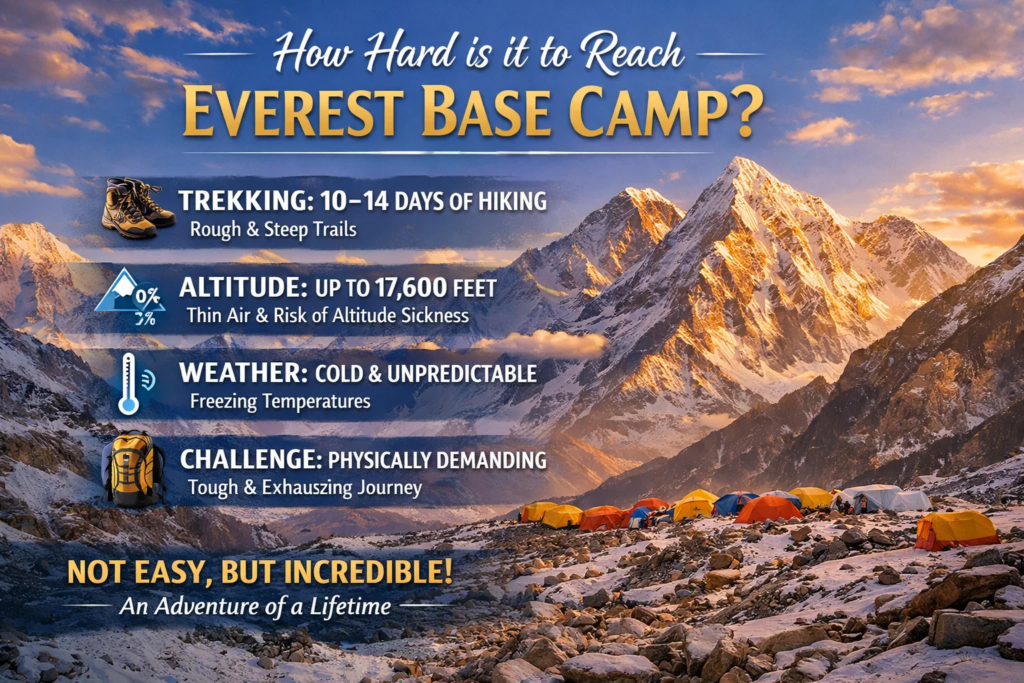
The Everest Base Camp trek takes you to an altitude of 5,364 meters (17,598 feet) in Nepal’s Khumbu region, home to the legendary Sherpa culture. The route follows ancient trading paths, passing through mountain villages, suspension bridges, glaciers, and alpine valleys. While no ropes or climbing gear are required, the trek lasts around 12–14 days, covering roughly 130 kilometers round trip. Many first-time trekkers underestimate the journey because it does not involve summiting Everest itself. However, sustained elevation gain, limited oxygen, and basic living conditions make the experience physically and mentally demanding, even for fit individuals.
How Hard Is It to Get to Base Camp Everest Physically?
When evaluating how hard is it to get to base camp everest, physical endurance is the first factor to consider. You typically walk 5–7 hours per day, often on rocky, uneven terrain with steep ascents and descents. While the trails are well-marked, the constant uphill movement gradually drains energy. Carrying a daypack, adjusting to cold mornings, and walking at altitude significantly increase effort. Even strong hikers feel slower and heavier as oxygen levels drop. Although you do not need elite athletic ability, a solid base of cardiovascular fitness and leg strength is essential for enjoying the trek safely.
Altitude: The Biggest Challenge on the Trek
Altitude is the defining difficulty of the Everest Base Camp journey. How hard is it to get to base camp everest, Above 3,000 meters, oxygen levels decrease noticeably, and by the time you reach Base Camp, oxygen availability is nearly 50% lower than sea level. This can cause Acute Mountain Sickness (AMS), with symptoms such as headaches, nausea, dizziness, and fatigue. The trek includes acclimatization days in places like Namche Bazaar and Dingboche, allowing your body to adapt gradually. Ignoring altitude symptoms or rushing the itinerary increases risk. Respecting altitude is not optional—it is the single most important factor for success.
Mental Toughness and Emotional Endurance
Beyond physical strain, the trek demands strong mental resilience. Long days, cold nights, simple meals, and limited connectivity can wear down even motivated trekkers. You may experience moments of doubt, homesickness, or frustration when progress feels slow. Weather changes can delay plans, while altitude can affect sleep and mood. Understanding how hard is it to get to base camp everest means acknowledging that mental endurance matters as much as physical fitness. Staying patient, maintaining a positive mindset, and embracing discomfort as part of the adventure help transform hardship into personal growth and lasting pride.
Trail Conditions and Terrain Explained
How hard is it to get to base camp everest? The terrain to Everest Base Camp is varied and constantly changing. Early sections feature forested paths and stone staircases, while higher elevations introduce rocky moraines and glacial debris. Trails can be dusty, icy, or muddy depending on the season. Suspension bridges over deep gorges add excitement but can be intimidating for those with a fear of heights. There are no paved roads beyond Lukla, meaning every step is taken on natural surfaces. While technically straightforward, the uneven ground demands balance and attention, especially during descents, which often feel harder than climbing up.
Weather and Seasonal Difficulty Levels
Weather plays a major role in determining how hard is it to get to base camp everest. The most popular trekking seasons are spring (March–May) and autumn (September–November), offering stable weather and clear views. However, temperatures can still drop below -10°C at night. Winter treks bring extreme cold and snow, increasing difficulty and risk, while monsoon season introduces rain, clouds, and slippery trails. Sudden weather changes are common, even during peak seasons. Being prepared for cold, wind, and delays is essential to handle the unpredictable Himalayan environment confidently.
Daily Life on the Trek: Comfort vs Reality
Life on the trail is simple and often surprising for first-time trekkers. How hard is it to get to base camp everest, Accommodation consists of teahouses, small lodges offering basic rooms with shared bathrooms. Heating is limited, and hot showers may cost extra or be unavailable at higher altitudes. Meals are repetitive but nourishing, with staples like dal bhat, noodles, and soup providing essential energy. Electricity and Wi-Fi become scarce as altitude increases. Understanding these realities helps set realistic expectations. The challenge is not luxury, but adaptation—learning to stay comfortable with less while focusing on the incredible surroundings.
Role of Guides and Porters in Reducing Difficulty
Hiring a licensed guide and porter can significantly reduce how hard the trek feels. Guides manage navigation, pacing, altitude monitoring, and logistics, allowing you to focus on walking and recovery. Porters carry heavy loads, easing physical strain and reducing injury risk. While independent trekking is possible, guided treks provide safety, cultural insight, and emotional reassurance. Especially for those questioning how hard is it to get to base camp everest, professional support can transform a daunting challenge into a structured, achievable journey, particularly for first-time high-altitude trekkers.
Fitness Preparation: What You Really Need
You do not need to be a marathon runner, but preparation matters. How hard is it to get to base camp everest, Training should focus on cardiovascular endurance, leg strength, and stamina. Activities like hiking, stair climbing, cycling, and strength training build resilience. Practicing long walks with a backpack helps simulate trail conditions. Mental preparation is equally important—learning to pace yourself and accept slower movement at altitude prevents frustration. Many trekkers succeed with moderate fitness but strong commitment. Consistent preparation over 8–12 weeks dramatically improves comfort and confidence throughout the trek.
Age, Experience, and Who Can Do This Trek
One encouraging truth is that Everest Base Camp is accessible to a wide range of ages. Trekkers in their 20s to 60s regularly complete the journey. Previous trekking experience helps but is not mandatory. What matters more is listening to your body and respecting the acclimatization schedule. Children and elderly trekkers have successfully reached Base Camp with proper planning and medical clearance. So when asking how hard is it to get to base camp everest, remember that difficulty is relative. Determination, preparation, and patience often outweigh age or background.
Cultural and Emotional Rewards Along the Way
The difficulty of the trek is balanced by powerful rewards. Walking through Sherpa villages, visiting ancient Buddhist monasteries, and witnessing daily Himalayan life adds deep cultural meaning to the journey. Moments like sunrise over Ama Dablam or prayer flags fluttering at high passes create emotional highs that outweigh physical exhaustion. These experiences provide motivation during challenging days and remain vivid long after the trek ends. The human connection and spiritual atmosphere of the region make the hardship feel purposeful, transforming struggle into a story worth telling.
Everest Base Camp vs Other Famous Treks
Compared to treks like the Inca Trail or Kilimanjaro, Everest Base Camp stands out for duration and altitude exposure rather than technical difficulty. Kilimanjaro involves a rapid ascent, while EBC emphasizes gradual acclimatization. The Inca Trail is shorter but steeper and more crowded. Understanding these comparisons helps contextualize how hard is it to get to base camp everest. The challenge lies in endurance over time, not extreme climbing skills. For those seeking a sustained adventure with cultural depth, EBC offers a uniquely balanced challenge.
Safety, Risks, and Responsible Trekking
Safety is a shared responsibility between trekkers, guides, and the environment. Altitude illness, weather exposure, and fatigue are real risks, but they are manageable with awareness and discipline. Following acclimatization guidelines, staying hydrated, and reporting symptoms early are essential habits. Travel insurance covering high-altitude evacuation is strongly recommended. Responsible trekking also means respecting local customs and minimizing environmental impact. When approached thoughtfully, the trek becomes demanding yet safe, reinforcing that difficulty does not equal danger when preparation and caution guide every step.
Is the Difficulty Worth It?
After considering every challenge, many trekkers agree that the effort is absolutely worth it. Reaching Everest Base Camp delivers a profound sense of accomplishment. Standing beneath Mount Everest (Sagarmatha/Chomolungma), surrounded by glaciers and peaks, reframes personal limits. The trek teaches patience, humility, and resilience. While asking how hard is it to get to base camp everest is natural, those who complete the journey often say the difficulty becomes part of its beauty. The struggle elevates the reward, making the experience unforgettable.
Conclusion
So, how hard is it really? The Everest Base Camp trek is challenging but achievable for prepared, motivated individuals. It demands physical endurance, mental strength, and respect for altitude, yet it does not require technical climbing skills. Difficulty varies from person to person, shaped by fitness, mindset, and preparation. With realistic expectations, proper training, and a flexible attitude, the trek becomes a life-changing adventure rather than an overwhelming ordeal. Ultimately, Everest Base Camp is not about conquering a mountain—it is about discovering your own strength, one step at a time.
Frequently Asked Questions (FAQs)
1. Is Everest Base Camp suitable for beginners?
Yes, beginners can complete the trek with proper preparation, acclimatization, and a steady pace.
2. Do I need climbing experience to reach Base Camp?
No technical climbing or mountaineering experience is required for this trek.
3. How long does the Everest Base Camp trek take?
Most itineraries last 12–14 days, including acclimatization days.
4. What is the hardest part of the trek?
Managing altitude and maintaining energy over consecutive days is the biggest challenge.
5. Can I trek without a guide?
Yes, but hiring a guide increases safety, comfort, and cultural understanding.
6. What is the success rate of reaching Base Camp?
With proper acclimatization, the success rate is very high for healthy trekkers.
7. Is Everest Base Camp harder than Kilimanjaro?
EBC is longer and involves prolonged altitude exposure, while Kilimanjaro is steeper and shorter.
For More Update and Stories Visit Daily Guides