 Admin
Admin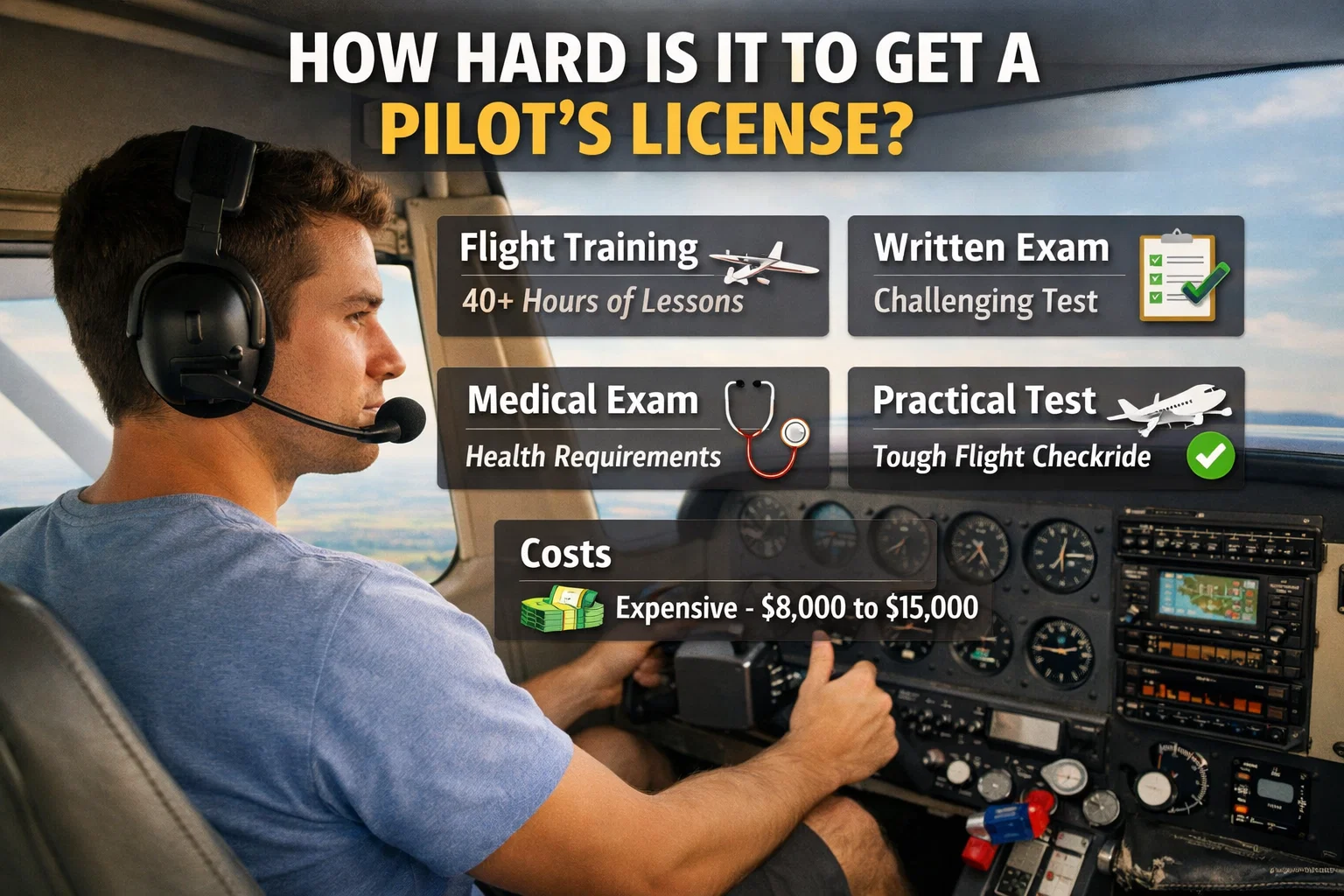
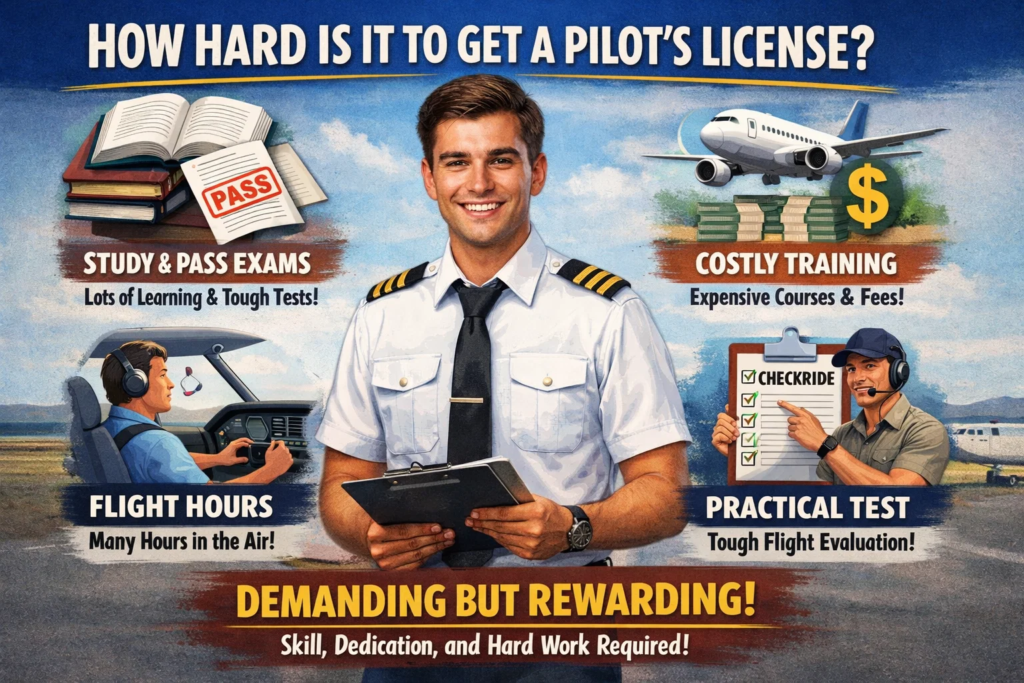
Becoming a pilot is a dream that sparks excitement, freedom, and a sense of achievement. Yet before that first solo flight, many people pause to ask how hard is it to get a pilot’s license. The truth is reassuring but realistic: earning a pilot’s license is challenging, structured, and demanding—but far from impossible. It requires dedication, financial planning, consistent study, and mental discipline rather than extraordinary intelligence or physical strength. This guide breaks down the process step by step, explaining what makes it difficult, what makes it achievable, and what most aspiring pilots experience along the way. By the end, you’ll know whether this journey fits your goals and lifestyle.
Understanding What a Pilot’s License Really Represents
A pilot’s license is more than a certificate—it is legal permission to operate an aircraft safely and responsibly. Aviation authorities issue licenses to ensure pilots understand flight theory, navigation, weather, safety procedures, and decision-making under pressure. This responsibility explains why the process is carefully regulated. While there are different types of licenses, most people begin with a Private Pilot License (PPL). The difficulty lies not in complexity alone but in mastering consistency, judgment, and accountability. When evaluating how hard is it to get a pilot’s license, it helps to view it as professional skill development rather than a simple test.
Types of Pilot Licenses and Their Difficulty Levels
Not all pilot licenses are the same, and difficulty increases with each level. The Private Pilot License (PPL) is the most common entry point and allows recreational flying. The Commercial Pilot License (CPL) enables paid flying, while the Airline Transport Pilot License (ATPL) is the highest level, required for airline captains. Each step adds more training hours, exams, and responsibility. Most people asking how hard is it to get a pilot’s license are referring to the PPL, which is considered demanding but achievable for motivated learners. Higher licenses require long-term commitment and professional-level discipline.
Basic Eligibility and Entry Requirements Explained
How hard is it to get a pilot’s license. The entry requirements for pilot training are surprisingly accessible. Most aviation authorities require a minimum age (usually 17 for a PPL), proficiency in English, and the ability to pass a medical examination. The medical check ensures adequate vision, hearing, coordination, and overall health. While this may sound intimidating, many everyday health conditions are acceptable. You do not need perfect vision or peak athletic fitness. These entry steps rarely determine difficulty. Instead, they confirm safety readiness. For most applicants, eligibility is not the hardest part of the journey.
Ground School: The Academic Side of Flight Training
Ground school is where many students reassess how hard is it to get a pilot’s license. This phase focuses on theory, including aerodynamics, aircraft systems, air law, navigation, and meteorology. The content is technical but logical, rooted in physics and real-world application. You must learn not only facts but how to apply them during flight planning and emergencies. Students with no science background can succeed, but they must study consistently. Ground school challenges time management more than intelligence. Those who keep up with lessons and ask questions usually find the material manageable rather than overwhelming.
Flight Training and Learning to Control an Aircraft
How hard is it to get a pilot’s license. Flight training is the most exciting and demanding part of the process. Here, theory meets reality in the cockpit. You’ll learn takeoffs, landings, navigation, communication, and emergency procedures under instructor supervision. Early flights can feel overwhelming as you manage multiple tasks simultaneously. Over time, muscle memory and confidence develop. Mistakes are expected and part of learning. The challenge is mental coordination rather than physical strength. Many students say this phase makes them truly understand how hard is it to get a pilot’s license, yet it is also the most rewarding.
Time Commitment and Training Duration
How hard is it to get a pilot’s license. Earning a Private Pilot License typically requires 40 to 70 flight hours, depending on progress, weather, and training frequency. For most students, this translates to 6 to 12 months of consistent training. Flying infrequently can slow progress and increase difficulty, as skills fade quickly. Regular lessons help build confidence and reduce overall cost. The time commitment extends beyond flying, including pre-flight planning, studying, and post-flight reviews. Those who treat training like a serious responsibility rather than a casual hobby usually find the journey smoother and less stressful.
Written Exams and Knowledge Tests
How hard is it to get a pilot’s license. Most pilot licensing authorities require passing a written knowledge exam. These tests evaluate understanding of flight theory, safety rules, navigation, and weather interpretation. The questions are designed to assess decision-making rather than rote memorization. While pass rates are generally good, poor preparation leads to failure. Many students underestimate this exam, assuming flying skill alone is enough. In reality, strong theoretical knowledge supports safe flying. This testing stage contributes significantly to perceptions of how hard is it to get a pilot’s license, especially for those uncomfortable with exams.
The Practical Flight Test and Checkride Experience
The final hurdle is the practical flight test, often called a checkride. An examiner evaluates your ability to plan, fly, and respond to real-world scenarios. This includes oral questioning followed by a flight assessment. Nerves play a major role here, even for skilled students. The examiner looks for safe decision-making, not perfection. Many applicants pass on their first attempt, while others need a retest. How hard is it to get a pilot’s license. Proper preparation and instructor guidance reduce stress significantly. This stage feels intense, but it is designed to confirm readiness, not to eliminate capable pilots.
Financial Cost and Its Impact on Difficulty
Cost is one of the most underestimated challenges. How hard is it to get a pilot’s license. A Private Pilot License can cost several thousand dollars, depending on location, aircraft type, and training pace. Expenses include flight hours, instructor fees, exams, medical certification, and materials. Financial pressure can add stress and slow training if lessons are paused. While this doesn’t affect skill directly, it influences motivation and consistency. Planning finances early helps reduce frustration. For many people, cost—not ability—is the biggest factor shaping how hard the process feels.
Mental Discipline and Emotional Challenges
How hard is it to get a pilot’s license. Learning to fly tests emotional resilience as much as technical skill. Students face information overload, performance anxiety, and self-doubt, especially early on. Weather cancellations, slow progress, or tough lessons can be discouraging. Confidence grows gradually, not overnight. Successful pilots learn to manage stress, accept feedback, and stay patient. This emotional growth is part of becoming a safe aviator. Those who expect quick mastery may struggle, while those who embrace steady improvement often find the journey deeply satisfying and transformative.
Age, Background, and Learning Style Considerations
How hard is it to get a pilot’s license. One common myth is that only young people can become pilots. In reality, students earn licenses in their 30s, 40s, 50s, and beyond. Age affects learning pace slightly but not capability. Backgrounds in engineering or gaming may help with coordination, but they are not required. Learning style matters more. Visual learners benefit from diagrams, while hands-on learners thrive in the cockpit. Instructors adapt methods to individual needs. This flexibility makes pilot training accessible to a wide range of motivated individuals.
Is Getting a Pilot’s License Hard Compared to Other Skills?
Compared to many professional certifications, pilot training is moderately difficult but fair. It demands consistency, responsibility, and focus rather than extreme academic brilliance. Unlike casual hobbies, flying has safety consequences, which raises the standard. However, compared to long medical or engineering degrees, the time investment is shorter. Many students describe the difficulty as “challenging but achievable.” When people ask how hard is it to get a pilot’s license, the most accurate answer is that it rewards discipline and patience more than natural talent.
Life After Licensing and Ongoing Responsibilities
Earning the license is not the end of learning. Licensed pilots must stay current through regular practice, medical renewals, and continued education. Skills fade without use, so responsible pilots fly consistently or train periodically. While this adds responsibility, it also builds confidence and mastery. Many pilots say the hardest part was earning the license, not maintaining it. Once licensed, flying becomes more enjoyable and less stressful as experience grows. Viewing licensing as a foundation helps set realistic expectations from the start.
Conclusion: So, How Hard Is It to Get a Pilot’s License Really?
So, how hard is it to get a pilot’s license? The honest answer is that it is challenging, structured, and deeply rewarding, but well within reach for committed individuals. The process requires time, money, study, and emotional resilience. It is not something you can rush or approach casually. However, it does not demand extraordinary intelligence or physical ability. With consistent training, supportive instruction, and realistic expectations, many ordinary people achieve this extraordinary goal. For those passionate about aviation, the difficulty becomes part of the fulfillment rather than a barrier.
Frequently Asked Questions (FAQs)
Is getting a pilot’s license harder than driving a car?
Yes, flying requires more training, theory, and responsibility than driving, but it is still achievable with proper instruction.
How long does it take to earn a Private Pilot License?
Most students complete training within 6 to 12 months, depending on schedule and consistency.
Do many people fail pilot training?
Some students quit due to time or cost, but those who stay committed usually succeed.
Is math very important for becoming a pilot?
Basic math is required, but advanced mathematics is not necessary for private pilot training.
Can I get a pilot’s license if I wear glasses?
Yes, corrective lenses are commonly accepted as long as vision meets medical standards.
Is flying stressful for beginners?
It can be at first, but stress decreases as confidence and experience grow.
For More Update and Stories Visit Daily Guides