
 Admin
Admin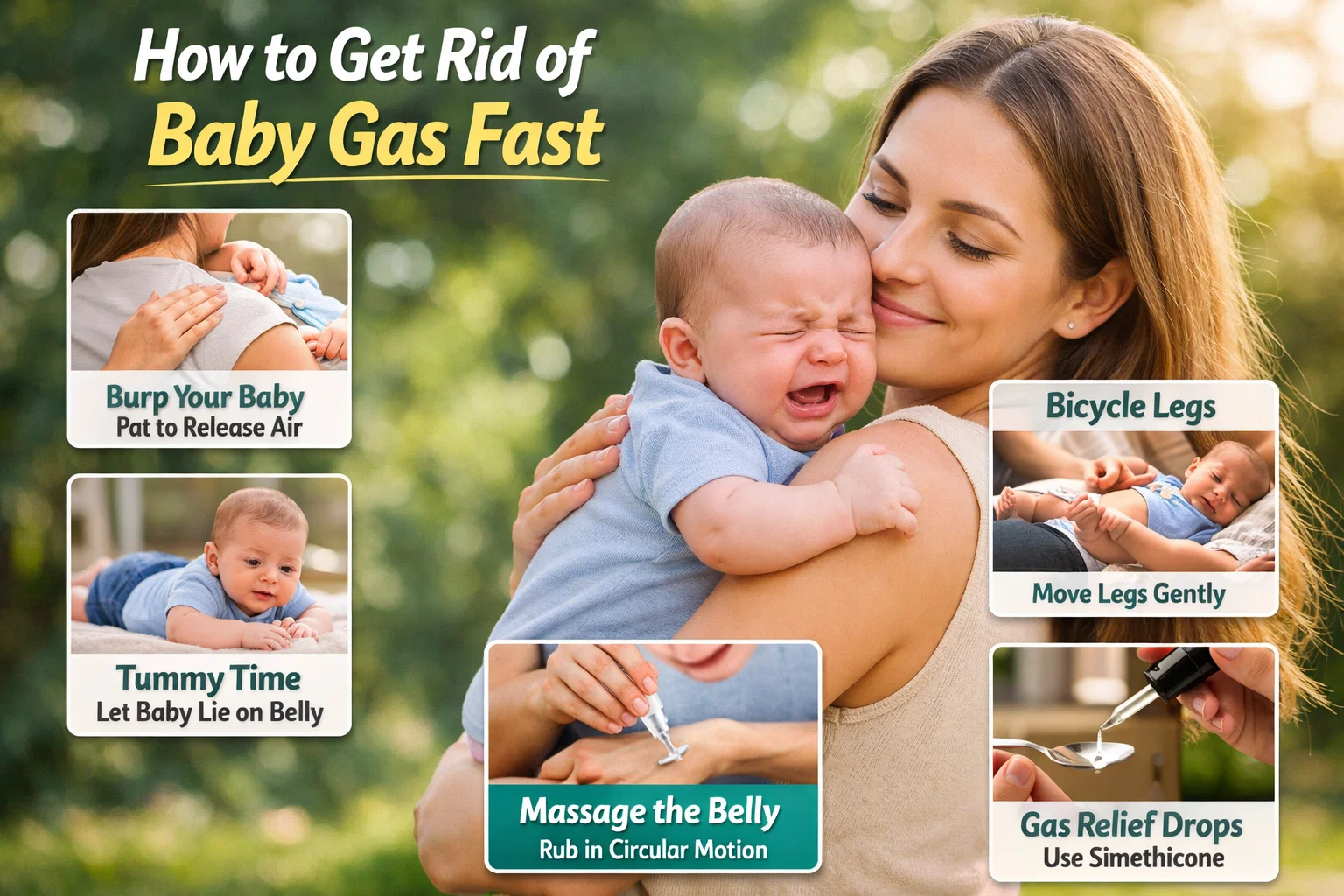
Watching your baby cry in discomfort can make any parent feel helpless. One of the most common reasons infants become fussy—especially in the first few months—is trapped gas. Their tiny digestive systems are still developing, and even normal feeding can lead to bloating and discomfort. If you’re searching for how to get rid of baby gas fast, you’re not alone. Many parents face this challenge daily, particularly during evening hours when fussiness peaks.
The good news is that baby gas is usually harmless and manageable at home. With the right techniques, positioning, feeding adjustments, and gentle remedies, you can ease your little one’s discomfort quickly and safely. This guide provides practical, pediatrician-recommended solutions to help your baby feel better—often within minutes.
Why Babies Get Gas So Easily
Newborns and young infants have immature digestive systems. Their intestines are still learning how to process milk efficiently, whether breast milk or formula. Because of this, swallowed air during feeding often gets trapped inside their bellies.
How to get rid of baby gas fast? Gas buildup can also occur if a baby feeds too quickly, cries intensely, or has difficulty latching. Additionally, some babies are more sensitive to certain proteins in formula or even components of a breastfeeding mother’s diet. According to pediatric guidance from organizations like the American Academy of Pediatrics (AAP), occasional gas is a normal part of infancy and usually improves as digestion matures.
Understanding how to get rid of baby gas fast the cause is the first step toward fast relief.
Common Signs Your Baby Has Gas
Before jumping into solutions, it’s important to recognize the symptoms. Babies cannot tell us what hurts, but their behavior offers clues.
Typical signs include:
- Pulling legs up toward the chest
- Arching the back
- Clenching fists
- Red face while crying
- A tight or bloated belly
- Passing gas after discomfort
Gas pain often appears shortly after feeding. Evening fussiness is common because gas can accumulate throughout the day. Recognizing these patterns helps you respond quickly and choose the most effective technique.
How to Get Rid of Baby Gas Fast with Immediate Techniques
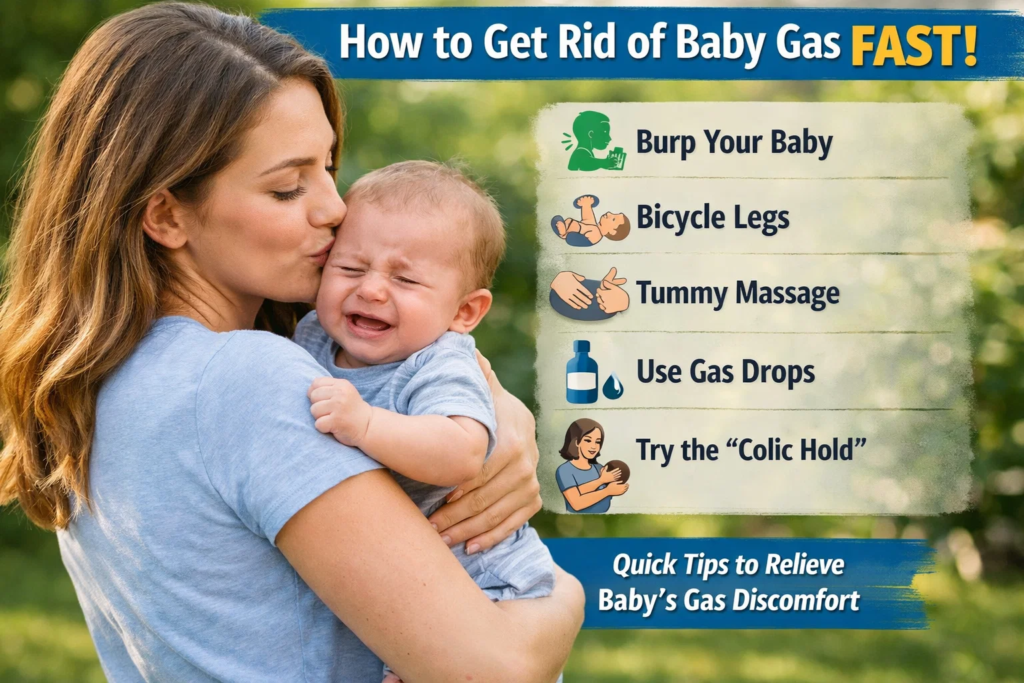
How to get rid of baby gas fast? When your baby is crying from gas discomfort, quick relief methods can work surprisingly well. The goal is to help trapped air move through the digestive tract safely.
Gentle Tummy Massage
A warm, calm environment makes massage more effective. Place your baby on their back and gently rub their belly in clockwise circular motions. This follows how to get rid of baby gas fast the natural direction of the intestines, encouraging gas movement.
You can also try the “I Love You” massage method, tracing gentle letters across the abdomen. Keep pressure light and soothing. Many parents notice improvement within minutes, especially if the baby relaxes during the massage.
Bicycle Leg Exercise
Lay your baby on their back and gently move their legs in a pedaling motion. This movement puts mild pressure on the abdomen and encourages gas release.
Another variation involves gently pressing both knees toward the chest and holding for a few seconds before releasing. Repeat several times. Many babies pass gas during this exercise, providing almost immediate relief.
Tummy Time
Short periods of supervised tummy time can also relieve pressure. When babies lie on their stomachs, gravity helps move gas bubbles through the intestines.
How to get rid of baby gas fast? Always supervise closely and keep sessions brief if your baby is uncomfortable. Even a few minutes can help reduce bloating.
Burping Techniques That Work Quickly
Burping is one of the simplest ways to prevent and relieve gas. However, how to get rid of baby gas fast technique matters.
Try burping your baby:
- Over your shoulder
- Sitting upright on your lap
- Lying face down across your lap
Use gentle, rhythmic pats or circular rubs. Some babies need a few minutes to release air. If nothing happens, adjust positions and try again.
For fast results, burp your baby halfway through feeding and again afterward. This prevents excessive air from accumulating.
Feeding Adjustments for Faster Relief
If gas is frequent, small feeding changes can make a big difference.
Improve Latch and Positioning
For breastfeeding mothers, ensure a deep latch. The baby’s mouth should cover most of the areola, not just the nipple. A shallow latch allows more air intake.
How to get rid of baby gas fast? Keep your baby’s head slightly elevated during feeding. Gravity helps milk flow smoothly and reduces swallowed air.
Bottle-Feeding Tips
Choose bottles designed to reduce air intake, often labeled “anti-colic” or “vented.” Hold the bottle at an angle so the nipple remains filled with milk, preventing air bubbles.
Avoid shaking formula vigorously. Instead, swirl gently to reduce foam and air pockets.
Monitor Feeding Pace
If milk flows too quickly, babies may gulp and swallow air. For breastfed babies, switching positions can slow flow. For bottle-fed babies, paced feeding—allowing small breaks—can help.
Natural Remedies for Quick Gas Relief
Parents often ask about safe, natural solutions. While not every remedy works for every baby, several options are commonly used.
Warm Compress
A warm (not hot) towel placed gently on your baby’s belly can relax abdominal muscles and ease discomfort. Ensure how to get rid of baby gas fast the temperature is safe before applying.
Baby Gas Drops
Simethicone-based drops are widely available and generally considered safe for infants. They work by breaking up gas bubbles in the stomach. Always follow dosing instructions and consult your pediatrician if unsure.
Probiotics
Certain probiotic strains, such as Lactobacillus reuteri, have shown promise in supporting infant digestion. However, consult your pediatrician before introducing supplements.
When Diet May Be the Cause
How to get rid of baby gas fast, for breastfeeding mothers, diet sometimes plays a role in infant gas. Foods like dairy, caffeine, and spicy meals may affect some babies.
Keeping a food diary can help identify patterns. If symptoms worsen after specific foods, try eliminating them temporarily under medical guidance.
For formula-fed babies, some may benefit from switching to partially hydrolyzed or sensitive formulas. Always discuss changes with your healthcare provider before switching brands.
How to Get Rid of Baby Gas Fast at Night
Nighttime gas can disrupt both baby and parents’ sleep. Evening fussiness often results from accumulated air throughout the day.
How to get rid of baby gas fast? Create a calm bedtime routine. Feed your baby in an upright position, burp thoroughly, and allow a few minutes of upright holding before laying them down. Gentle rocking can help trapped gas move naturally.
Avoid overstimulation before bed. A relaxed baby swallows less air during feeding and crying.
Preventing Future Gas Episodes
While occasional gas is normal, prevention strategies can reduce frequency.
Feed smaller amounts more frequently to avoid overfilling the stomach. Keep your baby upright for at least 20–30 minutes after feeding. Incorporate daily tummy time sessions to strengthen abdominal muscles and improve digestion.
How to get rid of baby gas fast? Watch for signs of overfeeding. A baby turning away from the bottle or breast may be signaling fullness. Respecting these cues reduces discomfort.
Understanding the Difference Between Gas and Colic
Sometimes parents confuse gas with colic. Colic involves prolonged crying—often more than three hours a day, three days a week, for three weeks or more—without an obvious cause.
Gas may contribute to discomfort, but colic is more complex and not solely digestive. How to get rid of baby gas fast? If crying is intense and persistent, consult your pediatrician for evaluation and reassurance.
When to Call the Pediatrician
Although gas is common, certain symptoms require medical attention. Seek guidance if your baby:
- Has persistent vomiting
- Develops a fever
- Shows blood in stool
- Refuses feeding
- Has poor weight gain
Trust your instincts. If something feels unusual, it’s always wise to consult a healthcare professional.
Emotional Support for Parents
How to get rid of baby gas fast? Caring for a gassy baby can be exhausting. Sleep deprivation combined with persistent crying can affect emotional well-being. Remember that this stage is temporary. Most babies outgrow frequent gas issues by 3 to 4 months of age as their digestive systems mature.
Take breaks when needed. Ask for help from family members. A calm caregiver can soothe a baby more effectively.
Parenting is not about perfection—it’s about patience and learning together.
Conclusion
Understanding how to get rid of baby gas fast empowers you to comfort your child quickly and confidently. From gentle tummy massages and bicycle leg exercises to improved feeding techniques and proper burping, small adjustments often bring rapid relief.
Gas is a normal part of infancy, and most cases resolve naturally as your baby grows. By observing symptoms, using safe remedies, and maintaining consistent feeding habits, you can reduce discomfort and restore calm more quickly.
If symptoms seem unusual or severe, consult your pediatrician for reassurance. With patience and the right approach, you’ll navigate this phase smoothly—and both you and your baby will enjoy more peaceful days and nights.
Frequently Asked Questions
1. How long does baby gas pain usually last?
Gas discomfort typically lasts from a few minutes to an hour. Relief often comes after burping, passing gas, or a bowel movement.
2. Can breastfed babies get gas?
Yes, breastfed babies can experience gas due to swallowed air or sensitivity to certain foods in the mother’s diet.
3. Are gas drops safe for newborns?
Simethicone gas drops are generally considered safe when used as directed. Always confirm dosage with your pediatrician.
4. Does tummy time help relieve gas?
Yes, supervised tummy time can help move trapped air through the digestive system and strengthen abdominal muscles.
5. When should I worry about my baby’s gas?
Seek medical advice if gas is accompanied by fever, persistent vomiting, blood in stool, or poor weight gain.
6. Can formula cause more gas than breast milk?
Some babies may experience more gas with certain formulas. Switching to a sensitive formula under medical guidance may help.
7. At what age do babies outgrow gas problems?
Most babies experience improvement by 3–4 months of age as their digestive systems mature.
For More Update and Stories Visit Daily Guides