 Admin
Admin
Retainers play a critical role in maintaining the results of orthodontic treatment. After months or years of wearing braces or aligners, retainers ensure your teeth remain in their corrected positions. However, because retainers stay in your mouth for extended periods, they naturally collect bacteria, plaque, saliva residue, and food particles. Without proper cleaning, retainers can develop unpleasant odors, discoloration, and harmful bacterial buildup that affects oral health.
Understanding how to clean retainers correctly protects both your dental investment and your overall health. Clean retainers help prevent infections, tooth decay, gum disease, and bad breath. Proper care also extends the lifespan of the appliance, saving you money and preventing replacement inconvenience. This detailed guide explains safe cleaning methods, tools, mistakes to avoid, and professional care recommendations.
Why Retainer Cleaning Is Essential for Oral Health
How to clean retainers? Retainers sit directly against your teeth and gums, making them highly susceptible to bacterial accumulation. Every time you eat, drink, or speak, microorganisms attach to the retainer’s surface. Over time, these bacteria form a sticky layer known as biofilm, which can cause oral infections and unpleasant smells. Regular cleaning removes harmful buildup and ensures the appliance remains safe to use.
Neglecting retainer hygiene can lead to serious dental problems. Harmful bacteria may transfer from the retainer to your teeth, increasing the risk of cavities, gum inflammation, and enamel damage. Clean retainers support healthy oral conditions and prevent complications. This is why dentists emphasize learning how to clean retainers properly as part of daily dental hygiene routines.
Understanding Different Types of Retainers Before Cleaning
Different retainer materials require slightly different cleaning approaches. Knowing your retainer type ensures you use safe and effective methods without causing damage.
Clear Plastic Retainers
Clear retainers, often called Essix retainers, are made from transparent plastic material. They are popular due to their invisible appearance and comfort. However, how to clean retainers plastic is prone to staining, odor retention, and bacterial buildup. Proper daily cleaning prevents discoloration and keeps the retainer clear and hygienic.
Plastic retainers are sensitive to heat and harsh chemicals. Using hot water or abrasive cleaners can warp the material permanently. Gentle cleaning methods are essential to maintain shape and effectiveness.
Hawley Retainers
Hawley retainers consist of metal wires attached to an acrylic base. These retainers are durable and adjustable, making them a long-lasting option. Cleaning involves maintaining both the acrylic and metal components safely.
Metal wires can accumulate plaque and bacteria how to clean retainers, if not cleaned properly. Gentle brushing and safe cleaning solutions ensure long-term hygiene and functionality.
Permanent (Bonded) Retainers
Permanent retainers are thin wires attached behind the teeth. They cannot be removed, so cleaning involves brushing and flossing carefully around them. Special floss tools may be required to remove trapped debris.
How to clean retainers? Although fixed retainers require less handling, they still demand consistent hygiene to prevent bacterial accumulation and dental issues.
Essential Supplies Needed to Clean Retainers Safely
Using proper cleaning tools prevents damage while ensuring effective hygiene. The most important tool is a soft-bristled toothbrush, which removes plaque without scratching the surface. Avoid hard brushes because they can damage plastic or acrylic materials.
Mild liquid soap or non-abrasive cleanser is ideal for removing bacteria safely. Avoid toothpaste, as it contains abrasive particles that scratch retainers and create areas where bacteria can grow. Lukewarm water is recommended because hot water can warp plastic retainers.
How to clean retainers? A clean storage case is equally important. Storing retainers in a hygienic container prevents contamination and protects them from environmental exposure.
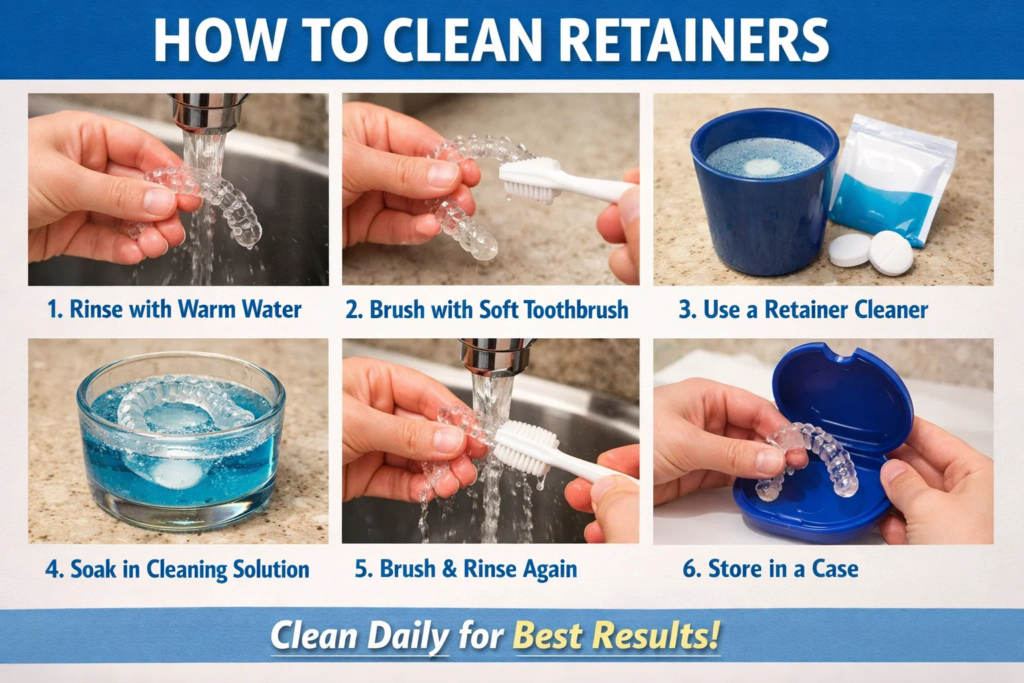
Step-by-Step Guide: How to Clean Retainers Properly
Cleaning retainers is simple when done correctly and consistently. Following the right steps ensures maximum hygiene and longevity.
Step 1: Rinse Immediately After Removal
Always rinse your retainer with lukewarm water immediately after removing it from your mouth. This removes saliva, food particles, and bacteria before they harden into plaque. Immediate rinsing prevents buildup and makes cleaning easier.
Avoid using hot water because it can distort plastic retainers. Lukewarm water maintains the original shape and protects structural integrity. How to clean retainers? This simple step is essential for proper retainer maintenance.
Step 2: Brush Gently with a Soft Toothbrush
Use a soft toothbrush to gently clean all surfaces of the retainer. Brush both the inside and outside areas to remove plaque and bacteria completely. How to clean retainers? Use mild soap or non-abrasive cleanser instead of toothpaste.
Gentle brushing removes debris without damaging the material. Avoid scrubbing aggressively, as this may create scratches where bacteria accumulate.
Step 3: Rinse Thoroughly Before Wearing Again
After brushing, rinse the retainer thoroughly with lukewarm water. This removes any soap residue and ensures the retainer is safe for use. Soap residue can cause irritation or unpleasant taste if not rinsed properly.
Ensure the retainer is completely clean before placing it back in your mouth.
Deep Cleaning Methods for Retainers
Daily brushing removes most debris, but deeper cleaning is necessary periodically to eliminate stubborn bacteria and odors.
Using Retainer Cleaning Tablets
Cleaning tablets are specially designed for dental appliances. Dissolve a tablet in water and soak the retainer according to instructions. These tablets remove bacteria, stains, and odors safely.
This method provides professional-level cleaning at home. Using tablets 2–3 times per week helps maintain hygiene and freshness.
Using Mild Vinegar Solution
A mixture of equal parts white vinegar and lukewarm water can remove mineral buildup and bacteria. Soak the retainer for 15–20 minutes, then rinse thoroughly.
Vinegar acts as a natural disinfectant. However, avoid frequent use because excessive exposure may weaken materials over time.
Using Baking Soda Solution
Baking soda is a gentle natural cleaner that neutralizes odors. Mix baking soda with water to form a solution and soak the retainer briefly. Rinse thoroughly afterward.
This method removes odor-causing bacteria safely and effectively.
How Often Should You Clean Retainers
Retainers should be cleaned daily to prevent bacterial buildup. Daily cleaning removes fresh debris and maintains hygiene. Deep cleaning should be done 2–3 times per week for optimal cleanliness.
Consistent cleaning prevents plaque formation, discoloration, and odor development. Proper routine maintenance ensures long-term retainer effectiveness.
Common Mistakes to Avoid When Cleaning Retainers
Many people unintentionally damage their retainers through improper cleaning habits. Avoid using hot water because heat can warp plastic retainers permanently. Never use toothpaste, as its abrasive texture scratches surfaces.
Avoid harsh chemicals such as bleach or alcohol. These substances weaken materials and create safety risks. Do not leave retainers exposed to air for long periods, as bacteria and debris accumulate quickly.
Understanding these mistakes helps preserve retainer quality and hygiene.
Signs Your Retainer Needs Immediate Cleaning
Certain warning signs indicate the need for immediate cleaning. Visible white buildup, unpleasant odor, or discoloration suggests bacterial accumulation. Sticky surfaces indicate plaque buildup that requires removal.
If your retainer smells bad even after rinsing, deep cleaning is necessary. Regular inspection helps maintain hygiene and prevent oral health problems.
Proper Storage Practices to Keep Retainers Clean
Proper storage protects retainers from contamination and damage. Always store retainers in a clean, ventilated case when not in use. Avoid wrapping retainers in tissues, as they may collect bacteria or be accidentally discarded.
Clean the storage case regularly to prevent contamination. Proper storage ensures long-term hygiene and protection.
Professional Cleaning and Replacement Recommendations
Dentists recommend professional retainer inspection during routine dental visits. Professional cleaning removes stubborn buildup and ensures proper fit.
Retainers typically last 6 months to several years, depending on care and material quality. Proper maintenance extends lifespan and prevents unnecessary replacements.
Professional guidance ensures optimal retainer performance and oral health.
Benefits of Proper Retainer Cleaning
Proper cleaning provides multiple long-term benefits. It prevents bad breath, infections, and bacterial buildup. Clean retainers also maintain transparency and appearance.
Maintaining hygiene protects teeth alignment and oral health. Proper care ensures long-term effectiveness and comfort.
Understanding how to clean retainers ensures optimal dental hygiene and appliance longevity.
Conclusion
Retainers are essential for preserving your orthodontic results, but their effectiveness depends on proper hygiene. Learning how to clean retainers correctly prevents bacterial buildup, odors, and oral health complications. Daily rinsing, gentle brushing, and regular deep cleaning maintain hygiene and extend retainer lifespan.
Avoid harmful cleaning methods such as hot water, harsh chemicals, or abrasive toothpaste. Proper storage and professional checkups further ensure long-term effectiveness. With consistent care and correct cleaning practices, your retainer will remain safe, comfortable, and effective for years, protecting your dental investment and maintaining your confident smile.
Frequently Asked Questions (FAQs)
1. How often should I clean my retainer?
You should clean your retainer daily using a soft toothbrush and mild cleanser. Deep cleaning should be done 2–3 times per week to remove bacteria and odors.
2. Can I use toothpaste to clean my retainer?
No, toothpaste contains abrasive particles that scratch retainers and create bacterial buildup areas. Use mild soap or retainer cleaner instead.
3. Is it safe to use vinegar for cleaning retainers?
Yes, diluted vinegar is safe for occasional deep cleaning. Always rinse thoroughly after soaking to remove residue.
4. Can hot water damage retainers?
Yes, hot water can warp plastic retainers and damage their shape. Always use lukewarm water for cleaning.
5. How long should I soak my retainer in cleaning solution?
Most cleaning solutions require soaking for 15–20 minutes. Follow product instructions for best results.
6. Why does my retainer smell bad?
Bad odor is caused by bacterial buildup. Regular cleaning and deep cleaning remove odor-causing bacteria effectively.
7. When should I replace my retainer?
Retainers should be replaced if they become damaged, loose, or worn out. Consult your dentist for proper replacement timing.
For More Update and Stories Visit Daily Guides