 Admin
Admin
Leather furniture has long been associated with luxury, durability, and timeless style. Whether it sits in a cozy living room or a professional office, a leather couch instantly elevates the space. However, maintaining its beauty requires proper care and attention. Unlike fabric upholstery, leather is a natural material that reacts to moisture, heat, oils, and improper cleaning methods. Many people accidentally damage their furniture by using harsh chemicals or incorrect techniques.
Understanding how to clean leather couch properly ensures your furniture stays soft, crack-free, and attractive for years. With the right approach, you can remove dirt, stains, and odors while preserving its natural finish. This guide explains everything in detail, including tools, methods, mistakes to avoid, and professional maintenance tips for long-term protection.
Why Leather Requires Special Cleaning and Care
Leather is made from treated animal hide, which contains natural oils that keep it flexible and strong. Over time, dust, sweat, spills, and environmental exposure gradually reduce these oils. When leather loses moisture, it becomes stiff, brittle, and prone to cracking. How to clean leather couch Proper cleaning removes harmful contaminants while conditioning restores essential hydration.
Unlike fabric, leather does not absorb liquids the same way. Instead, spills can sit on the surface and seep slowly into pores, causing stains or discoloration. Using too much water or harsh detergents can permanently damage its protective finish. This is why understanding how to clean leather couch correctly prevents long-term structural damage. Consistent care not only improves appearance but also extends the furniture’s lifespan by 5–15 years depending on usage.
Understanding Different Types of Leather Before Cleaning
How to clean leather couch? Not all leather couches are identical. Manufacturers use different finishes that respond differently to cleaning products and techniques. Identifying the type helps you select the safest cleaning method.
Protected (Finished) Leather
Protected leather is the most common type used in modern furniture. It has a durable coating that resists stains and moisture, making it easier to clean. Most household leather sofas fall into this category. This finish provides a safety barrier, allowing gentle cleaning solutions without immediate damage. It is ideal for families, pets, and everyday use.
Unprotected (Aniline) Leather
Aniline leather is more natural and lacks a heavy protective coating. It is softer, richer in appearance, but more sensitive to stains and moisture. Cleaning must be extremely gentle to avoid discoloration or damage. This leather develops a natural patina over time, which adds character but requires careful maintenance.
Semi-Aniline Leather
Semi-aniline leather combines softness with moderate protection. It offers a balance between durability and natural feel. Cleaning is easier than pure aniline leather but still requires caution. Knowing the material type helps determine the safest approach when learning how to clean leather couch safely.
Essential Tools and Supplies You Will Need
Before starting, How to clean leather couch gather the proper tools to avoid damaging the leather surface. Using the right equipment ensures effective cleaning without scratches or discoloration.
You will need a soft microfiber cloth, which is gentle and does not scratch the leather. Microfiber traps dust and dirt effectively without spreading debris. A vacuum cleaner with a brush attachment helps remove loose particles from crevices. Mild soap, such as baby soap or gentle hand soap, is ideal because it does not strip natural oils.
Additionally, you should use distilled water, which contains no minerals that could leave residue. A soft dry towel helps remove excess moisture after cleaning. Leather conditioner is essential to restore hydration and flexibility. These supplies are inexpensive yet critical for maintaining furniture safely and efficiently.
Step-by-Step Process: How to Clean Leather Couch Properly
How to clean leather couch? Cleaning leather furniture is simple when done correctly. Following these steps prevents damage and ensures long-lasting results.
Step 1: Remove Dust and Debris Thoroughly
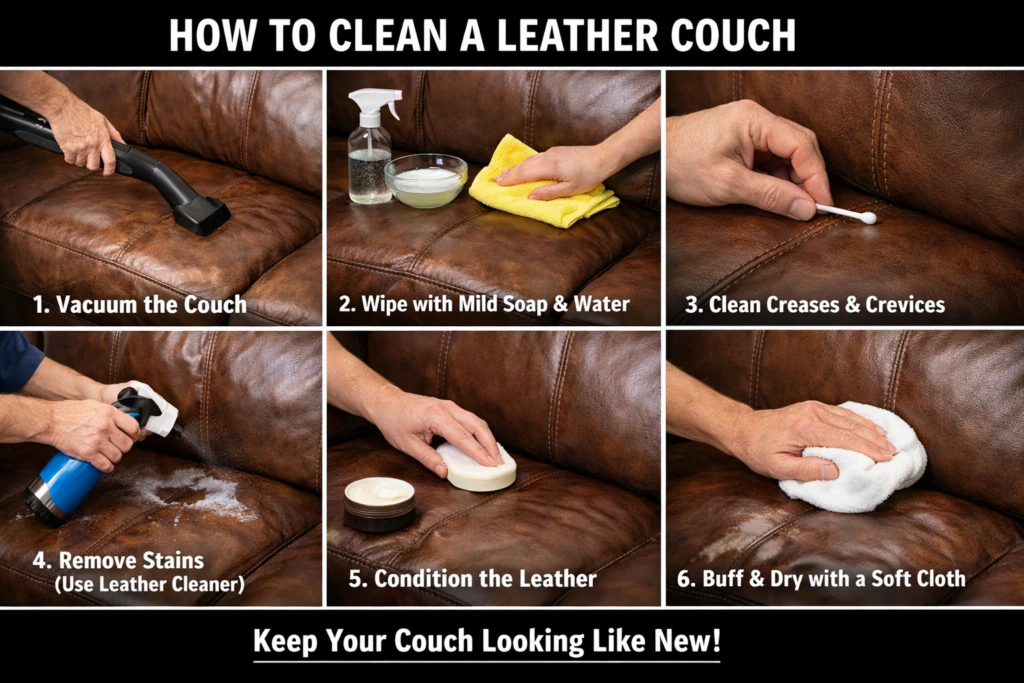
Begin by vacuuming the entire couch using a brush attachment. Focus on seams, creases, and corners where dirt accumulates. Dust particles may seem harmless, but they act like abrasive sandpaper, gradually wearing down the leather surface. Removing debris first prevents scratches during cleaning.
After vacuuming, wipe the surface gently with a dry microfiber cloth. This removes remaining dust and prepares the couch for deeper cleaning. Skipping this step can cause dirt to spread and damage the leather during wet cleaning. This is the most important preparation stage when understanding how to clean leather couch correctly.
Step 2: Prepare a Safe Cleaning Solution
How to clean leather couch? Mix a small amount of mild soap with distilled water. The solution should be very diluted, not concentrated. Excess soap can leave residue and damage the finish. Never use strong detergents, bleach, or ammonia, as these chemicals break down leather fibers.
Dip a microfiber cloth into the solution and wring it thoroughly until slightly damp. The cloth should never be soaking wet. Excess moisture can penetrate the leather and cause internal damage. Using a gentle cleaning solution ensures safety while removing dirt effectively.
Step 3: Clean the Surface Using Gentle Circular Motions
Wipe the leather using soft, circular movements. Work in small sections instead of cleaning the entire couch at once. This allows better control and prevents over-wetting. Focus on areas with visible dirt, body oils, or stains.
Avoid rubbing aggressively because friction can damage the finish. Gentle wiping is sufficient to lift dirt. If the cloth becomes dirty, rinse and wring it before continuing. This method ensures thorough cleaning without harming the leather structure.
Step 4: Dry the Couch Completely
After cleaning, use a dry microfiber cloth to remove any remaining moisture. This prevents water spots and protects the leather from absorption damage. How to clean leather couch, allow the couch to air dry naturally. Never use heat sources like hair dryers because heat removes natural oils and causes cracking.
Proper drying is essential to preserve flexibility and appearance. This step completes the main cleaning process safely and effectively.
Removing Common Stains from Leather Furniture
Different stains require different treatments. Using the wrong method can worsen the problem. Knowing the correct approach helps protect your furniture.
Oil and Grease Stains
Oil stains often come from skin contact, food, or hair products. How to clean leather couch do not use water immediately. Instead, blot gently with a dry cloth. Sprinkle a small amount of baking soda or cornstarch and leave it for 2–4 hours. This absorbs the oil naturally.
Afterward, wipe the powder away gently. Avoid scrubbing because it spreads the stain. This method removes oil safely without damaging the leather finish.
Ink Stains
Ink stains can be difficult to remove if untreated. Lightly dab the stain with a cloth slightly dampened with rubbing alcohol. Never pour alcohol directly onto leather. Gentle dabbing helps break down the ink gradually.
Act quickly because fresh ink is easier to remove than dried ink. How to clean leather couch this approach is effective when following proper methods for leather care.
Food and Drink Stains
Spills from coffee, juice, or food should be cleaned immediately. Use a damp cloth with mild soap solution and wipe gently. Delaying cleanup allows stains to settle permanently. Prompt action prevents permanent discoloration.
How to Condition Leather After Cleaning
Cleaning removes dirt but also removes some natural oils. Conditioning restores these oils and prevents cracking. Leather conditioner keeps the surface soft, flexible, and attractive.
How to clean leather couch? Apply a small amount of conditioner to a microfiber cloth and rub gently in circular motions. Allow the leather to absorb it naturally. Do not overapply because excess conditioner can clog pores. Conditioning should be done every 3–6 months depending on usage.
This step is essential when practicing how to clean leather couch correctly. It ensures long-term durability and prevents dryness damage.
Natural Cleaning Methods Using Household Ingredients
Some people prefer natural cleaning options to avoid chemicals. These methods are effective when used correctly and carefully.
A mixture of equal parts white vinegar and distilled water works well for removing dirt and bacteria. Vinegar disinfects naturally without harsh chemicals. However, How to clean leather couch always test on a hidden area first to ensure safety.
Another option is using mild baby soap with water. Baby soap is gentle and safe for leather surfaces. Natural methods provide effective cleaning while protecting the material’s integrity.
Mistakes to Avoid When Cleaning Leather Furniture
Many people unknowingly damage their furniture by making simple mistakes. Avoiding these errors helps preserve leather quality.
Never use excessive water because moisture weakens leather fibers. Avoid harsh chemicals such as bleach or ammonia. These substances cause permanent damage and discoloration.
Do not expose leather to direct sunlight for long periods. UV rays dry out the material and cause fading. Avoid using rough cloths or brushes because they scratch the surface.
Understanding these mistakes is crucial when learning how to clean leather couch safely and effectively.
How Often Should You Clean a Leather Couch
How to clean leather couch? Cleaning frequency depends on usage and environment. Light cleaning should be done every 1–2 weeks to remove dust and surface dirt. Deep cleaning can be done every 3–4 months to maintain proper hygiene.
Conditioning should follow deep cleaning to restore oils. High-traffic areas may require more frequent care. Regular maintenance prevents damage and extends furniture lifespan significantly.
Consistency is key to preserving appearance and durability.
Professional Cleaning vs DIY Cleaning
Professional leather cleaning services offer deep cleaning using specialized equipment and products. They are recommended for severe stains, delicate leather, or long-term neglect.
However, regular household maintenance is usually sufficient for most furniture. Learning how to clean leather couch yourself saves money and ensures consistent care.
Professional cleaning can be done every 12–18 months for optimal results.
Long-Term Maintenance Tips for Leather Furniture
Maintaining leather furniture is easier than repairing damage. Preventive care protects the material and reduces cleaning frequency.
Keep leather away from heat sources like heaters and fireplaces. Heat dries out the material and causes cracking. Use conditioners regularly to maintain flexibility.
How to clean leather couch? Clean spills immediately to prevent stains. Use protective covers if necessary. Proper maintenance ensures leather remains beautiful and durable for decades.
Signs Your Leather Couch Needs Immediate Cleaning
Certain warning signs indicate urgent cleaning is necessary. Visible dirt buildup, dull appearance, or stiffness suggests oil loss. Cracking or fading indicates dehydration and damage risk.
Sticky surfaces or odors suggest bacteria buildup. Address these issues quickly to prevent permanent damage. Early cleaning preserves leather integrity.
Recognizing these signs helps maintain furniture quality effectively.
Benefits of Regular Leather Couch Cleaning
Regular cleaning provides several long-term advantages. It improves appearance, prevents cracking, and extends lifespan. Clean leather also improves indoor hygiene by reducing dust and bacteria.
Proper maintenance protects your investment. Leather furniture can last 15–25 years with correct care. This makes cleaning essential for durability and comfort.
Understanding how to clean leather couch properly ensures maximum value and longevity.
Conclusion
Leather furniture represents quality, elegance, and long-term investment, but it requires proper care to maintain its beauty and durability. Learning how to clean leather couch correctly prevents damage, removes dirt safely, and preserves its natural oils. Using gentle cleaning methods, proper tools, and regular conditioning keeps leather soft, flexible, and visually appealing.
Avoid harsh chemicals, excessive moisture, and heat exposure to prevent cracking or fading. Regular maintenance ensures your leather couch remains comfortable and attractive for decades. With consistent care and correct techniques, you can protect your furniture and enjoy its luxurious appearance for many years without costly repairs or replacements.
Frequently Asked Questions (FAQs)
1. How often should I clean my leather couch?
You should dust your leather couch every 1–2 weeks and deep clean it every 3–4 months. Regular maintenance prevents dirt buildup and keeps the leather in good condition.
2. Can I use water to clean leather furniture?
Yes, but only in small amounts. Always use a damp cloth, not a wet one. Excess water can damage leather and cause cracking or stains.
3. What is the best homemade cleaner for leather couches?
A mixture of mild soap and distilled water is the safest option. Vinegar mixed with water can also work, but always test it on a hidden area first.
4. Is vinegar safe for cleaning leather?
Yes, diluted vinegar is safe when used properly. It helps remove dirt and bacteria without damaging the leather. Never use concentrated vinegar.
5. Why is conditioning important after cleaning leather?
Conditioning restores natural oils lost during cleaning. This prevents cracking, dryness, and stiffness while keeping leather soft and flexible.
6. Can I use baby wipes to clean leather?
No, baby wipes often contain chemicals that can damage leather. Always use a microfiber cloth and mild cleaning solution instead.
7. When should I hire professional leather cleaning services?
Hire professionals if your couch has severe stains, discoloration, or long-term neglect. Professional cleaning ensures safe and thorough restoration.
For More Update and Stories Visit Daily Guides