 Admin
Admin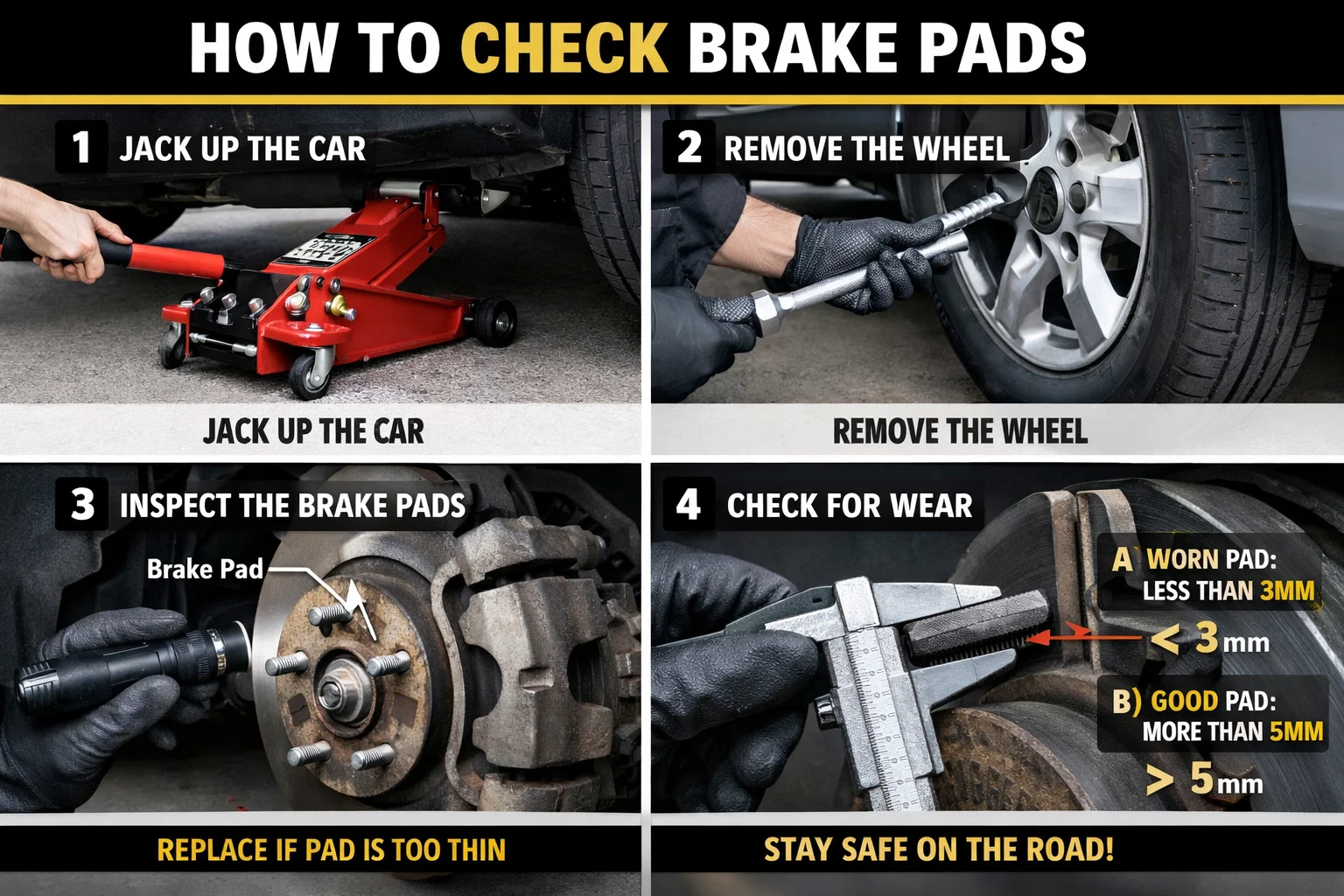
Your vehicle’s braking system is one of its most critical safety components, and understanding how to check brake pads is essential for every driver. Brake pads are responsible for creating the friction needed to slow down or stop your car, and their condition directly affects your ability to drive safely. Over time, these pads wear down due to constant use, heat, and friction. Ignoring worn brake pads can lead to longer stopping distances, expensive repairs, or even dangerous accidents. Many drivers only think about brakes when problems arise, but regular inspection helps prevent serious issues. Learning this simple skill empowers you to maintain your vehicle properly and ensures safer driving for yourself and others.
Understanding What Brake Pads Are and Why They Matter
Brake pads are flat components made from friction material mounted on metal backing plates. When you press the brake pedal, the brake caliper pushes these pads against the brake rotor, creating friction that slows the wheel’s rotation. This process converts kinetic energy into heat, allowing the vehicle to stop safely. Brake pads are designed to wear down gradually, making them a replaceable part of the braking system. Their condition determines how effectively your vehicle can stop under various driving conditions. Healthy brake pads ensure smooth braking, while worn ones reduce stopping power and increase risk.
Modern vehicles typically use disc brakes on all four wheels, although some older models use drum brakes in the rear. Disc brake systems provide better performance and heat dissipation, making them more reliable and efficient. Brake pads vary in material, including ceramic, metallic, and organic compounds, each offering different durability and performance levels. Regardless of type, regular inspection ensures optimal braking performance. Understanding how to check brake pads, their role helps drivers appreciate why routine checks are necessary. Maintaining brake pads protects both your vehicle and your safety on the road.
Signs That Indicate Your Brake Pads May Be Worn
Recognizing warning signs early helps prevent serious damage and costly repairs. One common sign is a squealing or squeaking noise when braking. Many brake pads include built-in wear indicators that produce noise when the pads become thin. This sound is designed to alert drivers that replacement may be needed soon. Ignoring these warnings can lead to further wear and potential brake failure. Drivers should always investigate unusual noises promptly to ensure their braking system remains safe and effective.
Another sign is reduced braking performance or longer stopping distance. How to check brake pads, If your vehicle takes longer to stop than usual, worn brake pads may be the cause. You may also feel vibrations in the brake pedal or steering wheel when braking. This can indicate uneven wear or damage to brake components. Additionally, a dashboard brake warning light may illuminate in some vehicles, signaling a problem. Paying attention to these symptoms helps prevent accidents and ensures your braking system remains reliable.
How to Check Brake Pads Without Removing the Wheel
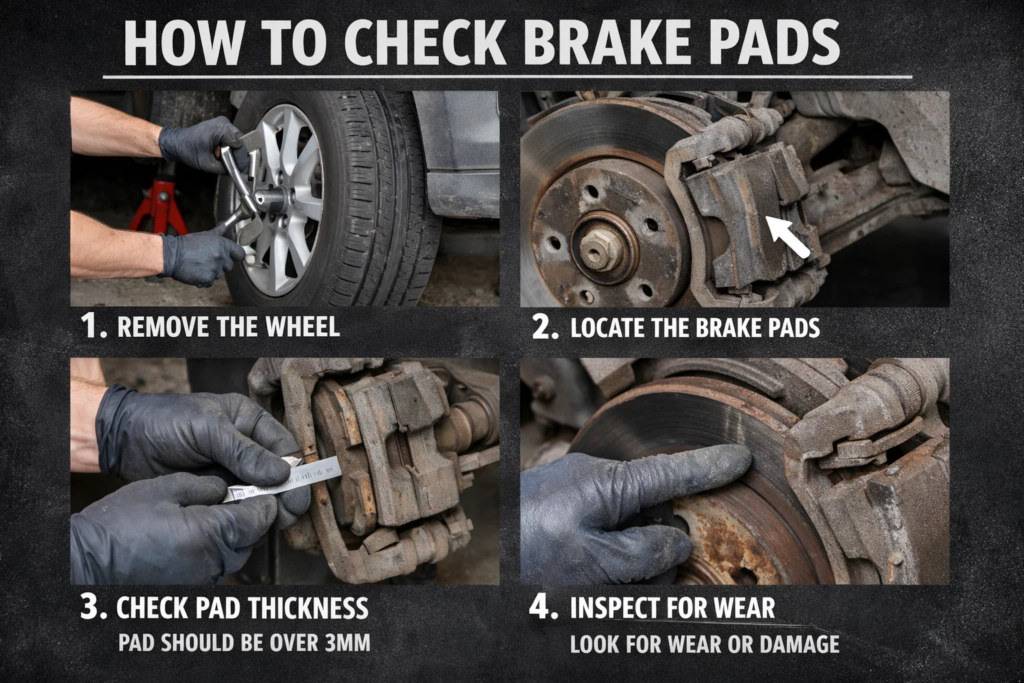
How to check brake pads, One of the easiest ways to inspect brake pads is through visual inspection without removing the wheel. Many modern wheels have openings that allow you to see the brake components inside. Using a flashlight, look through the wheel spokes to locate the brake caliper and pads. The brake pad sits between the caliper and rotor. Check the thickness of the friction material carefully. Healthy brake pads typically measure more than 6 millimeters thick, while pads below 3 millimeters require immediate replacement.
This method provides a quick and convenient inspection for most drivers. It helps identify obvious wear without requiring mechanical expertise. However, how to check brake pads, visibility may be limited depending on wheel design. In such cases, further inspection may be necessary. Regular visual checks help detect problems early and prevent unexpected brake failure. This simple habit contributes significantly to vehicle safety and maintenance.
How to Check Brake Pads by Removing the Wheel
How to check brake pads, For a more accurate inspection, removing the wheel allows a closer look at brake components. Begin by parking your vehicle on a flat surface and engaging the parking brake. Use a jack to lift the vehicle safely and secure it with jack stands. Remove the wheel using a lug wrench, exposing the brake assembly. Inspect the brake pad thickness directly and look for uneven wear or damage. Measure the pad thickness if necessary to determine its condition accurately.
This method provides a clear view and ensures accurate assessment of brake pad condition. It also allows inspection of related components such as rotors and calipers. While this process requires basic tools and effort, it provides valuable information about your vehicle’s braking system. Regular inspection helps prevent unexpected problems and ensures reliable braking performance.
Recommended Brake Pad Thickness and Replacement Guidelines
How to check brake pads, Brake pads should be replaced before they wear down completely. Most manufacturers recommend replacement when pad thickness reaches 3 millimeters or less. New brake pads typically measure 10 to 12 millimeters thick, providing optimal braking performance. Driving with worn pads increases stopping distance and risks damage to brake rotors. Replacing pads at the right time protects both safety and vehicle components.
Driving habits affect how quickly brake pads wear down. Frequent braking, heavy loads, and city driving increase wear rate. Highway driving typically results in slower wear due to less frequent braking. Regular inspection ensures timely replacement and prevents costly repairs. How to check brake pads, Following manufacturer guidelines helps maintain optimal vehicle performance and safety.
Tools You Need to Inspect Brake Pads Properly
Inspecting brake pads requires a few basic tools for safety and accuracy. Essential tools include a flashlight, jack, jack stands, lug wrench, and measuring gauge. These tools help you access and examine brake components safely. A flashlight improves visibility, especially in low-light conditions. Jack stands provide stability when lifting the vehicle, ensuring safety during inspection.
How to check brake pads, Using proper tools prevents accidents and ensures accurate assessment. Investing in basic tools allows you to perform regular inspections without relying entirely on mechanics. This saves money and improves vehicle maintenance awareness. Proper equipment ensures effective and safe brake pad inspection.
How Often You Should Check Your Brake Pads
Regular inspection helps maintain braking performance and safety. How to check brake pads, Experts recommend checking brake pads every 10,000 to 15,000 kilometers or during routine maintenance. Frequent inspections are especially important for drivers who operate vehicles in heavy traffic or mountainous areas. These conditions increase brake usage and wear rate.
Routine inspection prevents unexpected failures and ensures reliable braking. Monitoring brake pad condition helps drivers plan timely replacement. Consistent maintenance improves vehicle safety and reduces repair costs. Developing this habit enhances overall vehicle care and performance.
Front vs Rear Brake Pad Wear Differences
How to check brake pads, Front brake pads typically wear faster than rear pads due to weight distribution during braking. When braking, the vehicle’s weight shifts forward, placing more pressure on front brakes. This increased pressure accelerates wear rate. Rear brake pads experience less stress and usually last longer.
Understanding how to check brake pads, this difference helps prioritize inspection and replacement. Front brake pads may require replacement more frequently. Monitoring both front and rear pads ensures balanced braking performance. Proper maintenance improves vehicle safety and stability.
Professional Inspection vs DIY Brake Pad Check
Many drivers choose professional inspection for convenience and expertise. Mechanics use specialized tools and experience to assess brake condition accurately. Professional inspection ensures thorough evaluation of the entire braking system. This approach is recommended for drivers unfamiliar with vehicle maintenance.
However, how to check brake pads, DIY inspection provides valuable awareness and saves money. Learning basic inspection skills helps drivers identify problems early. Combining both methods ensures optimal vehicle maintenance. Regular checks improve safety and confidence on the road.
Risks of Driving with Worn Brake Pads
Driving with worn brake pads increases accident risk significantly. Thin brake pads reduce stopping power and increase stopping distance. This can be dangerous in emergency situations. Worn pads may also damage brake rotors, leading to expensive repairs.
How to check brake pads, Ignoring worn brake pads compromises vehicle safety. Timely replacement prevents serious problems and ensures reliable braking. Proper maintenance protects both driver and vehicle.
Conclusion
Understanding how to check brake pads is an essential skill that improves vehicle safety, performance, and maintenance awareness. Brake pads play a critical role in stopping your vehicle safely, and regular inspection ensures they remain in good condition. Recognizing warning signs, performing visual inspections, and following replacement guidelines help prevent accidents and costly repairs. Whether you choose professional inspection or perform checks yourself, consistent monitoring ensures reliable braking performance. How to check brake pads, Taking responsibility for brake maintenance enhances safety, reduces expenses, and provides peace of mind. By making brake pad inspection a regular habit, you ensure your vehicle remains safe and dependable for years to come.
FAQs
How do I know when my brake pads need replacement?
Brake pads need replacement when their thickness falls below 3 millimeters. Common warning signs include squealing noises, longer stopping distances, and vibration when braking. Dashboard warning lights may also indicate brake issues. Regular inspection helps identify wear early. Ignoring worn brake pads can lead to serious safety risks and expensive repairs. Monitoring pad thickness ensures timely replacement and optimal braking performance.
Can I check brake pads without removing the wheel?
Yes, many vehicles allow visual inspection through wheel openings. Using a flashlight, you can see brake pad thickness without removing the wheel. This method provides a quick assessment but may not show complete details. Removing the wheel allows more accurate inspection. Both methods are useful for monitoring brake pad condition.
How long do brake pads typically last?
Brake pads usually last between 30,000 and 70,000 kilometers, depending on driving habits and conditions. City driving causes faster wear due to frequent braking. Highway driving results in slower wear. Regular inspection ensures timely replacement and prevents safety risks.
What happens if I don’t replace worn brake pads?
Ignoring worn brake pads can damage brake rotors and reduce braking performance. This increases accident risk and repair costs. Replacing brake pads early protects vehicle safety and prevents expensive repairs. Proper maintenance ensures reliable braking performance.
Can I replace brake pads myself?
Yes, replacing brake pads is possible with proper tools and knowledge. However, beginners should consider professional assistance. Incorrect installation can compromise safety. Learning proper procedures ensures safe and effective replacement.
Are front brake pads more important than rear pads?
Front brake pads handle more braking force and wear faster than rear pads. Both are essential for balanced braking performance. Regular inspection ensures optimal safety and performance.
For More Update and Stories Visit Daily Guides