 Admin
Admin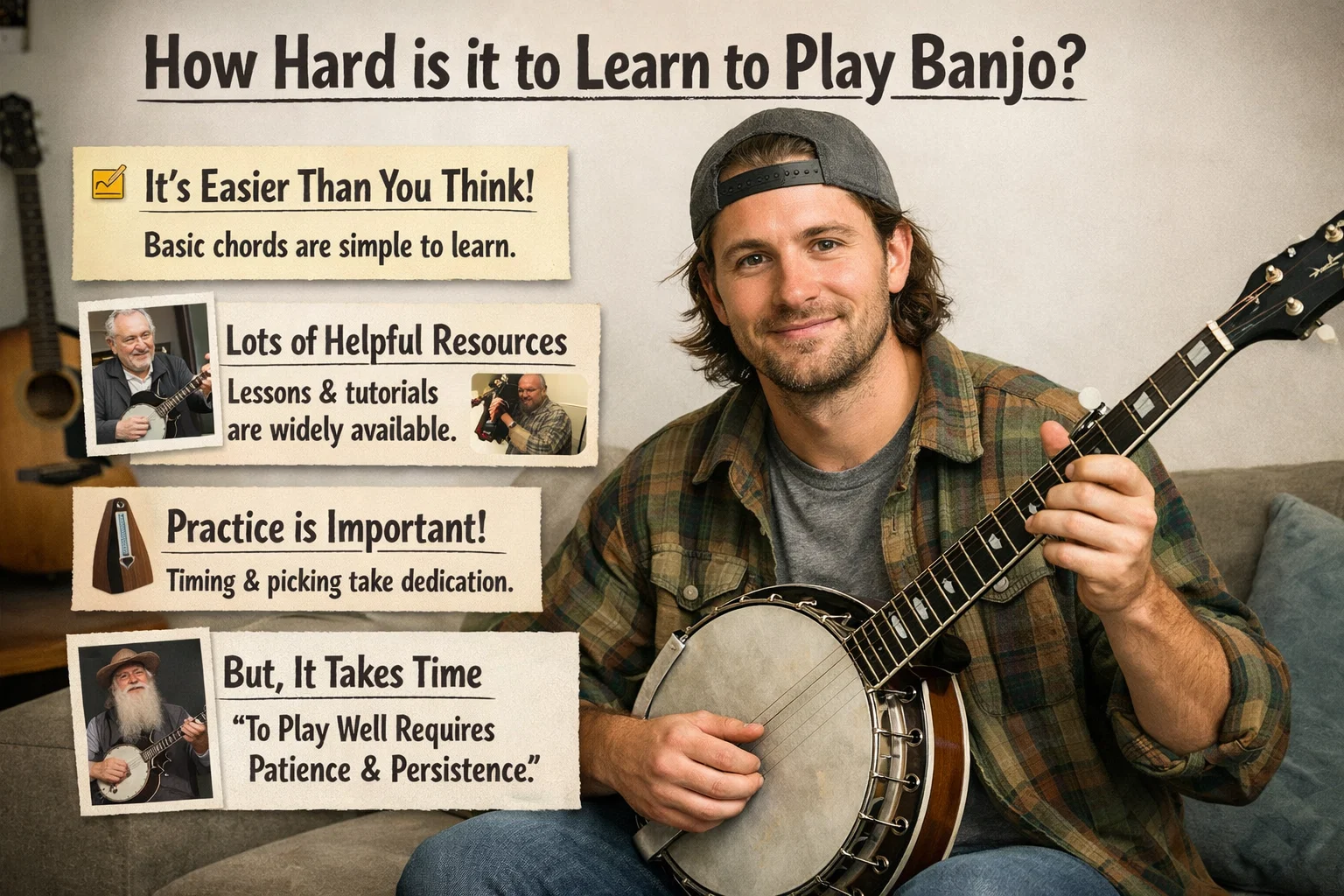
For many people, the banjo instantly brings to mind lively folk tunes, bluegrass jams, and the unmistakable twang that cuts through any room. Yet beginners often hesitate before starting because they wonder how hard is it to learn to play banjo compared to other instruments. This concern is completely natural. The banjo looks complex, sounds fast, and is often associated with advanced fingerpicking. In reality, the learning curve depends on your goals, mindset, and practice habits rather than raw talent. This guide offers a clear, realistic, and friendly explanation of what learning the banjo actually involves, helping you decide whether it’s the right instrument for you.
Understanding the Banjo and Its Unique Appeal
The banjo is a stringed instrument with African roots that later became central to American folk, old-time, and bluegrass music. How hard is it to learn to play banjo, Its most recognizable version is the five-string banjo, featuring a short fifth string that creates its signature sound. Unlike guitars, banjos are designed for rhythmic drive and brightness rather than sustained notes. This structural difference shapes how beginners experience learning. While it may look intimidating at first, the banjo’s design actually helps new players produce satisfying sounds early on. Understanding the instrument’s purpose and personality is a major step toward appreciating why many learners progress faster than expected.
How Hard Is It to Learn to Play Banjo for Absolute Beginners?
For absolute beginners, the banjo is often easier to start than it appears. Basic rolls, simple chords, and open-string patterns allow new players to make music quickly. Many learners can play recognizable tunes within a few weeks of consistent practice. The initial challenge lies in finger coordination, especially for the picking hand. However, this difficulty is short-lived when approached patiently. Compared to instruments that require embouchure control or bowing technique, the banjo rewards effort quickly. So when asking how hard is it to learn to play banjo, the honest answer is that the beginning phase is surprisingly encouraging.
Comparing Banjo Difficulty to Other Instruments
When compared to guitar, piano, or violin, the banjo sits somewhere in the middle in terms of difficulty. Guitar chords can be physically harder on the fingers early on, while piano demands reading two clefs simultaneously. Violin, often cited as one of the hardest instruments, requires years just to control tone. The banjo’s fretted neck removes pitch uncertainty, and its common tunings are forgiving for beginners. Although fast bluegrass playing looks complex, it builds from simple foundations. How hard is it to learn to play banjo, In many cases, learners find the banjo more intuitive than expected once they move past initial assumptions.
The Role of Musical Background in Learning Speed
A musical background can help, How hard is it to learn to play banjo but it is not required to learn banjo successfully. Players with experience in guitar or ukulele often adapt faster due to familiar chord shapes and strumming concepts. However, complete beginners also thrive because the banjo does not demand advanced music theory at the start. Many traditional banjo styles are learned by ear, focusing on patterns rather than notation. This makes the instrument accessible to those who prefer hands-on learning. Motivation, rhythm awareness, and consistency matter far more than prior experience when determining how quickly you progress.
Physical Challenges and Finger Coordination
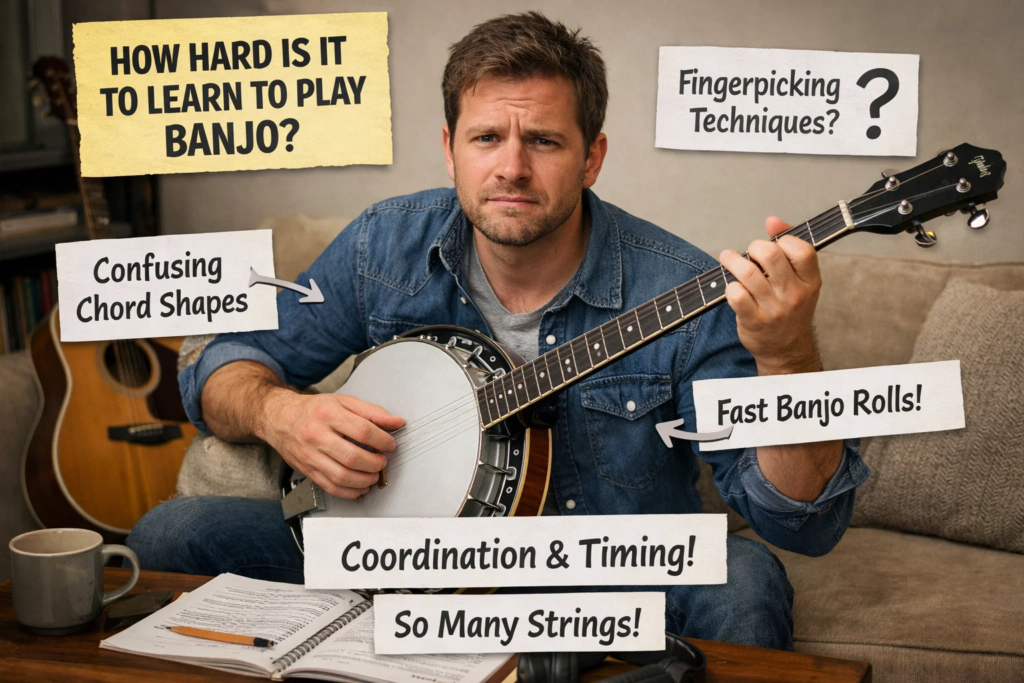
One of the most discussed challenges is finger coordination, particularly in three-finger picking styles. How hard is it to learn to play banjo the right hand must learn repetitive rolling patterns while the left hand forms chords or melodic shapes. Initially, this can feel awkward, but the movements become automatic with repetition. Finger strength develops naturally through short, regular sessions. Importantly, the banjo’s lighter strings are easier on the fingers than many steel-string guitars. This reduces fatigue and pain for beginners. While coordination takes time, it is a manageable challenge that most learners overcome within the first few months.
Mental Barriers and Learning Mindset
Often, the hardest part of learning any instrument is mental rather than physical. Beginners may feel discouraged when progress slows or mistakes repeat. How hard is it to learn to play banjo, With the banjo, expectations are sometimes unrealistic because people associate it with rapid, complex playing. Accepting gradual improvement is essential. A positive mindset transforms challenges into milestones rather than obstacles. Consistent practice, even in small amounts, builds confidence quickly. Understanding that mastery is a journey helps reduce frustration. When learners stop comparing themselves to professionals, the process becomes enjoyable and sustainable.
Learning Styles: Self-Taught vs Guided Instruction
Both self-teaching and guided instruction can be effective, depending on your personality and goals. How hard is it to learn to play banjo? Self-taught learners often enjoy flexibility and exploration, especially with modern learning materials. However, guided instruction provides structure and immediate feedback, which can prevent bad habits. Many beginners benefit from a combination of both. Starting with structured lessons and gradually exploring independently offers balance. The banjo community is known for its supportive culture, making learning feel less isolating. Choosing the right learning style can significantly affect how difficult the experience feels over time.
Practice Time and Realistic Expectations
How hard is it to learn to play banjo? Consistency matters more than long practice sessions. Practicing 20 to 30 minutes daily is more effective than infrequent, extended sessions. In the first three months, beginners typically learn basic rolls, simple chord transitions, and a few recognizable tunes. Progress may plateau temporarily, which is normal. Over six to twelve months, most learners can play confidently in casual settings. Understanding this timeline helps manage expectations. Learning the banjo is not about speed but steady improvement. Realistic goals reduce pressure and make the process more enjoyable.
Styles of Banjo and Their Difficulty Levels
Not all banjo styles are equally challenging. How hard is it to learn to play banjo? Clawhammer, a down-picking style, is often considered beginner-friendly due to its rhythmic simplicity. Three-finger bluegrass, popularized by Earl Scruggs, involves faster rolls and greater precision. Melodic and jazz banjo styles require advanced theory and finger independence. Beginners should choose a style that aligns with their musical taste rather than perceived difficulty. Starting with a simpler style builds confidence and technique that transfers easily to more complex approaches later.
The Influence of Age on Learning Banjo
Age is far less important than many assume. How hard is it to learn to play banjo? Children, adults, and seniors all successfully learn banjo every year. Younger learners may adapt physically faster, while adults often bring discipline and focus. Older beginners benefit from patience and life experience. The banjo’s ergonomic design makes it accessible across age groups. While learning speed may vary, long-term success depends on enjoyment and consistency rather than age. Many players begin later in life and still achieve impressive skill levels.
Common Myths About Learning Banjo
Several myths discourage beginners unnecessarily. One common belief is that banjo is only for bluegrass music. In reality, it appears in folk, country, jazz, and even modern genres. Another myth suggests you need exceptional finger speed to start. Speed develops naturally over time. Some believe banjo is louder and more annoying than other instruments, which ignores its expressive range. Dispelling these myths helps learners approach the instrument with curiosity instead of fear, making the learning experience far less intimidating.
How Long Does It Take to Play Confidently?
Confidence develops gradually and often arrives unexpectedly. Many beginners feel comfortable playing simple songs within two to three months. Playing with others or recording yourself accelerates this confidence. Mastery, of course, takes years, but enjoyment does not require perfection. Confidence comes from familiarity with the instrument and trust in your hands. When mistakes become learning tools rather than setbacks, progress feels natural. Measuring success by enjoyment rather than technical perfection makes the journey far more rewarding.
Is Banjo Harder Than It Looks?
Visually, banjo playing can seem overwhelming due to rapid finger movement. However, much of this complexity comes from combining simple patterns at speed. Once foundational rolls and rhythms are internalized, advanced playing becomes an extension of basics rather than a new skill set. This illusion of difficulty often deters beginners unnecessarily. In practice, learners discover that what looked impossible is built step by step. The banjo rewards patience, making it less intimidating over time than initial impressions suggest.
Long-Term Growth and Musical Satisfaction
Long-term banjo players often describe a deep sense of musical satisfaction. The instrument’s rhythmic nature makes it ideal for group playing and social music-making. As skills grow, learners explore improvisation, songwriting, and stylistic experimentation. The banjo’s versatility keeps the learning process fresh even after years. This ongoing discovery reduces burnout and sustains motivation. For many, the banjo becomes more than an instrument—it becomes a creative outlet and a connection to musical tradition.
Conclusion
So, how hard is it to learn to play banjo? The honest answer is that it is challenging but highly approachable. While coordination and patience are required, the banjo offers quick rewards that keep beginners motivated. Its learning curve is friendlier than its reputation suggests, especially for those who practice consistently and set realistic expectations. Whether you aim to play simple tunes or advanced bluegrass solos, the journey is flexible and fulfilling. With the right mindset, learning the banjo becomes less about difficulty and more about enjoyment and personal growth.
Frequently Asked Questions
Is banjo harder than guitar for beginners?
For many beginners, banjo feels easier initially due to lighter strings and simple picking patterns, though long-term mastery varies by style.
Can I learn banjo without any musical background?
Yes, many successful players start with no prior experience and learn entirely through practice and repetition.
How often should I practice banjo as a beginner?
Short daily sessions of 20–30 minutes are ideal for building muscle memory and avoiding frustration.
Does finger pain last long when learning banjo?
Finger discomfort is temporary and usually fades within a few weeks as calluses develop.
What is the easiest banjo style for beginners?
Clawhammer is often considered beginner-friendly due to its rhythmic simplicity and relaxed hand position.
Can older adults learn banjo successfully?
Absolutely. Age does not limit learning; consistency and enjoyment matter far more.
Do I need to read music to play banjo?
No, many players learn by ear or through tablature without reading traditional music notation.
For More Update and Stories Visit Daily Guides