
 Admin
Admin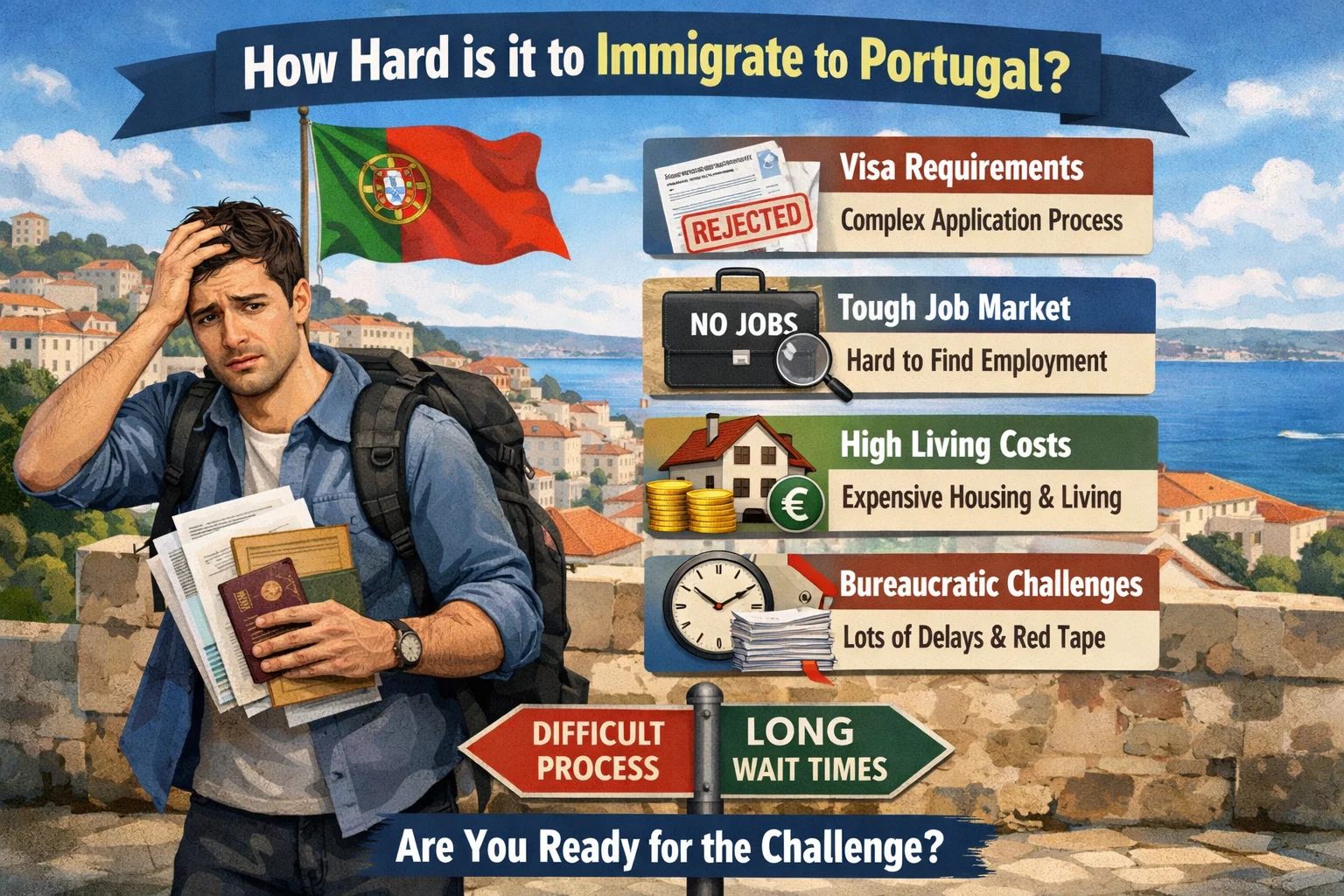
Portugal has quietly transformed into one of Europe’s most attractive immigration destinations, drawing digital nomads, retirees, entrepreneurs, students, and skilled professionals from around the world. Its stable economy, high safety ranking, affordable cost of living, mild climate, and welcoming culture have fueled global interest. Yet one crucial question remains for most people considering the move: how hard is it to immigrate to Portugal in practical terms? The answer is not simply “easy” or “difficult.” It depends on your nationality, income source, professional background, and long-term goals. This guide breaks down the realities of Portuguese immigration in clear, human terms—covering visas, bureaucracy, timelines, and lifestyle challenges—so you can decide if Portugal is truly the right fit for you.
Understanding Portugal’s Immigration Philosophy
Portugal follows a comparatively open and pragmatic immigration policy, especially when measured against many other European Union countries. How hard is it to immigrate to Portugal, The government actively encourages newcomers who can support themselves financially, contribute economically, or bring valuable skills. Rather than focusing solely on high-income migrants, Portugal offers multiple legal pathways for people with remote income, pensions, employment contracts, or family connections. This inclusive philosophy significantly shapes how hard the process feels. For well-prepared applicants, the system can be manageable and transparent. For those arriving without documentation or financial planning, it can feel slow and frustrating. Understanding this mindset early helps explain why Portugal offers more visa flexibility than many neighboring EU nations.
How Hard Is It to Immigrate to Portugal Compared to Other EU Countries
When people ask how hard is it to immigrate to Portugal, they often mean in comparison to countries like Germany, France, or the Netherlands. In that context, Portugal is generally easier and more accessible. Income thresholds are lower, visa options are broader, and language requirements are less strict at the beginning. Portugal also allows many residents to apply for permanent residency or citizenship after five years, which is shorter than in several EU states. However, “easier” does not mean “effortless.” You still face paperwork, appointments, and compliance rules. The difference lies in friendlier eligibility criteria and a government that actively seeks foreign residents to support economic growth.
Key Immigration Pathways Available in Portugal
Portugal offers several legal immigration routes, each designed for a different profile of applicant. How hard is it to immigrate to Portugal? The most common options include D7 visas for passive income earners, Digital Nomad visas, work visas, student visas, and family reunification permits. Each pathway has its own documentation requirements, financial thresholds, and processing timelines. Choosing the correct visa from the start significantly reduces delays and rejection risks. Unlike some countries, Portugal allows many visa holders to transition smoothly to long-term residency without restarting the process. This flexibility is a major reason the country is perceived as immigrant-friendly, particularly among freelancers, retirees, and location-independent professionals seeking stability within the European Union.
The D7 Visa: A Popular Option for Passive Income Earners
The D7 Visa is one of Portugal’s most well-known residency options and plays a major role in discussions about how hard is it to immigrate to Portugal. It targets individuals with stable passive income, such as pensions, rental income, dividends, or long-term savings. The financial requirement is tied to Portugal’s minimum wage, making it relatively accessible compared to other European residency programs. Applicants must show proof of accommodation and a clean criminal record. While the paperwork is detailed, it is not overly complex. For retirees and financially independent individuals, the D7 remains one of the simplest and most reliable pathways into Portuguese residency.
Digital Nomad and Remote Work Visas Explained
Portugal has embraced the global shift toward remote work, introducing specific visa options for digital nomads and remote employees. These visas are designed for individuals earning income from outside Portugal while residing within the country. The income threshold is higher than the D7 visa, but still competitive compared to similar programs elsewhere in Europe. Applicants must demonstrate consistent remote income, employment contracts, or freelance agreements. For tech professionals, consultants, and online entrepreneurs, this pathway significantly lowers the difficulty level. How hard is it to immigrate to Portugal, While documentation must be precise, approval rates are strong when requirements are met, reinforcing Portugal’s reputation as a remote-worker-friendly destination.
Work Visas and Employment-Based Immigration
For those seeking local employment, Portugal offers work visas tied to job offers from Portuguese employers. This route can feel more challenging because it depends on securing a contract before applying. Employers must often prove they could not easily fill the role locally, particularly for non-EU nationals. How hard is it to immigrate to Portugal, However, Portugal has labor shortages in technology, healthcare, construction, tourism, and agriculture, creating real opportunities. Once a work visa is approved, the residency path is stable and renewable. While this option involves more coordination and paperwork, it remains achievable for skilled workers willing to navigate the job market strategically.
Student Visas and Academic Pathways to Residency
Portugal’s universities and research institutions attract a growing number of international students. How hard is it to immigrate to Portugal? A student visa allows legal residence for the duration of studies and can later be converted into a work or residency permit. This pathway is especially attractive to younger applicants seeking long-term settlement. Tuition fees are relatively affordable, and Portugal’s academic qualifications are recognized across the EU. While student visas do not automatically guarantee permanent residency, they provide a legal foothold and valuable time to build local networks. For many, education becomes a stepping stone toward full integration into Portuguese society.
Family Reunification and Ancestry-Based Options
Portugal places strong emphasis on family unity, offering straightforward reunification options for spouses, children, and dependent relatives of legal residents. How hard is it to immigrate to Portugal, Once one family member holds residency, others can apply without meeting independent income thresholds. Additionally, individuals with Portuguese ancestry or Sephardic Jewish heritage may qualify for special citizenship or residency considerations. These routes dramatically reduce the overall difficulty of immigration. While documentation requirements can be strict, approval rates are generally high when eligibility is clearly demonstrated. Family-based immigration remains one of the most humane and supportive aspects of Portugal’s immigration system.
Bureaucracy, Paperwork, and Administrative Reality
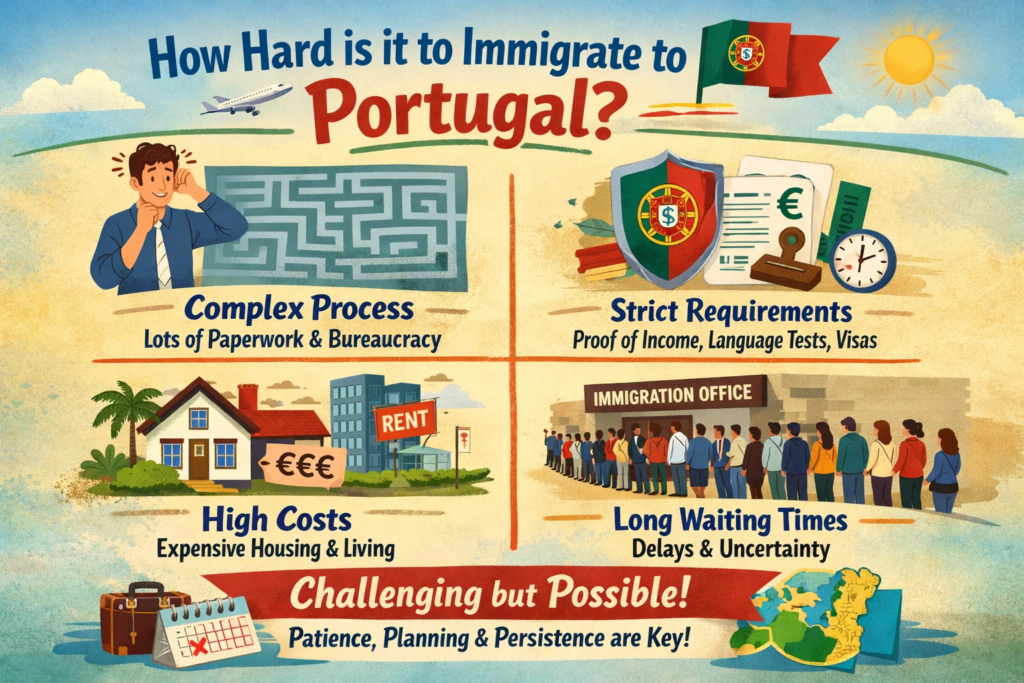
No honest discussion of how hard is it to immigrate to Portugal would be complete without addressing bureaucracy. Portugal’s administrative system is known for being slow but methodical. Appointments with immigration authorities can take time, and document verification requires patience. That said, processes are generally transparent, and rules are clearly defined. Most frustrations stem from delays rather than denials. Applicants who prepare documents carefully, follow official guidelines, and remain organized often succeed. While the system may test your patience, it rarely feels hostile or arbitrary, which is a critical distinction.
Language, Culture, and Social Integration Challenges
Portuguese is the official language, but English is widely spoken, especially in urban areas like Lisbon and Porto. This makes initial settlement easier for newcomers. How hard is it to immigrate to Portugal? However, long-term integration benefits greatly from learning basic Portuguese. Language proficiency becomes important for citizenship applications and deeper cultural connection. Socially, Portuguese people are known for being polite, reserved, and welcoming, though building close friendships can take time. Cultural adaptation is rarely overwhelming, but it does require openness and respect for local norms. Compared to many countries, integration challenges are manageable and often rewarding.
Cost of Living and Financial Readiness
Portugal remains one of Western Europe’s more affordable countries, though costs have risen in recent years. How hard is it to immigrate to Portugal, Housing prices in major cities have increased, while smaller towns remain budget-friendly. Immigration success depends heavily on financial preparedness, as authorities want assurance that newcomers can support themselves. Day-to-day expenses such as food, transportation, and healthcare remain reasonable. For those with stable income or savings, financial pressure is usually moderate. Understanding realistic living costs helps set expectations and prevents unnecessary stress during the settlement process.
Healthcare, Safety, and Quality of Life
Portugal consistently ranks high for safety, healthcare access, and overall quality of life. How hard is it to immigrate to Portugal, Legal residents can access the public healthcare system, supplemented by affordable private insurance. Crime rates are low, and political stability is strong. These factors reduce the emotional difficulty of immigration, even when administrative steps feel slow. Many newcomers report feeling settled and secure within their first year. When lifestyle benefits are considered alongside visa accessibility, Portugal’s appeal becomes clearer, particularly for families and retirees seeking long-term stability.
Long-Term Residency and Citizenship Prospects
One of Portugal’s biggest advantages is its clear path to permanence. After five years of legal residency, how hard is it to immigrate to Portugal, individuals can apply for permanent residency or citizenship. Citizenship requires basic language proficiency and clean legal records, but no extreme integration tests. This timeline is shorter than in many European countries, making Portugal especially attractive for long-term planners. For those asking how hard is it to immigrate to Portugal with a future-focused mindset, the country offers one of Europe’s most realistic and humane paths to belonging.
Common Mistakes That Make Immigration Harder
How hard is it to immigrate to Portugal? Many people struggle unnecessarily due to poor preparation, incorrect visa selection, or incomplete documentation. Relying on outdated information or informal advice can lead to delays. Another common issue is underestimating appointment wait times or income verification rules. Portugal’s system rewards patience, accuracy, and planning. Working with official resources and double-checking requirements dramatically improves outcomes. Immigration itself may not be difficult, but mistakes can make it feel that way. Awareness is often the difference between a smooth transition and months of frustration.
Conclusion
So, how hard is it to immigrate to Portugal in reality? For most well-prepared applicants, it is moderately easy compared to other EU countries, especially when using the correct visa pathway. Portugal combines flexible residency options, reasonable financial requirements, and a welcoming social environment. Challenges exist—primarily bureaucracy and waiting periods—but they are rarely insurmountable. With realistic expectations, proper documentation, and patience, immigration to Portugal is not just achievable, but often deeply rewarding. How hard is it to immigrate to Portugal? For many, the process feels less like a barrier and more like a structured journey toward a better quality of life.
Frequently Asked Questions
Is Portugal one of the easiest EU countries to immigrate to?
Yes, Portugal is widely considered one of the more accessible EU countries due to flexible visas and shorter residency timelines.
Do I need to speak Portuguese to immigrate?
No, language skills are not required initially, but basic Portuguese is needed for citizenship later.
How long does the immigration process usually take?
Processing times vary, but most visas take several months from application to approval.
Can I bring my family with me to Portugal?
Yes, Portugal offers strong family reunification options for legal residents.
Is it possible to gain citizenship after residency?
Yes, after five years of legal residency, you may apply for Portuguese citizenship.
Is healthcare available to immigrants in Portugal?
Legal residents can access public healthcare and affordable private insurance options.
For More Update and Stories Visit Daily Guides