 Admin
Admin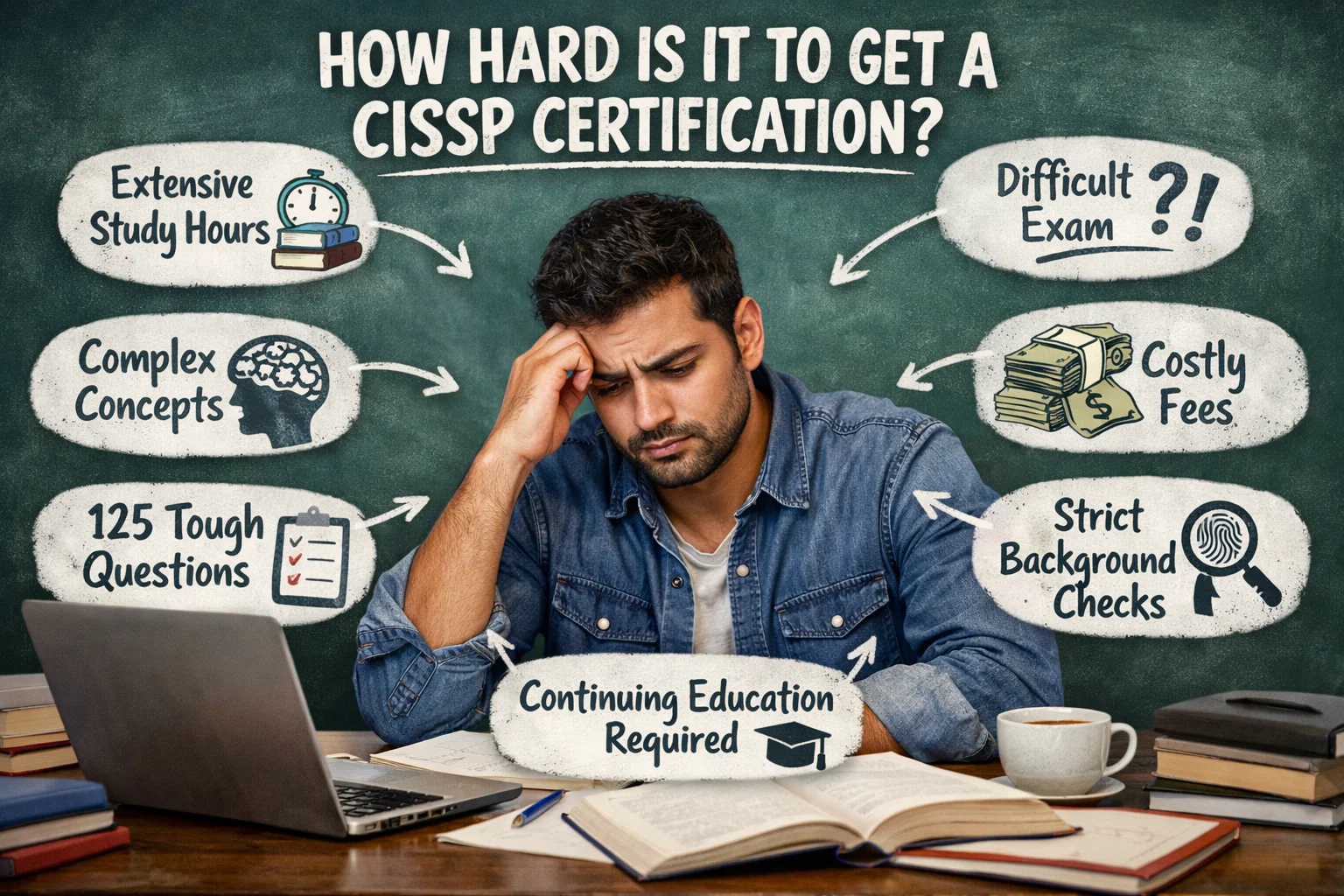
For many IT and cybersecurity professionals, one question stands out before committing months of study: how hard is it to get a CISSP certification? The Certified Information Systems Security Professional (CISSP) credential is widely regarded as one of the most respected and demanding certifications in the cybersecurity industry. It is designed for experienced professionals, not beginners, and tests both technical knowledge and strategic thinking. This guide provides a realistic, experience-based look at what makes the CISSP challenging, who struggles the most, and who succeeds. By understanding the true difficulty level, candidates can prepare mentally, academically, and professionally for the journey ahead.
What the CISSP Certification Represents
Before assessing how hard is it to get a CISSP certification, it is essential to understand what the credential represents. CISSP is not just a technical exam; it validates a professional’s ability to design, manage, and govern enterprise-level security programs. The certification emphasizes leadership, risk management, and decision-making at scale. It is often pursued by security managers, architects, consultants, and senior engineers. The exam expects candidates to think like executives rather than technicians. This mindset shift is one of the first challenges candidates face, especially those coming from hands-on technical roles.
Eligibility Requirements and Experience Expectations
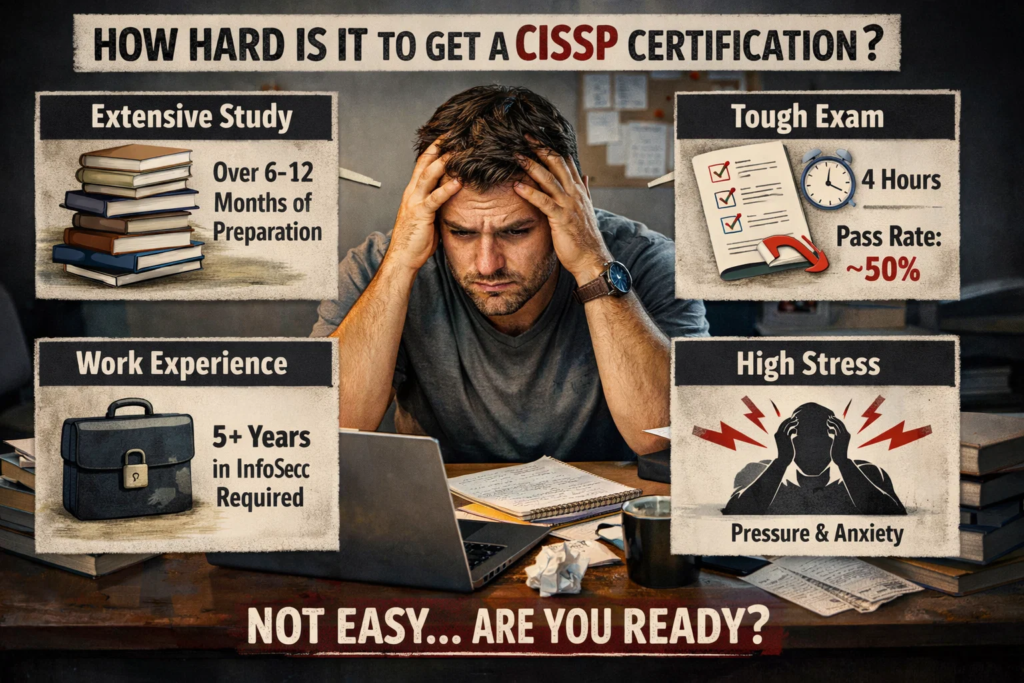
One reason many ask how hard is it to get a CISSP certification is the strict eligibility criteria. Candidates are expected to have a minimum of five years of cumulative, paid work experience across multiple cybersecurity domains. While some education or certifications can reduce this requirement, real-world experience is still essential. This ensures that CISSP holders are seasoned professionals, not entry-level practitioners. The experience requirement itself filters out many applicants before they even sit for the exam. Those without practical exposure often struggle to interpret scenario-based questions that rely heavily on professional judgment.
Understanding the CISSP Exam Structure
The CISSP exam format contributes significantly to its difficulty. It is a computer-adaptive test with up to 175 questions, designed to assess not just knowledge but confidence and consistency. Candidates must answer questions that span technical, managerial, and policy-driven topics. When evaluating how hard is it to get a CISSP certification, many candidates highlight the mental endurance required. The exam is long, intense, and unforgiving of weak conceptual understanding. Time management is critical, as questions are complex and require careful reading. The adaptive nature means difficulty adjusts based on performance, increasing pressure throughout the exam.
The Eight CISSP Domains and Knowledge Breadth
The CISSP covers eight distinct domains, ranging from security governance to software development security. This breadth is one of the main reasons candidates question how hard is it to get a CISSP certification. Unlike certifications that focus on a narrow skill set, CISSP demands familiarity with multiple disciplines. Candidates must understand policies, frameworks, technical controls, legal considerations, and human factors. Mastery across all domains is required, as weak performance in one area can affect overall results. The challenge lies not in memorizing facts, but in understanding how all domains interact within real organizations.
The Shift from Technical Thinking to Managerial Judgment
One of the most underestimated challenges is the required mindset shift. Many candidates fail because they approach the exam like a technical test. When asking how hard is it to get a CISSP certification, experienced candidates often say the difficulty lies in learning to answer from a risk-based, managerial perspective. The exam prioritizes policies, processes, and long-term organizational impact over quick technical fixes. Candidates must choose answers that reflect governance, compliance, and strategic alignment, even if a technical solution seems faster. This adjustment takes time and practice, especially for hands-on professionals.
Volume of Study Material and Cognitive Load
The amount of material required for CISSP preparation is substantial. Most candidates study for three to six months, sometimes longer, depending on experience. When considering how hard is it to get a CISSP certification, the sheer volume of reading, practice questions, and concept review is often overwhelming. Each domain has its own terminology, frameworks, and best practices. Retaining and connecting this information requires disciplined study habits. Burnout is common among candidates who underestimate the time commitment. How hard is it to get a CISSP certification. Success often depends on structured study plans and consistent review rather than last-minute cramming.
Practice Questions Versus Real Exam Questions
Another factor that shapes perceptions of difficulty is the gap between practice exams and the real test. Many candidates feel confident during preparation but are surprised on exam day. This fuels the question how hard is it to get a CISSP certification. Practice questions often test knowledge directly, while real exam questions assess reasoning and judgment. The exam rarely asks for definitions; instead, it presents scenarios requiring prioritization and analysis. Candidates must interpret intent, eliminate distractions, and choose the best possible answer, not just a correct one. This nuance increases difficulty significantly.
Psychological Pressure and Exam-Day Stress
The psychological aspect of the CISSP exam should not be underestimated. High stakes, cost, and professional expectations create intense pressure. When reflecting on how hard is it to get a CISSP certification, many candidates cite stress management as a key challenge. The adaptive format provides no immediate feedback, which can increase anxiety. Mental fatigue can lead to second-guessing and reduced confidence. Candidates who prepare mentally, practice mindfulness, and manage expectations tend to perform better. Emotional resilience is just as important as technical knowledge in passing the exam.
Pass Rates and Industry Reputation
While exact pass rates are not publicly disclosed, CISSP is widely recognized as difficult. Its reputation alone contributes to the perception of challenge. When professionals ask how hard is it to get a CISSP certification, they are often influenced by stories of multiple attempts. However, many successful candidates pass on their first try with proper preparation. The difficulty is intentional, designed to preserve the certification’s value and credibility. Employers trust CISSP holders because the certification is not easily earned. This exclusivity reinforces its standing in the cybersecurity industry.
Comparison with Other Cybersecurity Certifications
Compared to entry-level or intermediate certifications, CISSP is significantly more demanding. Understanding how hard is it to get a CISSP certification becomes clearer when comparing it to technical exams focused on tools or specific technologies. CISSP requires strategic thinking, broad knowledge, and professional maturity. It is closer to an executive assessment than a skills test. Candidates who have already earned other certifications often find CISSP conceptually harder, even if less technical. The challenge lies in integration and judgment rather than isolated expertise.
Study Strategies That Reduce Difficulty
While challenging, CISSP is not impossible. Candidates who succeed often follow structured strategies. When addressing how hard is it to get a CISSP certification, preparation quality matters more than raw intelligence. Effective strategies include domain-by-domain study, active note-taking, scenario analysis, and regular self-assessment. Discussing concepts with peers and relating material to real work experience improves retention. Consistency is more effective than long, infrequent study sessions. Those who treat preparation as a professional project rather than an exam tend to manage the difficulty better.
The Role of Professional Experience in Success
Experience plays a decisive role in perceived difficulty. Candidates with hands-on exposure to multiple security domains often find the material familiar. For them, how hard is it to get a CISSP certification becomes a question of alignment rather than capability. Less experienced candidates may struggle with abstract scenarios they have never encountered. The exam rewards practical understanding over theoretical knowledge. Real-world exposure helps candidates identify the most appropriate responses quickly. This is why CISSP is best attempted after substantial industry experience rather than early in a career.
Long-Term Value Versus Short-Term Difficulty
Despite its challenges, the CISSP certification offers long-term benefits. When reflecting on how hard is it to get a CISSP certification, many professionals agree the difficulty enhances its value. The credential is associated with career advancement, leadership roles, and increased credibility. The effort invested translates into broader professional confidence and strategic thinking skills. For many, the challenge itself becomes a milestone that validates years of experience. The difficulty is temporary, but the professional impact is lasting.
Conclusion
So, how hard is it to get a CISSP certification? The honest answer is that it is challenging, demanding, and intentionally rigorous, but absolutely achievable for the right candidate. It tests not just knowledge, but mindset, experience, and judgment. Those who approach it with realistic expectations, disciplined preparation, and professional maturity are well-positioned to succeed. The CISSP is not meant to be easy; it is meant to be meaningful. For cybersecurity professionals seeking to validate their expertise at a strategic level, the challenge is part of the reward.
Frequently Asked Questions
Is the CISSP exam harder than technical security exams?
Yes, CISSP is generally considered harder because it focuses on strategic decision-making, governance, and risk management rather than specific tools or technologies.
Can someone without management experience pass CISSP?
Yes, but it is more difficult. Candidates without management exposure must work harder to understand policy-driven and leadership-focused questions.
How long does it take to prepare for CISSP?
Most candidates prepare for three to six months, depending on experience, study habits, and familiarity with the domains.
Is CISSP harder for technical professionals?
Many technical professionals find it challenging because the exam prioritizes managerial thinking over technical problem-solving.
Can CISSP be passed on the first attempt?
Yes, many candidates pass on their first attempt with proper preparation, structured study, and realistic expectations.
Is CISSP worth the difficulty?
For most experienced professionals, yes. The certification offers strong career credibility, leadership recognition, and long-term professional value.
For More Update and Stories Visit Daily Guides